This content has been automatically translated from Ukrainian.
Recently, the word Woke (in Ukrainian transcription – woke) has become increasingly common in the media space, including in the realm of video games. This word is actively used in discussions on forums, social media, and even in reviews. But what does woke actually mean, and why does it provoke such heated debates in the gaming community?
The Origin of the Term Woke
The word woke comes from the English language and is a form of the verb wake. In a figurative sense, it originated in African American culture in the 20th century to describe a state of "awareness" or "awakening" to social issues such as racism, inequality, or oppression. In a modern context, the term has taken on a broader meaning and is used to denote sensitivity to social justice, gender equality, inclusivity, and environmental consciousness.
However, in the 2010s, the word became politically charged and took on an ironic or negative connotation among critics who believe that woke culture imposes its agenda.
Woke in Video Games: What Does It Look Like?
The video game industry often serves as a mirror to contemporary social phenomena. The concept of woke in this context manifests through the following aspects:
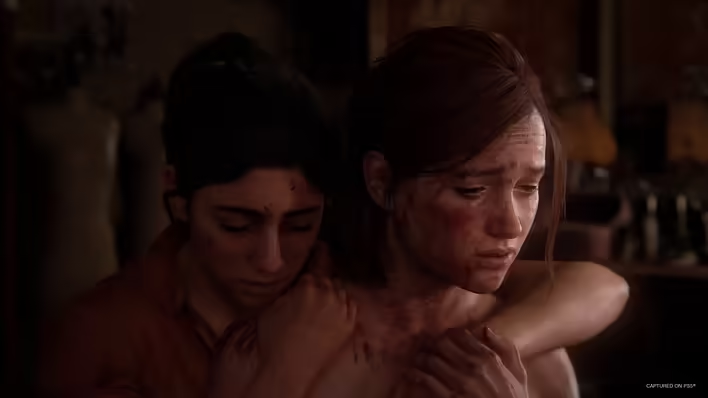
- Character Inclusivity.In many modern games, developers add diverse characters by gender, race, or orientation. For example, the The Last of Us series features LGBTQ+ characters, which has sparked controversy. Some view this as an important step towards inclusivity, while others see it as unnecessary "catering to an agenda."
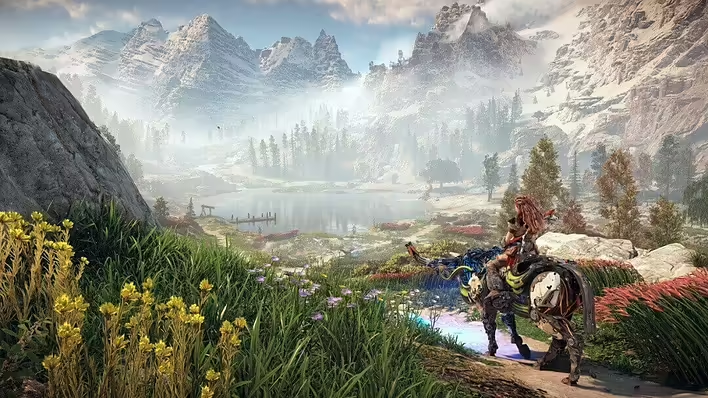
- Social and Political Themes.Video games increasingly address complex issues such as climate change (Horizon Zero Dawn), immigration (Papers, Please), or gender stereotypes (Celeste). This is seen as a manifestation of the woke approach, as such stories encourage players to reflect on pressing issues.
- Diversity Among Developers.In large studios, more attention is being paid to diversity within teams to ensure that stories in games better reflect the experiences of different people.
- Community Reaction.Often, when a game is considered "too woke," it triggers a wave of criticism. For instance, the release of Battlefield V was accompanied by controversy over the presence of female soldiers on the front lines, which some players deemed historically inaccurate.
Why Do Woke Games Spark Controversy?
- Audience Division.Some gamers support this approach, believing that inclusivity makes games more realistic and accessible to a wider audience. Others argue that woke culture "destroys" beloved franchises, sacrificing quality for the sake of an agenda.
- "Overreach" in Implementation.Critics point out that some games overly emphasize social issues, which can sometimes detract from gameplay or narrative. For example, players of Forspoken complained about a weak script and excessive focus on social themes.
- Politicization of Games.Games that were once purely entertaining environments now often become platforms for discussing political issues. This provokes resistance from those who just want to "play."
How to Approach Woke in Video Games?
Ultimately, video games, like any art form, reflect the spirit of the times. Woke culture in this sense is part of a broader trend towards awareness of social issues. Whether this is a plus or a minus for a game depends on how developers integrate these themes.
For players, it is important to remember that games are created for diverse audiences. If a game seems too woke, there is always the option to find something closer to one's preferences. Inclusivity does not mean that classic genres or ideas disappear – the market is simply expanding, opening new opportunities for everyone.
Like it?React
🧵
This post doesn't have any additions from the author yet.