This content has been automatically translated from Ukrainian.
Have you noticed how often the word "canon" appears in conversations about favorite books, movies, or games? In fan discussions, it can sound like a key argument: "That's not canon!" or "This is definitely canonical!". But what is canon and why is it so fiercely defended in various areas of pop culture? Let's figure it out.
What is canon?
The word "canon" comes from the Greek kanon, which means "measure" or "rule". In its original meaning, it was a tool for measurement – something like a ruler. Later, the word took on a figurative meaning – it came to denote a set of rules, norms, or officially approved texts.
In the context of religion, canon refers to sacred texts that are considered authoritative, such as the Bible in Christianity. In literature, canon is a set of works that are considered classics or essential for study. But how did this concept penetrate the world of modern books, games, movies, and series?
Canon in modern pop culture

In the context of entertainment, "canon" means the officially accepted part of the story that is part of a specific fictional world. For example, all events and characters described in the original "Harry Potter" books are considered canon. However, fan creations (fanfiction), even if popular, do not fall within this canon, as they are not approved by the author or creators.
The term "canonical" is used to denote elements that accurately correspond to the official version of the plot or world. If a favorite character appears in a movie based on a book, but their traits or story are changed, fans might say that it is "not canonical".
Why is canon important?
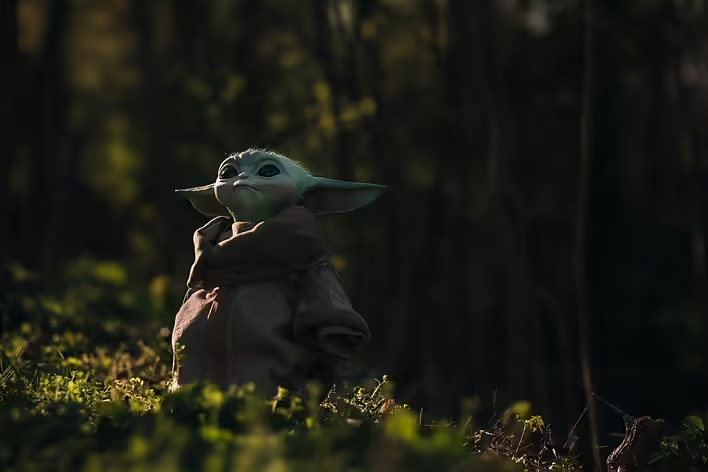
Canon is like the foundation for a fictional universe. It defines the rules, boundaries, and key events that create the integrity of the story. For example, if in the "Star Wars" universe, the Force is described as an energy that creates balance in the Universe, that is part of the canon. However, if someone decides to add that the Force works like a battery and has a limited charge, that would be a departure from the canon.
For fans, it is important that stories remain consistent and logical, as this helps them immerse themselves deeper into the world of characters and events. Canon also provides a common ground for discussions in fan communities.
Canon and alternative realities

Sometimes creators themselves change the canon. This can be a deliberate update of the plot or the introduction of an alternative reality. For example:
- In Marvel comics, there are numerous "universes," and events in each of them may not coincide.
- In the series "Doctor Who," the concept of time travel allows for constant rewriting of history, creating new canons.
In such cases, fans have to either accept the changes or discuss which version they consider "true".
Discrepancies between canon and fan theories
Fans often create their versions of events that complement or change the canon. This is called fanon (from the English fan – fan and canon). For example:
- In "Harry Potter," fans created a theory that Snape is a secret relative of Harry. This idea became popular but was never confirmed by J.K. Rowling, so it remained fanon.
Fanon can be very popular, but if it contradicts the official story, it is not considered part of the canon.
Canon in different media
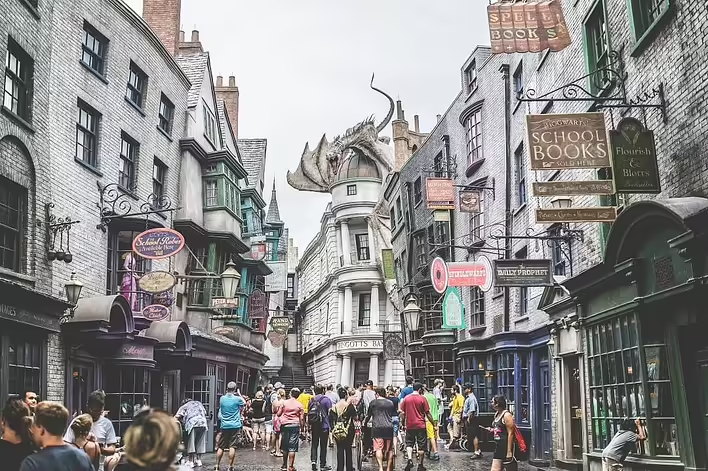
- In booksCanon in literature is usually clearly defined by the author. For example, everything described in George R.R. Martin's novels about the world of "A Song of Ice and Fire" is canon. However, the events of the series "Game of Thrones" are an adaptation that diverges from the canon in many details.
- In film and televisionIn cinema, canon can be more flexible. For example, in the Marvel universe, some events are considered canonical for films, while others are for comics. In the "Star Wars" universe, canon includes everything that is officially approved by Lucasfilm.
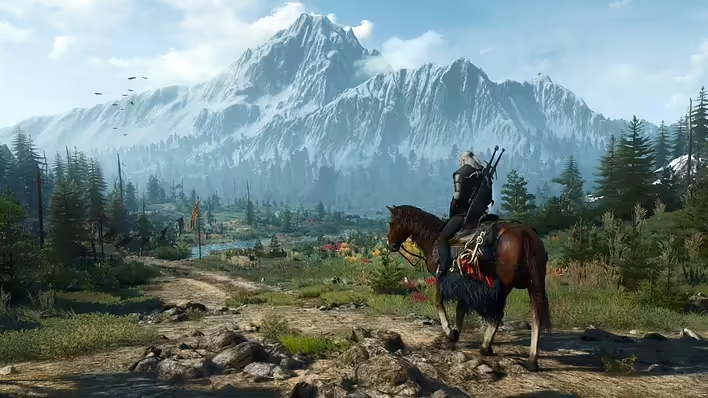
- In gamesIn video games, canon can be defined as the events of the main storyline. For example, in the "The Elder Scrolls" series, there are dozens of books and legends, but only officially confirmed events are part of the canon.
- In comicsComics often complicate canon by creating "reboots" and alternative stories. This allows for the expansion of the universe but can sometimes confuse readers.
Why does canon cause controversies?
Sometimes creators change the canon or introduce new elements that not everyone likes. For example, in "Star Wars," many fans were outraged by the introduction of new characters or changes to old plots. Such decisions can split the community into those who accept the changes and those who defend the original canon.
Whether you are a fervent supporter of the canon or prefer fanon theories, the main thing is to enjoy the stories that inspire and captivate us.
Like it?React
🧵
This post doesn't have any additions from the author yet.