This content has been automatically translated from Ukrainian.
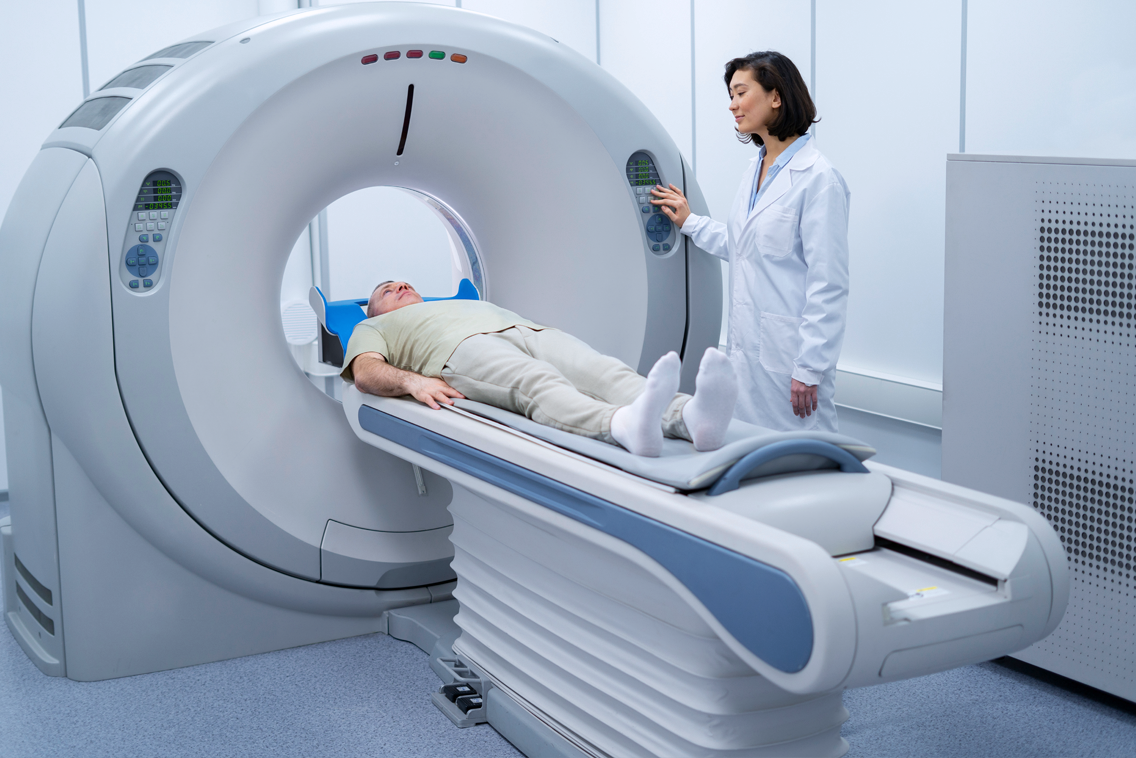
CT with contrast is a modern method of radiological diagnosis that allows "lighting up" the internal structures of the body through the intravenous administration of an iodine-containing agent. While a regular scan clearly shows bones and lungs, CT with contrast makes soft tissues, vessels, and the smallest pathological changes visible.
What is it and how does it work?
During the procedure, a catheter is placed into the patient's elbow vein, through which an automatic injector delivers the contrast agent. The blood carries this "marker" throughout the body. Since tumors or areas of inflammation have a different type of blood supply than healthy tissues, they accumulate the agent differently. This creates a clear visual difference (contrast) on the images.
Main advantages
- Highly accurate visualization of vessels. Allows for the detection of clots, aneurysms (wall expansions), and malformations.
- Early-stage cancer diagnosis. The contrast helps distinguish between benign and malignant tumors based on the nature of the accumulation and elimination of the substance.
- Assessment of blood flow. It is possible to understand how well a particular organ (for example, the kidney or liver) is supplied with blood.
- Clarity of boundaries. Surgeons use this data for precise surgical planning to know exactly where the boundary between healthy tissue and pathology lies.
At the "Good Prognosis" clinic, you can schedule an examination at any convenient time on the website https://dobro-clinic.com/ua/kt-diagnostika/kt-organov-grudnoj-kletki.
Physical activity after CT: when should you take a break?
Most patients feel well immediately after the procedure; however, there are a few nuances regarding physical exertion.
- The first 2-4 hours
Since the contrast is injected through a catheter into the vein, intense arm movements (lifting heavy objects, training) can provoke the formation of a hematoma (bruise) or bleeding at the injection site.
During this time, the body is actively working to eliminate iodine. A large amount of water is priority number one. Sports that cause sweating can lead to mild dehydration, which puts extra strain on the kidneys.
- The first day (24 hours)
It is advisable to avoid exhausting workouts in the gym, CrossFit, or heavy lifting. Although the contrast is eliminated quickly, the body needs resources to restore the water-salt balance. Moreover, in rare cases, delayed allergic reactions may occur, so it is better to remain calm to notice them in time.
- When can you return to sports?
After 24 hours post-examination, if there is no weakness or dizziness, you can return to your usual rhythm of life.
Details to know
Without a fresh creatinine test (no older than 10-14 days), it is dangerous to perform the procedure with contrast, as this is an indicator of kidney function.
Modern recommendations state that it is not necessary to interrupt breastfeeding, as less than 1% of iodine enters the milk. However, many doctors recommend taking a 24-hour break (pumping milk) for safety.
It is strictly forbidden to consume alcohol 24 hours before and 24 hours after the CT, as this is a double blow to the kidneys.
CT with contrast is an indispensable tool when you need to look "inside" the problem. It is safe if the kidneys are healthy; the main thing is to give the body a rest from sports for at least a day to ensure the elimination process of the agent goes as smoothly as possible.
Like it?React
🧵
This post doesn't have any additions from the author yet.