This content has been automatically translated from Ukrainian.
It only takes a slight tear of the mandarin peel — and the room almost instantly begins to smell like the holidays. For several generations, this aroma has become as recognizable a winter signal as the scent of pine or Christmas baking. However, mandarins found their way to the festive table not due to one beautiful legend. Here, seasonality, trade, scarcity, ancient customs, and the ability of scents to firmly anchor in memory came together.
Winter fruit from warm regions
The main reason is quite simple: the season for many varieties of mandarins falls during the cold time of the year. In Mediterranean countries, they are harvested mainly from November to January, although some varieties ripen earlier or later. Therefore, historically, mandarins arrived in northern countries at the end of autumn and winter — just before Christmas and New Year.
Today, citrus fruits can be bought almost anytime, but previously fresh fruits in winter were significantly less accessible. A bright, sweet, and fragrant fruit brought from a warm region was perceived not as an everyday snack, but as a small luxury. Children especially loved mandarins: they were easy to peel, divided into segments, and sweet enough to compete with candies.
Ultimately, the seasonal product became associated with the time when it most often reached consumers. Just as strawberries are associated with the beginning of summer, and watermelons with August, mandarins began to signify the approach of winter holidays.
From orange in a stocking to mandarin under the Christmas tree
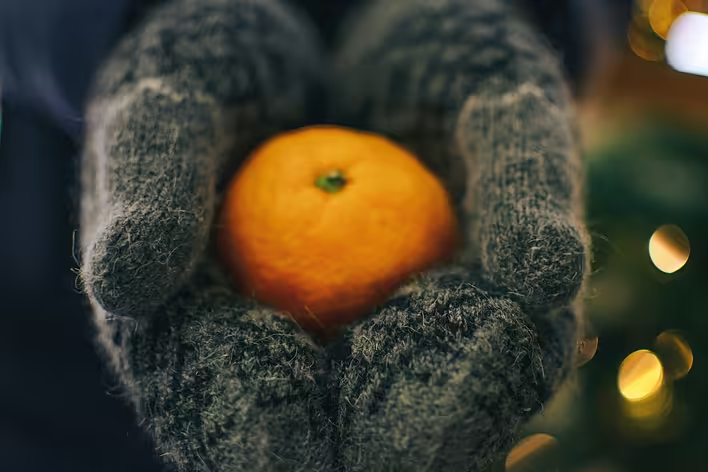
In many countries of Europe and North America, Christmas has traditionally been associated not only with mandarins but with citrus fruits in general. Oranges were often placed in Christmas stockings along with nuts, sweets, and small gifts.
One explanation links this custom to the legend of Saint Nicholas. According to tradition, he secretly gifted three poor girls gold to save them from poverty. The round orange fruit in the festive stocking began to be interpreted as a symbol of a gold coin or ball. However, this is rather a later symbolic explanation than a definitively established origin of the custom.
There was also a more practical reason. In the 19th and early 20th centuries, an orange or mandarin in the middle of winter could indeed be a valuable gift. Citrus fruits were not cheap, did not grow in cold climates, and were not among the usual everyday products. Therefore, a fruit in a stocking was not a modest addition but a desired festive treat.
Why mandarins are eaten on New Year
In Ukraine, the special connection between mandarins and New Year was formed mainly in the 20th century. During the Soviet period, the selection of fresh fruits in winter was limited, and citrus fruits often remained a scarce product.
Mandarins grown in the subtropical regions of the Black Sea coast ripened in late autumn and early winter. Later, supplies from Morocco and other countries were added. Significant batches of fruit reached stores precisely in December, so their appearance in sales became one of the signs of the approaching holidays. In the 1960s, when supplies increased, the connection between mandarins and the New Year's table was finally solidified.
The status of New Year also played an important role. During Soviet times, religious Christmas traditions were pushed out of public life, while New Year was transformed into the main winter holiday — with a Christmas tree, children's gifts, and a certain set of scarce products. Mandarins were rare enough to be perceived as something special, but at the same time, they were accessible enough to be included in gift sets and on the tables of many families.
Thus, a familiar pattern emerged: mandarins were not often encountered throughout the year, but in December they appeared along with Christmas decorations and preparations for the holidays. Repeating every year, this combination transformed the seasonal fruit into a cultural symbol.
What mandarins symbolize in China
A separate tradition exists in China and countries with significant Chinese communities. There, mandarins and other orange citrus fruits are given and displayed in homes during the celebration of the New Year according to the lunar calendar.
They are associated with luck, abundance, and prosperity. Part of this symbolism is based on the phonetic similarity of the names of the fruits with words meaning luck or gold in various Chinese languages and dialects. Fruits with leaves are especially valued: a green branch can symbolize longevity, vitality, and the continuation of the lineage. Mandarins are exchanged during visits to relatives and friends, and small citrus trees are used as festive decorations.
This tradition is not a direct reason for the appearance of mandarins on our New Year's tables. In different regions, similar symbolism formed independently: in China — due to wordplay and ideas about prosperity, in Western Christmas culture — through the custom of giving citrus fruits, and in Ukraine and other countries of the former USSR — primarily due to seasonality and trade characteristics in the 20th century.
Why the scent of mandarins is so strongly associated with holidays
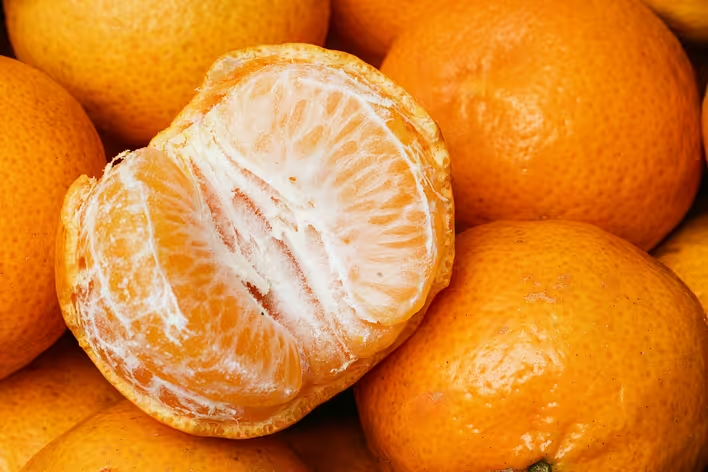
The areas of the brain that process smells are closely linked to structures responsible for emotions and memory. Because of this, a familiar aroma can suddenly evoke not only a memory of a specific event but also the feelings associated with it.
If mandarins appeared at home every year along with the Christmas tree, gifts, and the anticipation of holidays, the brain gradually combined these impressions. Over time, the very scent of the fruit began to evoke festive associations — even without garlands and a decorated room.
Mandarins became a symbol of winter holidays due to a fortunate coincidence. They ripen in winter, were once a rare and desired gift, withstand transportation well, and have an extraordinarily distinct aroma. Everything else was made by repetition and memory: returning every year in December, mandarins gradually transformed from a seasonal fruit into the taste and smell of the holiday.
Like it?React
🧵
This post doesn't have any additions from the author yet.