Table of contentsClick link to navigate to the desired location
This content has been automatically translated from Ukrainian.
A crown is a modern and reliable way to restore a damaged tooth, returning its functionality and aesthetic appearance. It is firmly fixed to the tooth and serves for decades. However, sometimes patients face the unpleasant problem of a specific odor emanating from the area where the crown is installed. This is not just a flaw, as specialists note, particularly at Solovei Dental Clinic, that an unpleasant smell is always a signal of certain problems that require immediate attention. Let's figure out together why this smell occurs and how to eliminate it.
Why does an unpleasant smell occur: main reasons
The unpleasant smell from under a dental crown is, in essence, the smell of decomposing organic matter and the byproducts of bacterial activity. It can indicate a number of problems:
- Insufficient hygiene in the area of the crown. Even with a perfectly placed crown, if food debris and plaque are poorly removed in this area, they begin to decompose. This is especially true for the edges of the crown, where bacterial plaque can accumulate, causing an unpleasant smell.
- Inadequate sealing of the crown. The crown should fit tightly to the surface of the tooth. If there is a microscopic gap (even invisible to the naked eye) between the crown and the tooth, it becomes an ideal place for the accumulation of bacteria, food particles, and saliva. The residues decompose, forming volatile compounds with an unpleasant odor.
- Caries under the crown. This is one of the most serious causes. Due to inadequate sealing or washing out of the cement, bacteria penetrate under the crown, causing secondary caries of the tooth itself. The process of decay of the tooth tissues occurring under the crown is accompanied by the release of a characteristic foul smell. Often this occurs without pain until late stages.
- Gum inflammation (gingivitis or periodontitis) around the crown. A poorly made crown that injures the gums, or insufficient hygiene can provoke inflammation of the gums around it. Inflamed gums bleed, swell, and the accumulation of bacteria in the periodontal pockets leads to an unpleasant smell, sometimes with pus.
- Improper root canal treatment. If the tooth under the crown was depulped (nerve removed), but the root canals were poorly treated (not completely filled, infections remained), this can lead to the development of an inflammatory process at the root apex. This process is accompanied by the accumulation of pus, which can exit through the gums, causing an unpleasant smell.
- Destruction of the cement. The cement material used to fix the crown to the tooth can deteriorate or wash away over time. This creates cavities where food and bacteria can accumulate, provoking odor and secondary caries.
- Fracture of the root or wall of the tooth under the crown. Although this is a rare cause, a crack or fracture of the tooth under the crown can create a space for infection and tissue decomposition, causing an unpleasant smell.
- Food residues under a bridge prosthesis. If a bridge prosthesis is installed, food residues can get stuck under its intermediate part (pontic), which replaces missing teeth. This also leads to their decomposition and odor.
Considering the above possible causes of an unpleasant smell from under the crown, ignoring the symptom is not only undesirable but also dangerous. Decisive actions are necessary.
How to combat unpleasant smell at home
Regularly use dental floss, especially thoroughly cleaning the space between the crown and adjacent teeth. For bridge prostheses, super floss or floss with a stiff end is recommended, allowing access under the crown. Do not neglect the advice to use interdental brushes, antiseptic mouthwashes, and an irrigator. Do not skip brushing your teeth twice a day for 2-3 minutes with a soft or medium-hard toothbrush.
Do not delay visiting the dentist
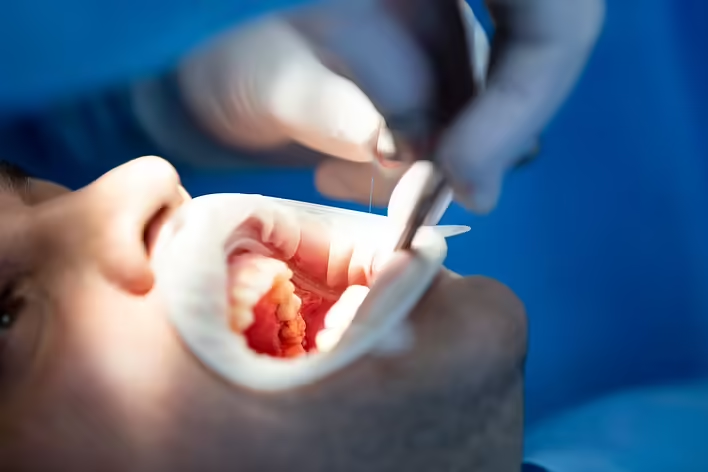
It is usually impossible to eliminate the cause of the smell on your own. Only a doctor can perform an accurate diagnosis and prescribe adequate treatment. The dentist will conduct professional cleaning of the teeth with crowns, removing plaque that may have accumulated around the crown for a long time. Using X-rays, the specialist will determine the presence of caries under the crown, inflammation in the tooth roots, the condition of the bone tissue, and the accuracy of the crown's fit.
If a lack of sealing, caries under the crown, or its damage is found, the old crown must be removed. Caries treatment is performed, and if necessary, the canals are unsealed and subsequently sealed again. Then a new, perfectly fitting structure is made and installed, or the dental crown is re-fixed.
Treatment of gum inflammation is carried out with appropriate therapy, including curettage and medication. Treatment of bruxism and correction of the bite may become an additional necessity if relevant problems are identified.
An unpleasant smell from under a dental crown is not just an aesthetic discomfort but a warning signal indicating the presence of a dental problem. Ignoring this symptom can lead to serious complications, including tooth loss. Timely consultation, a periodontist's advice, and adherence to hygiene recommendations are the keys to solving the problem and maintaining the health of your smile.
This post doesn't have any additions from the author yet.