Table of contentsClick link to navigate to the desired location
This content has been automatically translated from Ukrainian.
The choice of an autonomous power supply system, in particular a diesel generator, is a responsible step that requires deep engineering analysis to ensure reliability and cost-effectiveness of operation. 10 kW rated installations have become widely used as the optimal solution for reserving the power supply of premium private households, small commercial facilities, as well as critical communication and security systems. The technological essence of choosing such an installation is the correct balancing between nominal power, battery life, output voltage quality and operating costs.
10 kW generator - load calculation and power selection
The nominal power of the unit means its ability to continuously generate 10 kilowatts of active electrical energy (P) under given operating conditions and power factor (cos φ). For most three-phase installations, this factor is 0.8, corresponding to a full power (S) of 12.5 kVA. When designing a power supply system, the following critical aspects must be taken into account:
- Active and reactive load components: Consumer load always consists of active (P) and reactive (Q) capacities. Inductive consumers (compressors, pumps, refrigeration units) generate significant reactive power, which requires an appropriate supply of full generator power (S). Underestimation of the reactive component leads to overloading of the alternator.
- Start current analysis: The start of electric motors is accompanied by short-term start currents, which can be several times higher than the nominal operating indicators. The diesel generator ( like this) must have a reserve of peak power to withstand these starting loads without a critical drop in voltage and frequency, which can lead to the shutdown of the AVR (automatic reserve input). As a rule, for starting inductive loads, the power of the generator should be 2-3 times higher than the nominal power of the consumer engine.
- Part-load operation: Long-term operation of a 10 kW generator at very low load (less than 30% of the rated) is undesirable. This can lead to a phenomenon known as "wet stacking", in which unburned fuel and lubricant settle on the cylinder walls and exhaust system, reducing engine efficiency and life.
Technological advantages of diesel units
Compared to its gasoline counterparts, the diesel generator shows significant advantages, which makes it a better choice for backup power with a large annual working hours. First, it is fuel efficiency. Such stations have a higher thermal efficiency due to a higher compression ratio, which ensures lower fuel consumption per unit of energy produced. This directly affects operating costs, especially in case of long-term power outages.
Secondly, it is resource and reliability. Diesel engines, especially those equipped with a liquid cooling system, have a significantly greater motor resource (up to 20,000 hours or more) than gasoline counterparts. This makes the 10 kW generator (elektrostancii-i-generatory/power-kwt-10) a strategic investment for facilities where power failure is unacceptable.
Third is temperature management. Professional diesel generators are almost always equipped with a liquid cooling system. This system ensures stable maintenance of the optimal temperature regime of the internal combustion engine regardless of the duration of operation and external climatic conditions. This allows the unit to be operated in either "Prime" (main) or "Continuous" (continuous) mode, which is not possible for air-cooled generators.
Alternator selection criteria and current quality
The quality of the output electricity generated by a 10 kW diesel generator depends critically on the type and design of the alternator (AC generator). Synchronous alternators provide high quality output voltage, suitable for powering sensitive electronics, computers and complex household equipment. They are able to better cope with inductive loads and high starting currents. Asynchronous alternators are of simpler design, but their output current is less stable and they tolerate high starting currents less well. For powering modern heating systems and computer equipment, preference should be given to synchronous models. Stabilization of the output voltage is provided by the AVR (Automatic Voltage Regulator) system. High-quality AVR maintains the output voltage within ±1−2% of the nominal value, which is a necessary condition for the safe operation of household appliances.
Key technological parameters of the installation:
- Voltage Stabilization Type (AVR): Affects current quality and its suitability for sensitive electronics.
- Noise level (dB): Determines the comfort of operation, especially in residential areas (requires a noise cover).
- Availability of a heating system: For guaranteed start-up of the internal combustion engine at low temperatures (mandatory for diesel).
- Degree of protection (IP): Determines resistance to dust and moisture in external installation.
- Availability of an electronic control unit: For monitoring, diagnostics and automatic work with AVR.
- Fuel tank volume (l): Determines the autonomous operation time without refueling.
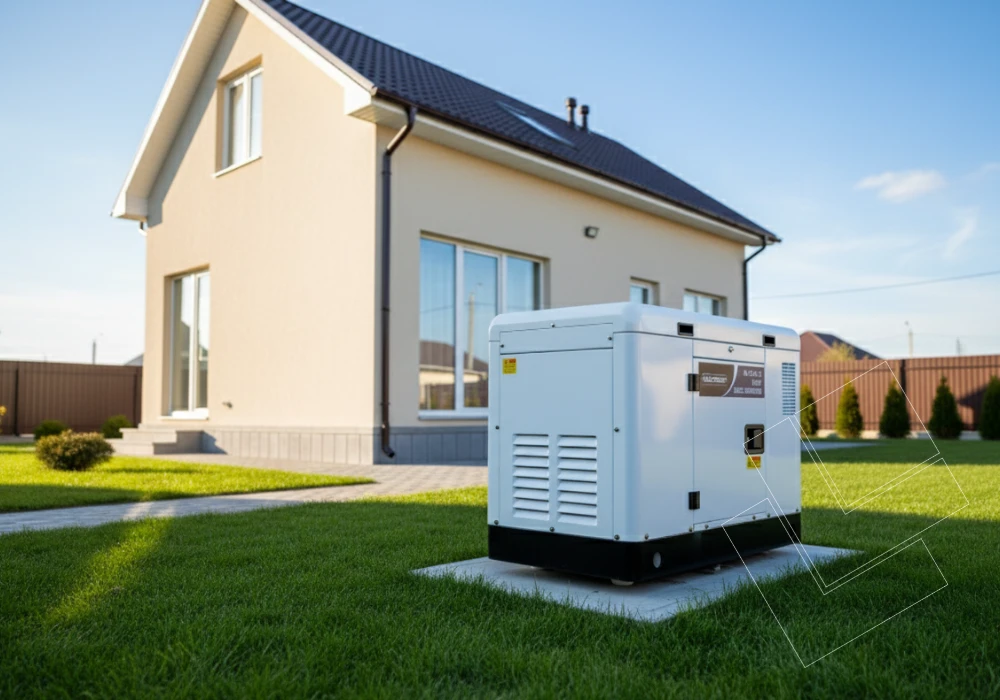
Installation of the installation must be carried out taking into account fire safety standards and ventilation requirements. An equipped exhaust system is required for exhaust gas removal, and sufficient air supply and removal is required for effective cooling of the internal combustion engine. Operational safety also involves protecting the generator from adverse weather conditions with the help of a special all-weather casing or installation in a separate technical room with effective sound insulation, which is mandatory for the unit due to its increased noise level.
Economic feasibility and maintenance
The assessment of the economic feasibility of purchasing a 10 kW diesel generator should include not only the initial cost but also the projected operating costs consisting of fuel, lubricants and periodic maintenance costs. Due to its high fuel efficiency, the device is often more profitable in the long term, especially with a large number of hours of operation. Regular maintenance is a prerequisite for maintaining the warranty and maximum equipment resource. Maintenance includes replacement of lubricant, filters (fuel, air, oil), and inspection and adjustment of valve mechanisms. Compliance with the service regulations based on the number of engine hours worked ensures that the equipment will work reliably throughout the estimated service life, ensuring stable energy independence.
This post doesn't have any additions from the author yet.