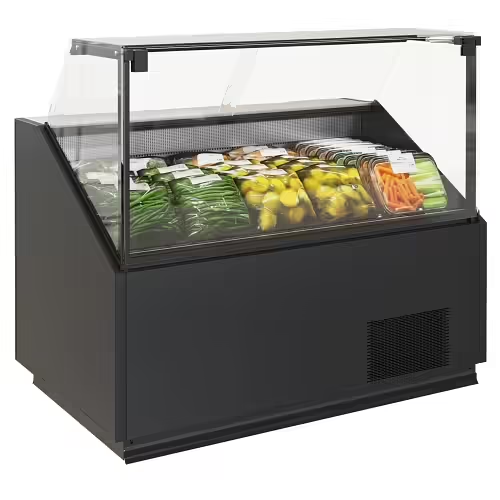
Among the many types of commercial equipment for storing products, refrigeration equipment occupies a special place. It significantly differs from standard refrigerators because refrigeration equipment for stores not only cools products but also provides the opportunity for their demonstration to customers. This is made possible by the thoughtful design of shelves, as well as the presence of glass doors.
A wide selection of such equipment can be found on the website of the company HOLD, which provides comprehensive outfitting services for stores and warehouses. We will discuss the three most popular types of commercial refrigerators.
Types of Refrigeration Equipment for Stores
Today, there are quite a few types of refrigerators for commercial premises, including tables, ice generators, monoblocks, and refrigeration chambers. However, the most popular types are:
Showcases. Used for displaying products to customers. They are equipped with glass doors and can be produced in both horizontal and vertical designs.
Chests. Manufactured in the form of a horizontal cabinet with a rectangular shape. Usually, they have solid metal doors that can vary in the type of opening. There are also many types of chests with glass doors.
Cabinets. Used for freezing and storing products. Typically, such units are installed outside of sales areas and are used for placing meat, fish, beverages, and other products.
Also, among refrigeration equipment for stores, shelves and bar refrigerators are popular.
Advantages of Installing Refrigeration Equipment in Sales Areas
This type of equipment offers significant advantages for both store owners and customers. In the first case, it is important to note the high productivity, increased continuous operation resource, durability, and the ability to maintain optimal temperatures for product storage. As for customers, they can not only view products through glass doors but also have access to them.
A proper installation of such equipment will significantly save useful space in the store, ensuring the preservation of taste qualities and the commercial appearance of products.