This content has been automatically translated from Ukrainian.
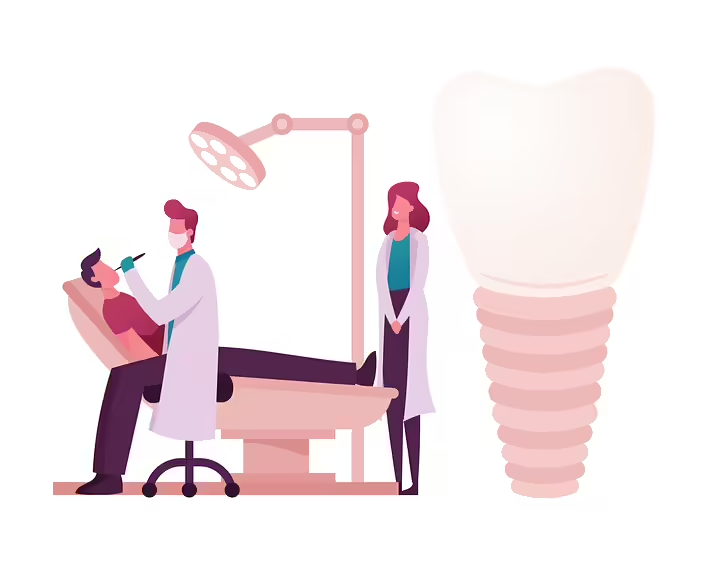
Everyone has probably heard about dental implants. This is a real chance for those whom dentists have thrown up their hands.
Currently, dental clinics offer a huge range of implants: from premium to more budget-friendly alternatives. What are the best dental implants and their prices in Lviv? We tried to find the answer to this question.
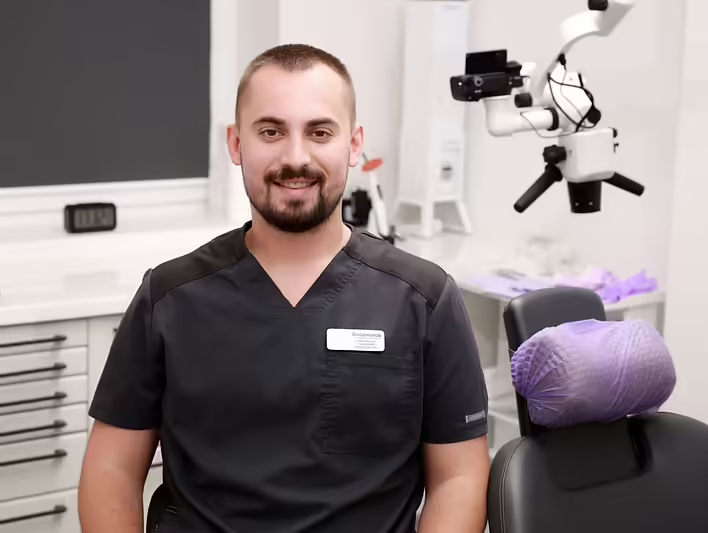
When planning the installation of implants, patients face the dilemma: should they choose expensive or cheap implants?
Implants can be conditionally divided into two groups:
- implants that have a history and have stood the test of time (Nobel, Straumann, etc.).
- no-name implants that have appeared recently and have not yet proven their reliability.
Which implants to choose?
Professional dentists who deal with various types of implants have concluded that it is better to choose certified systems that have a simple orthopedic system and a good operational history.
Before choosing implants, it is advisable to consult with various specialists and select proven systems.
4 ways to restore a lost tooth
Tooth loss is not only an aesthetic problem but also a threat to oral health. If the defect is not closed, neighboring teeth will begin to shift towards it, which can lead to an improper bite, chewing difficulties, and joint problems. Today we will consider four methods of restoring a lost tooth, their advantages, and disadvantages.
1. Implantation
Advantages:
- No need to grind neighboring teeth.
- Reliability and durability.
- Preserves jawbone from atrophy.
Disadvantages:
- Cost is higher than some other methods.
- The process takes several months.
- Good oral hygiene and health are necessary for the implant to integrate.
2. Bridge prosthesis
Advantages:
- Restoration is faster than implantation.
- Strong construction that holds well.
Disadvantages:
- Need to grind neighboring teeth.
- Over time, it may lead to their destruction.
- Does not prevent bone atrophy at the site of the lost tooth.
3. Adhesive bridge
Advantages:
- The procedure is quick, usually done in one visit.
- Does not require significant grinding of neighboring teeth.
Disadvantages:
- Less durable than a classic bridge prosthesis.
- Requires careful maintenance and may need replacement after a few years.
4. Removable prosthesis (“Butterfly”)
Advantages:
- Affordable price.
- Does not require intervention in neighboring teeth.
Disadvantages:
- Uncomfortable to use.
- Over time, it may press on the gums and cause their atrophy.
- Not a permanent solution, requires regular replacement.
If possible, it is better to choose implantation as the most reliable and durable method. However, in case of a limited budget, alternatives such as a bridge or adhesive prosthesis can be considered. It is important to consult with a dentist to choose the optimal option for you.
Features of anterior tooth implantation
Implantation of anterior teeth is a particularly responsible procedure, as it affects not only functionality but also the aesthetics of the smile. In this article, we will discuss the main aspects and features of this process.
1. Differences in implantation in the frontal zone
Anterior teeth play a key role in the aesthetics of the smile. When implanting them, it is important to consider the following factors:
- Bone tissue – in this area, the bone quickly atrophies after tooth loss, so bone grafting is often needed.
- Gum aesthetics – without proper modeling of the gums, an unnatural appearance of the implant can result.
- Pink and white zones of the smile – it is necessary to ensure a harmonious transition between the implant and natural teeth.
2. One-stage and two-stage implantation
- One-stage implantation is performed immediately after tooth extraction, allowing to preserve the contour of the gums and minimize bone tissue loss.
- Two-stage implantation is used when the tooth has been absent for a long time, and additional bone augmentation is needed.
3. Choice of implants and crowns
For anterior teeth, implants with zirconium abutments are often used, as they do not create a dark shade under the gums. It is also important to choose the crown color correctly, considering possible future teeth whitening.
4. Care for implants
- Regular professional cleaning at the dentist (twice a year).
- Use of an irrigator to clean interdental spaces.
- Cautious use of the implanted tooth in the first months.
Implantation of anterior teeth is a complex but effective method of restoring lost teeth. It requires careful planning and adherence to all the doctor's recommendations to achieve the best result.
Like it?React
🧵
This post doesn't have any additions from the author yet.