This content has been automatically translated from Ukrainian.
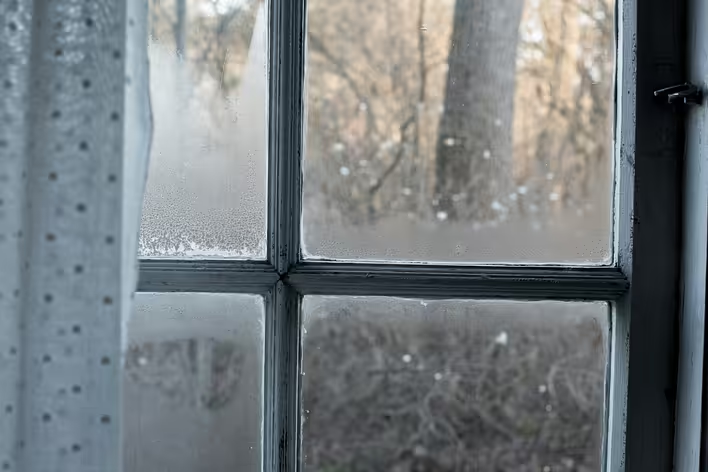
Foggy windows do not always mean that they were installed incorrectly or that it's time to replace the glazing unit. Condensation can occur due to high humidity in the room, insufficient ventilation, low glass temperature, or damage to the glazing unit itself. Much about the cause can be inferred from where exactly the moisture has formed: on the room side, from the street, between the panes, along the edges of the glass, or on the reveals.
However, the location of the droplets only provides a preliminary hint, not an infallible diagnosis. Identical traces can sometimes arise from different causes, so it is necessary to consider the weather, room temperature, humidity levels, and the time of water appearance.
Where water comes from on windows
There is always water vapor in the air. At higher temperatures, the possible content of water vapor can be greater until saturation is reached. When the air near a cold surface cools to the dew point, some of the vapor condenses into droplets.
That is why in winter, windows often fog up first: the inner surface of the glass is usually colder than the air and most objects in the room. Condensation forms when the glass temperature drops below the dew point. Even a high-quality energy-efficient glazing unit can fog up during severe frost if the room is too humid.
What the location of condensation means
Condensation on the inner surface of the glass
If droplets can be wiped off from the room side, they formed due to the contact of humid air with cold glass. The cause may be high humidity, low surface temperature, or a combination of both factors.
Humidity is increased by cooking, showering, drying laundry, a large number of plants, and even human breathing. It accumulates especially quickly in a sealed apartment with weak exhaust ventilation. After replacing old leaky windows with new ones, air exchange may decrease if no other air supply is provided in the home.
To check, it is worth using a hygrometer. The U.S. Environmental Protection Agency recommends maintaining relative humidity below 60%, with the optimal range for most rooms being 30–50%. However, this does not mean that 50% will always be safe for windows. During severe frost, the acceptable level may be lower, especially near a single-chamber glazing unit or cold frame.
Water mainly collects at the bottom of the window
The bottom edge of the glazing unit often has the lowest surface temperature and the highest risk of condensation formation. This is influenced by the spacer frame between the panes, the design of the frame, and the movement of air near the window.
The problem is exacerbated by a wide windowsill that obstructs the flow of warm air from the radiator. Similar effects are created by thick curtains, closed blinds, furniture in front of the radiator, or decorative screens. The air between the curtain and the window cools down, and the inner glass receives less heat from the room.
A small strip of moisture at the bottom during severe frost does not necessarily indicate a window malfunction. However, if water regularly drips onto the windowsill, it is worth checking the humidity, ventilation, room temperature, and access of warm air to the glass.
Condensation and ice along the edges of the glazing unit
The edges of the glazing unit are usually colder than its central part. Here is the spacer frame that separates the panes. The metal frame conducts heat well, so a cold zone can form along it. So-called warm spacer frames have lower thermal conductivity and reduce the risk of condensation along the edges.
Moisture only around the perimeter of the glass during frost can be explained by the design of the glazing unit. However, if the edges regularly get wet or freeze at moderate winter temperatures, it is worth checking the humidity level and thermal characteristics of the window.
Frosting of the edge alone does not prove that the glazing unit has lost its seal. The loss of tightness is primarily indicated by moisture inside the chamber, not on the accessible surface of the glass.
Wet frames, joints, and reveals
Moisture on the inner reveals often occurs when their surface is so cold that water vapor from the room condenses on it. The cause may be insufficient insulation, a thermal bridge, cavities around the frame, or a leaky connection of the window to the wall.
However, a wet reveal does not always mean condensation. If a stain appears after rain, increases regardless of the humidity in the room, or has a clear streak of dripping, it is necessary to check the external seams, drip edge, facade, and possible penetration of rainwater. Visually, leaks and condensation can sometimes look very similar, so it is not advisable to hastily determine the cause based solely on the stain.
Condensation more often appears in cold weather in the coldest area and depends on the humidity in the room. Leaks, on the other hand, are usually associated with rain, wet snow, or a certain direction of the wind.
Moisture between the panes
If fogging is located inside a sealed glazing unit and cannot be accessed from either side, this indicates damage to the edge seal. Humid air enters the chamber, and the desiccant embedded in the spacer frame gradually loses its ability to absorb moisture.
This glazing unit may appear cloudy, be covered with droplets, or have a whitish coating. Ventilating the room will not help here. Usually, the glazing unit is replaced while the frame is left if it is in good condition.
This explanation pertains specifically to factory-sealed glazing units. In old wooden windows with two separate frames, the space between the panes is not a sealed chamber. Water can appear there when warm humid air from the room passes through the gaps in the inner frame and cools near the outer glass.
Condensation from the outside
Droplets on the outer surface of a modern glazing unit often appear in the morning after a cool, clear night. The outer pane releases heat to the environment, cools below the dew point, and moisture from the air settles on it—almost like on grass or a car.
This phenomenon is indeed more often observed on energy-efficient glazing units: heat from the room reaches the outer pane less effectively, so it remains colder. However, external condensation itself is not a certificate of window quality. Its appearance is also influenced by outdoor humidity, wind, shading, window orientation, and nighttime cooling.
Usually, external dew disappears after the glass warms up in the sun or air and does not require repair. It can also form in warm, humid weather if the internal surface is significantly cooled by air conditioning.
Why only one window fogs up
One window may fog up more due to the room's location, wind direction, shading, absence of a radiator, or specific usage characteristics of the room. In the bedroom, humidity increases at night due to human breathing, in the kitchen during cooking, and in the bathroom after a shower.
The cause may also be thick curtains, a wide windowsill, disrupted sash adjustment, worn seals, a cold installation seam, or a glazing unit with poorer thermal insulation characteristics.
If under the same conditions one window is noticeably colder than the others, there is a noticeable draft from it, or a certain corner is wet, the structure should be checked separately. However, a small difference between windows facing different sides of the house can be quite natural.
What to do if windows constantly fog up
First, you need to determine on which surface the water is located. Condensation between the panes of a sealed glazing unit indicates its malfunction. Moisture on the reveals requires checking for condensation and leaks. If water appears on the inner surface of several windows, you should start by measuring humidity, checking ventilation, and temperature in the rooms.
Reducing the amount of condensation is aided by a functioning exhaust fan in the bathroom and kitchen, directing steam during cooking, drying laundry in a ventilated room, and allowing warm air to circulate freely near the windows. During a shower or cooking, it is better to close the door to the room so that moisture does not spread throughout the home.
In cold weather, short, intense ventilation is beneficial. The State Energy Efficiency Agency recommends ventilating the room for 5–10 minutes rather than keeping the window constantly ajar: this way, the air is refreshed, but the surfaces do not have time to cool excessively.
Droplets should be wiped away to prevent water from standing on the seals, frames, and windowsills. However, this is only addressing the symptom. The final solution depends on the cause: sometimes it is enough to improve air exchange, while other times it may be necessary to insulate the reveals, repair the external seam, or replace the glazing unit.
Like it?React
🧵
This post doesn't have any additions from the author yet.