In Germany, there is a special tradition that precedes the wedding — Polterabend. It is not just a party, but a symbolic ritual that combines elements of folk beliefs, communal celebration, and a test of the couple's relationship strength.
What is Polterabend?
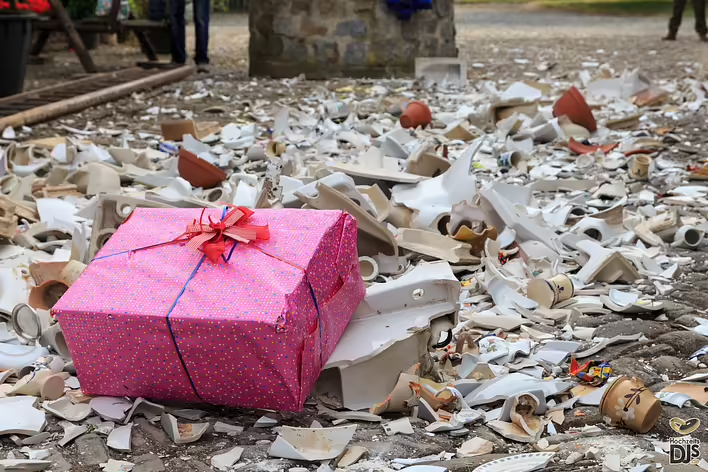
Polterabend (literally from German — “noisy evening”) is a party held the night before the wedding, during which guests break ceramic or porcelain dishes. It is believed that the noise from the breaking drives away evil spirits and brings luck to the couple in their shared life. Glass, mirrors, or crystal dishes should not be broken — they symbolize misfortune, so only clay and porcelain items are chosen.
How does the tradition take place?
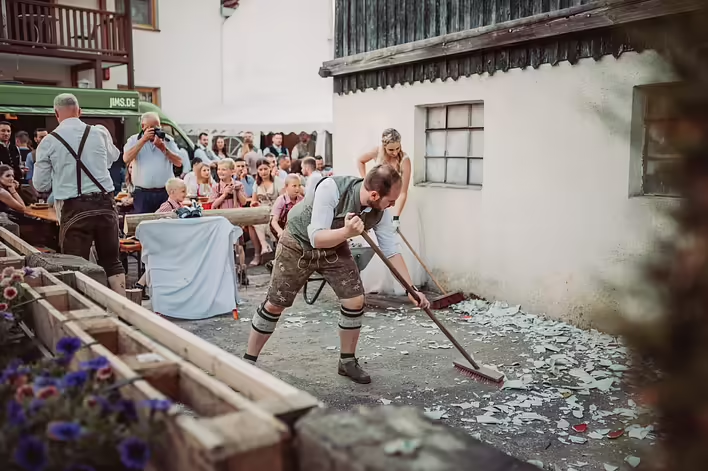
The celebration has no strict rules: there can be many guests, sometimes even an entire village or neighborhood. Friends and relatives bring old dishes, pots, tiles, or even sinks — the main thing is that they are made of ceramics. After the symbolic breaking, the couple cleans up the shards together. This is considered their first joint trial: they demonstrate their readiness to overcome difficulties together.
Origin
The tradition dates back to the Middle Ages. At that time, people believed that noise and clatter warded off evil spirits, and broken dishes symbolized purification from the bad before a new stage of life. Polterabend also aimed to gather the community around the couple: even those who were not invited to the wedding could come to the “noisy evening” and congratulate the couple.
Modern significance
Today, Polterabend remains popular in Germany and Austria. It is often held in the yard or on the street, and the celebration turns into a fun party with music, dancing, and barbecues. Some couples replace this tradition with modern forms — for example, themed evenings or quest parties, but breaking dishes is still considered a classic element.
In Germany, there is a saying: “Scherben bringen Glück” — “shards bring luck.”
The tradition is so ingrained that sometimes even famous politicians or stars hold a Polterabend before their wedding.
The shards that remain after the celebration are not thrown away immediately — sometimes they are kept as a symbolic talisman for good luck.