War is a terrible thing, but history knows paradoxes: many technologies created for destruction have become lifesaving or simply convenient household items in peacetime. What once helped on the front lines now helps prepare breakfast, take photos, or even surf the internet.
Here are some amazing examples of items born in war but remained with us in peace.
Adhesive tape (duct tape): armor for ammunition and plumbers
During World War II, the American company Johnson & Johnson received an order to create waterproof adhesive tape that soldiers could use to quickly seal ammunition boxes. Thus, in 1942, “duct tape” was born — a strong, cloth adhesive tape that could withstand moisture and dirt.
Soldiers quickly found hundreds of other uses for it: repairing weapons, shoes, even airplanes. After the war, the invention “rolled over” into civilian life, becoming a universal repair tool. In the 1950s, the tape began to be used for sealing ventilation ducts, and that’s when it received the familiar name — “duct tape.” Today, duct tape is an integral part of everyday life, even though it was born on the battlefield.
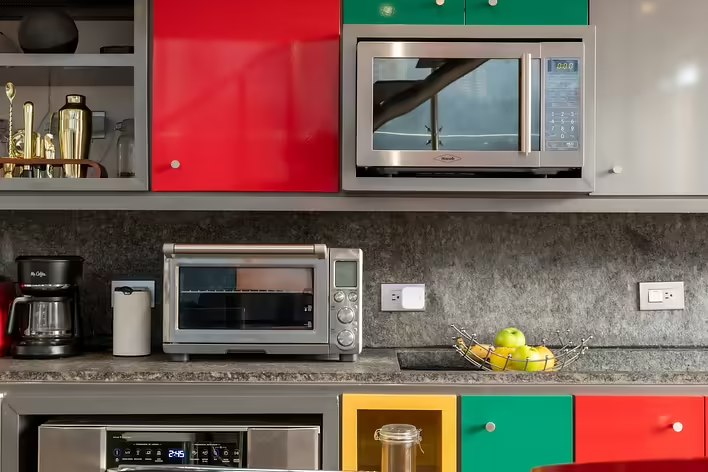
Microwave oven: a byproduct of radar
During World War II, British and American engineers developed magnetrons — devices for generating microwaves needed in radar systems. One day, an engineer at Raytheon, Percy Spencer, noticed that a chocolate bar in his pocket had melted while working near a radar. Thus, he accidentally discovered that microwaves could quickly heat food.
In 1947, the company released the first commercial microwave oven, Radarange. It weighed over 300 kg and cost as much as a car. But over time, the technology became cheaper — and today, microwaves are found in almost every kitchen. Its roots are not in cooking, but in military radar developments.
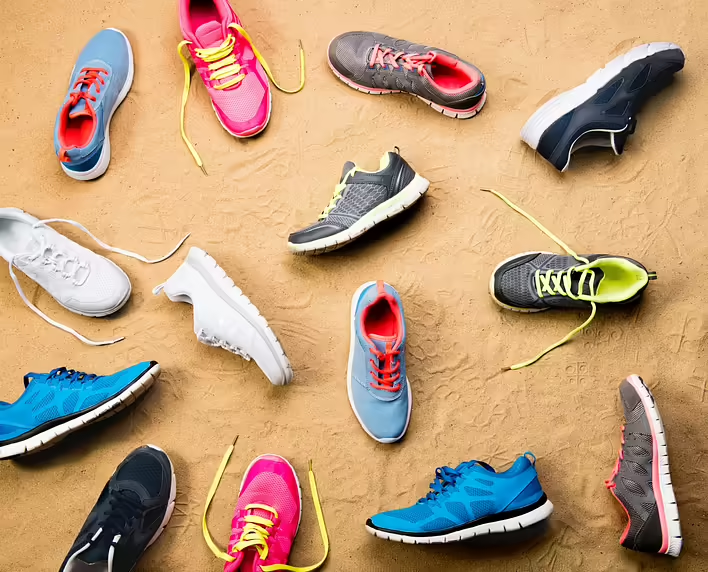
Sneakers and athletic shoes: from army boots to Nike
During World War I, the British army needed lighter footwear for soldiers who had to move quickly through marshy terrain. This led to the creation of the first rubber-soled shoes with treads — the predecessors of modern sneaker soles. In the 1920s and 30s, manufacturers began adapting military materials (canvas, rubber, spikes) for athletic footwear.
After World War II, Nike, Adidas, and Puma actively used military developments — particularly cushioning technology and synthetic materials created for parachutes and uniforms. Thus, every pair of comfortable sneakers carries echoes of army laboratories in its “DNA.”
Instant coffee: the soldiers' drink that became a daily convenience
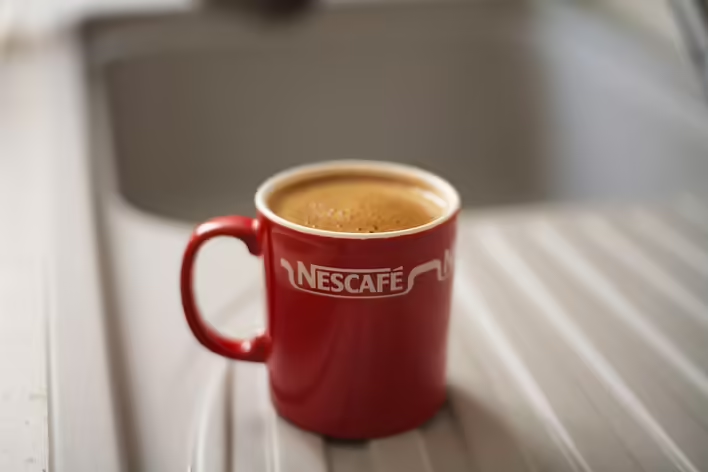
During World War II, American soldiers received powdered instant coffee in their rations — convenient, quick, with no need for brewing. Although the first patent for instant coffee appeared back in 1901, it was the war that made it mainstream.
The company Nestlé launched the production of Nescafé for the U.S. Army, supplying the front lines with thousands of tons of dry beverage. It did not spoil, was lightweight, and provided energy. After the war, soldiers returned home with a new habit — and instant coffee became part of everyday life, from offices to student dormitories.
Internet and GPS: military developments without which we cannot imagine the world
Most modern communication technologies were also born from war. In the 1960s, the U.S. Department of Defense created the ARPANET — a system for sharing information between military computers, even in the event of a nuclear attack. This became the foundation of the Internet.
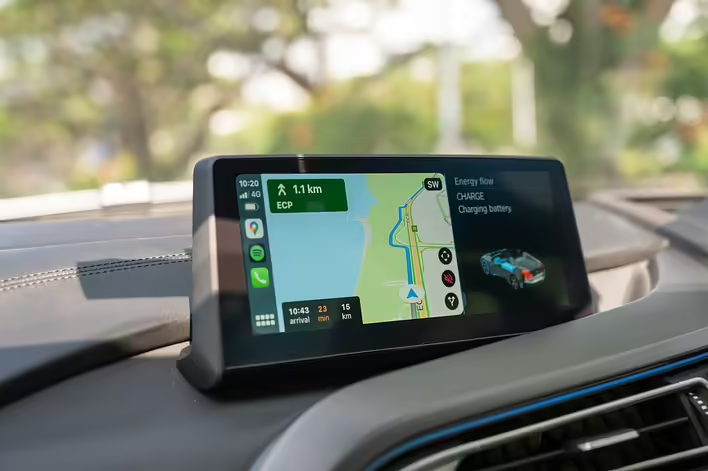
GPS (Global Positioning System) was initially also a purely military project — for determining the location of submarines and missiles. Over time, these technologies were opened for civilian use, and now they help us find a nearby café or not get lost in the mountains.
What was created for combat operations now connects people and saves lives.