Many popular drinks that today seem like symbols of pleasure and carefree living actually originated under very different circumstances. They were created not for parties or billboard advertising, but as medical remedies, therapeutic tinctures, or tonics for fatigue. But history had other plans: from pharmacies, they made their way into bars, from apothecary bottles — into iconic logos.
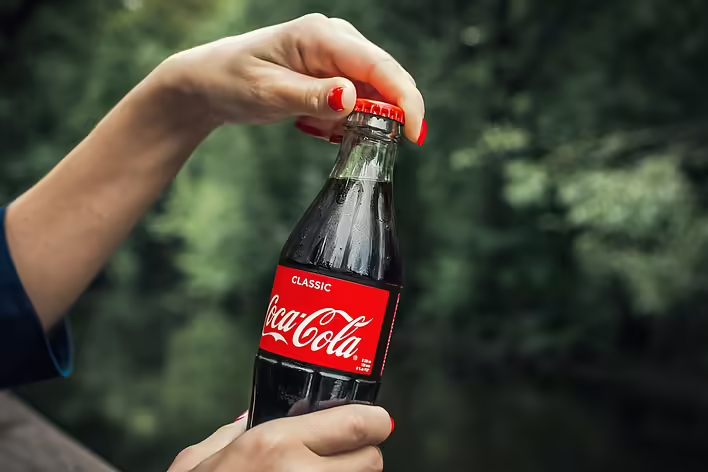
Coca-Cola: a tonic for morphine addiction that conquered the world
In 1886, American pharmacist John Stith Pemberton from Atlanta created a drink that was supposed to help him overcome his morphine addiction. Pemberton was a Civil War veteran and after being wounded, he was treated with opiates. In search of a safer alternative, he developed “French Wine Coca” (Pemberton’s French Wine Coca) — a mix of wine, coca leaf extract, and kola nuts that were meant to invigorate and improve well-being.
When “Prohibition” was introduced in Atlanta, Pemberton changed the formula, removing the alcohol — and Coca-Cola was born. A sugar syrup with added coca (in microdoses) and kola nuts was sold in pharmacies as a “brain tonic” and a remedy for nervous exhaustion.
Eventually, the company replaced the narcotic components with safer ones, and the drink became an embodiment of the American dream, marketing innovations, and globalization. The irony is that a product created as a treatment for addiction itself spawned another — cultural, sweet, and mass.
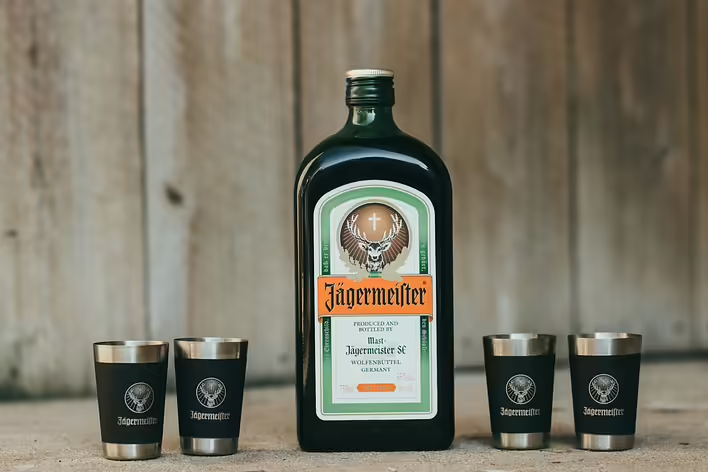
Jägermeister: the hunter's elixir that became a party symbol
The name Jägermeister translates to “master hunter,” referring to a hunting rank in Germany. This liqueur was invented by Kurt Mast in 1934 — a descendant of a family that produced vinegar and herbal tinctures. Initially, the drink had a medicinal purpose: it consisted of 56 ingredients — herbs, flowers, bark, roots, and fruits — and was used to aid digestion, treat coughs, and colds.
Kurt's father suffered from stomach pains, so he experimented with recipes, seeking the perfect balance of bitterness and sweetness. The resulting liqueur was so rich that it began to be recommended as a “bitter aperitif for health.” The emblem with a deer and a shining cross references the legend of Saint Hubert, the patron saint of hunters.
Only in the 20th century did Jägermeister become a youth symbol: first in Germany, and then in the USA, where the brand aggressively promoted itself through rock festivals and nightclubs. Thus, a medicinal tincture transformed into one of the world's most popular shots.
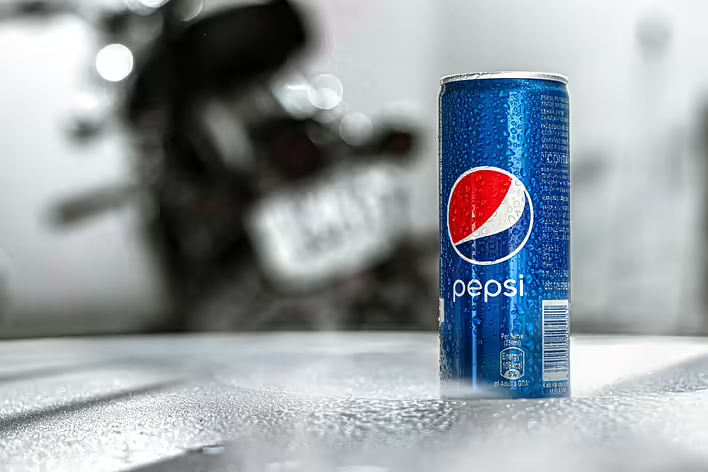
Pepsi: a stomach tonic that challenged Coca-Cola
The story of Pepsi began in 1893 in North Carolina. Pharmacist Caleb Bradham experimented with tonics that were meant to improve digestion and relieve fatigue. His drink called Brad’s Drink consisted of water, sugar, vanilla, kola nut oil, lemon juice, and a few secret ingredients.
Five years later, Bradham renamed the drink to Pepsi-Cola, combining the words dyspepsia (indigestion) and “cola.” He positioned it as a remedy “for health, energy, and digestion” — a kind of pharmacy elixir that could be consumed daily.
However, the Great Depression devastated Bradham's business: he went bankrupt due to fluctuations in sugar prices. The brand was bought by other entrepreneurs, and Pepsi gradually transformed into a modern soda — a symbol of youth, drive, and competition with Coca-Cola. But its medicinal roots remained in the very name.
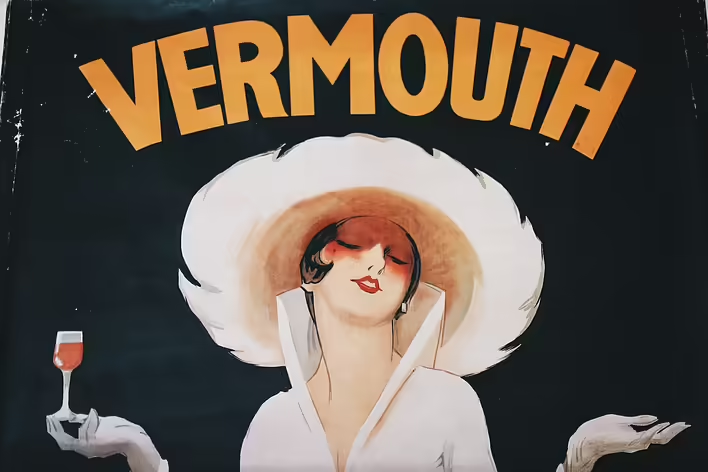
Vermouth: aromatic wine that healed more than it pleased
The word “vermouth” comes from the German Wermut — “wormwood.” Even the ancient Greeks and Romans infused wine with herbs, considering it medicinal. But modern vermouth appeared in 1786 in Turin when Italian winemaker Antonio Benedetto Carpano created a blend of white wine, alcohol, sugar, and over 30 herbs.
Carpano claimed that the drink “improves appetite, refreshes blood, and calms nerves.” Initially, it was sold in pharmacies and used as a remedy for colds and weakness. The Turin aristocracy quickly appreciated the aroma and taste of the new wine — thus, the medicinal drink became a fashionable aperitif served before lunch.
Today, vermouth is the base of classic cocktails like Martini, Negroni, or Manhattan, but it began its journey as a medicinal tonic meant to rejuvenate body and spirit.
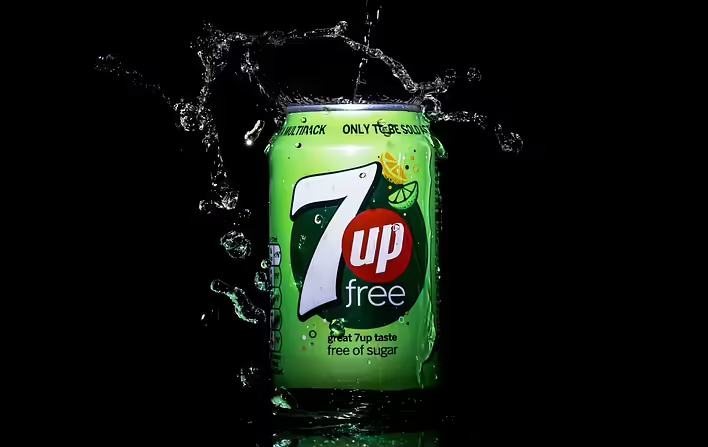
7Up: lemonade with lithium for depression
One of the most unexpected cases is 7Up. It was invented in 1929 by Charles Leiper Grigg, naming it Bib-Label Lithiated Lemon-Lime Soda. The drink contained lithium citrate — a compound that at the time was used to treat depression, nervous disorders, and even manic states. Grigg marketed it as a remedy that “lifts mood and calms nerves.”
Seven years later, the name was shortened to 7Up, although the origin of the number still sparks debate (one version is 7 ingredients and “lifting” mood). Lithium remained in the composition until 1948 when medical research deemed it dangerous in food products.
Despite this, 7Up survived its “pharmacy” days and became a symbol of pure, “clear” soda — in contrast to colorful competitors. Its history serves as a reminder that the line between medicine and beverage was once remarkably thin.