This content has been automatically translated from Ukrainian.
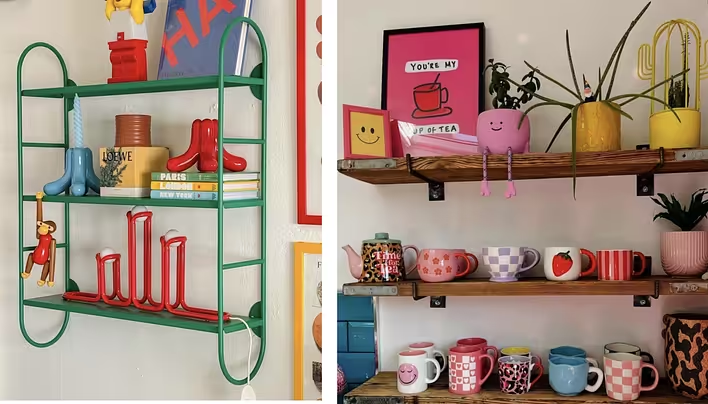
Endowment effect is a term from behavioral economics and psychology that describes our tendency to value things higher simply because we own them. Even if objectively these items are no better than similar ones, the mere fact of ownership makes them seem more valuable in our eyes.
The essence of the endowment effect is that a person is willing to sell their item for significantly more than they would pay for the same item if they did not own it.
In other words, “mine” automatically becomes “better” — even without logical grounds.
Origin of the term
The concept of endowment effect was actively researched in the 1970s and 80s by psychologist and Nobel laureate Daniel Kahneman, as well as economists Richard Thaler and Jack Knetsch. Their experiments showed that the classical economic model “rational man” does not work as well as it seemed.
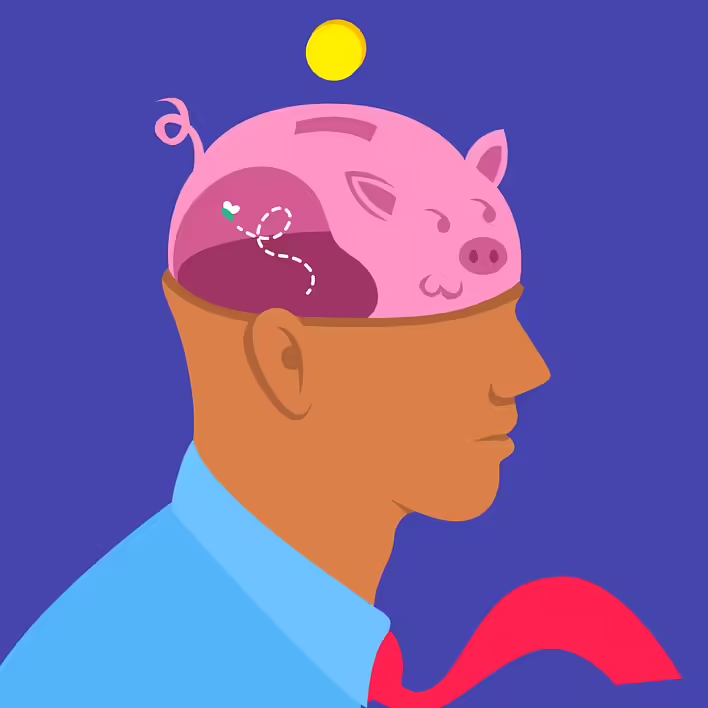
The endowment effect became one of the key pieces of evidence that our economic decisions are often irrational.
How it works: classic experiment
Participants were randomly divided into two groups:
- the first group was given ordinary ceramic mugs and clearly told that this is now their property
- the second group did not receive any mugs.
After that:
- the mug owners were asked to name the minimum price at which they were willing to sell their mug
- participants without mugs were asked the maximum price they were willing to pay to buy one.
Result
- mug owners wanted on average 2–3 times more money,
- than those who did not have mugs were willing to pay.
At the same time, the item was the same; participants did not choose the mug themselves; the difference arose only from the fact of ownership.
People evaluate the loss of something “theirs” much more painfully than the possibility of gaining something. This is the endowment effect, closely related to loss aversion.
Why the endowment effect occurs
There are several psychological reasons:
- Loss aversion
People experience loss more intensely than gain. Giving away their item is psychologically more painful than not receiving a new one.
- Emotional attachment
Even neutral items quickly gain emotional value: memories, efforts, time.
- Self-identification
Things become part of our “self”: my home, my project, my text — thus, they seem more important to us.
Examples from everyday life
- Sale of used items: the owner considers the price adequate, while the buyer considers it inflated.
- Real estate: people often overestimate their own apartments or houses.
- Work and creativity: authors tend to overvalue their own ideas or products.
- Investments: investors hold onto assets for too long because they “already own them.”
Endowment effect in business and marketing
Companies actively use this effect:
- free trial periods;
- test drives;
- “try before you buy”;
- the possibility of returning the product.
As soon as a person begins to feel an item as “theirs,” it becomes harder to part with it.
The endowment effect shows that the value of things in our minds does not equal their market price. It affects purchases, sales, investments, and even self-esteem regarding one's work. Awareness of this effect helps make more balanced decisions — both in finances and in life.
Like it?React
🧵
This post doesn't have any additions from the author yet.