This content has been automatically translated from Ukrainian.
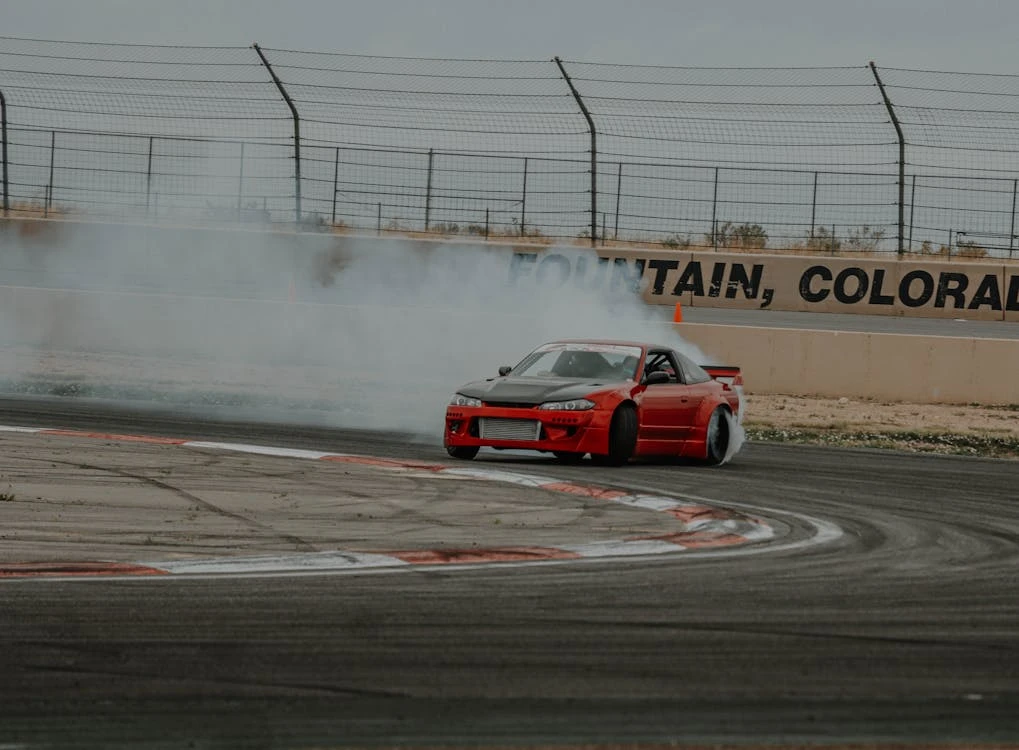
There is a movement at the wheel that at first glance seems like a mistake: before entering a turn, the driver turns the steering wheel in the opposite direction. Not into the turn, but away from it. This is what the Scandinavian flick looks like - a technique from the rally tracks of Scandinavia, where a quick and precise entry into a turn on a slippery surface determined everything.
Among those who want not just to drive but to truly feel the car, it has long become a benchmark.
How weight transfer works and why to provoke it
The physics is simple but not obvious. A sharp deviation in one direction shifts the mass of the car to the opposite suspension, loading the rear wheels. If at that moment you sharply turn in the desired direction, the rear axle breaks loose and begins to overtake the front. Controlled oversteer: the car turns to the apex faster and sharper than normal steering allows. The driver does not wait for the turn; he initiates it through impulse.
To practice this technique in an environment with room for error, they offer counter-driving courses https://chayka-school.com.ua/courses/about-extreme-driving/, where mistakes can not only be made but also analyzed.
Why it’s more complicated than it seems
The flick relies on three actions simultaneously: deviation from the turn, a sharp opposite movement of the steering wheel, and precise gas modulation at the moment when the rear axle begins to shift. If you are late - instead of entering the turn, you get a chaotic skid. If you lift off the gas at the wrong time, the car goes straight. If you add gas too early, the rear axle skids further than planned.
You won’t feel this point on a regular road, as there is no repetition, and there is no safe mistake. The only thing that remains without training is guesses about where exactly it is located. In a real emergency situation, these guesses are worthless.
What it gives beyond the track
The flick is not an attraction. It is a practical understanding of how the mass of the car shifts during sharp maneuvers and how to control this movement intentionally. A driver who has gone through this experience feels the car differently everywhere - in a skid on wet surfaces, during a sharp avoidance, when coming out of a skid. He no longer reacts; he acts proactively.
The difference between reactive and proactive driving is the ability to anticipate the behavior of the center of gravity before it becomes a problem. This is not about intuition or talent. It is about a specific skill that is developed through repetition under controlled load conditions.
Where the line is drawn between technique and loss of control
Controlled drift and chaotic drift are the same physical phenomenon. The difference is who initiated it and whether there is a plan for the exit. A closed track provides exactly this: several dozen repetitions, where each time you can enter a little more precisely and understand where the line is drawn.
For a driver who is curious about what the car is capable of and what he himself is capable of - this is not just training. It is a test that most never undergo because they simply do not seek a place where it can be done safely.
Like it?React
🧵
This post doesn't have any additions from the author yet.