This content has been automatically translated from Ukrainian.
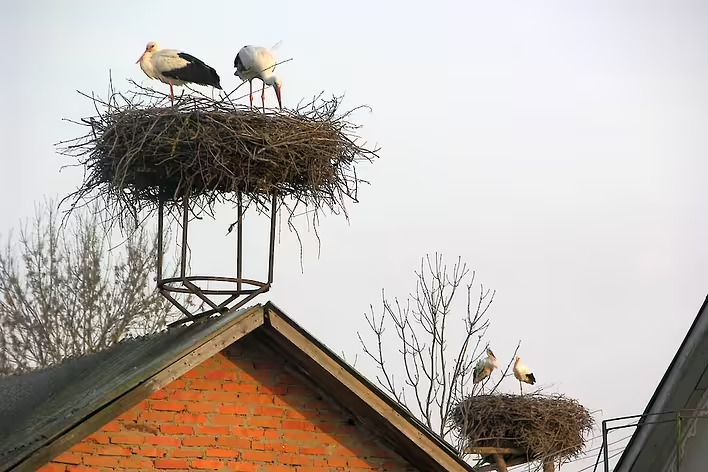
The roof of the house serves not only a practical protective function but also historically carries deep symbolism. In Ukrainian culture, the roof often becomes a place where folk beliefs intersect with modern engineering - a vivid example of this is the stork's nest.
Aquaizol, where you can buy euro-ruberoid with a guarantee, offers to explore how to combine folk signs with construction realities, as well as compare popular roofing materials.
What the stork's nest on the roof symbolizes: signs
In Ukraine, the white stork is a sacred bird. It has long been believed that storks nest only near the homes of good, sincere people, where peace and harmony prevail.
Folk signs and symbolism:
A. A talisman against misfortune. According to beliefs, a house where a stork has built a nest will never be struck by lightning, and fires will avoid it.
B. Family happiness. The appearance of a nest promises an addition to the family, prosperity, and healing from illnesses.
C. A bad omen. If storks suddenly leave an inhabited nest without visible reasons or drop their eggs, it is considered a harbinger of misfortune or prolonged drought.
Real impact on roofing
Despite all the aesthetics and spiritual value, such proximity creates serious technical challenges for the roof structure. Quality bitumen shingles in Kyiv to buy can be found at Aquaizol.
- Colossal weight: A new nest weighs about 50-70 kg. However, storks add to it every year, and over a few years, the weight of the structure made of branches, clay, and dung can reach from 300 to 700 kg. This creates a huge point load on the truss system.
- Moisture retention. The large dense mass does not dry out after rains. The roofing material under the nest is constantly damp, which provokes wood rot or metal corrosion.
- Aggressive environment. Bird droppings contain a high concentration of uric acid and phosphates, which quickly destroy protective polymer coatings on metal and accelerate the aging of bitumen.
The best compromise to solve the problem is to carefully move it in the fall (when the birds have flown away) to a specially welded metal platform secured on a separate post near the house or to a sturdy tree.
Like it?React
🧵
This post doesn't have any additions from the author yet.