This content has been automatically translated from Ukrainian.
The Ukrainian language becomes a clear and even interesting subject for some children, while for others it is a constant source of mistakes, tension, and uncertainty. Parents often explain this by the child's "aptitude" for the humanities or their inattentiveness. In reality, the reason is not always in abilities. Often, the decisive factor is how the child learns the language.
When a student simply memorizes rules but does not understand how they work in sentences, the knowledge quickly fades away. That is why parents are increasingly paying attention to online Ukrainian language courses, where learning can be based not only on rules from textbooks but also on practice, clear explanations, and gradual reinforcement of topics.
Why rote learning does not help write correctly
Mechanical memorization of rules may yield short-term results before a test, but rarely forms true literacy. A child may know definitions but get lost when they need to apply them in dictation, retelling, or their own text. In such a situation, the rule exists separately, and living language exists separately.
The Ukrainian language requires not only memory but also an understanding of logic. The student must see why a word is written the way it is, how a sentence is constructed, where a mistake occurs, and how to correct it. If the explanation is presented dryly or too complicated, the child begins to perceive the subject as a set of exceptions that are impossible to remember.
Practice and reading develop language sense
Children who find Ukrainian easier often have more contact with the language outside of lessons. They read, hear correct speech, write their own texts more often, ask questions, and are not afraid of making mistakes. All of this helps to develop a sense of language—the ability to notice what sounds natural and what does not.
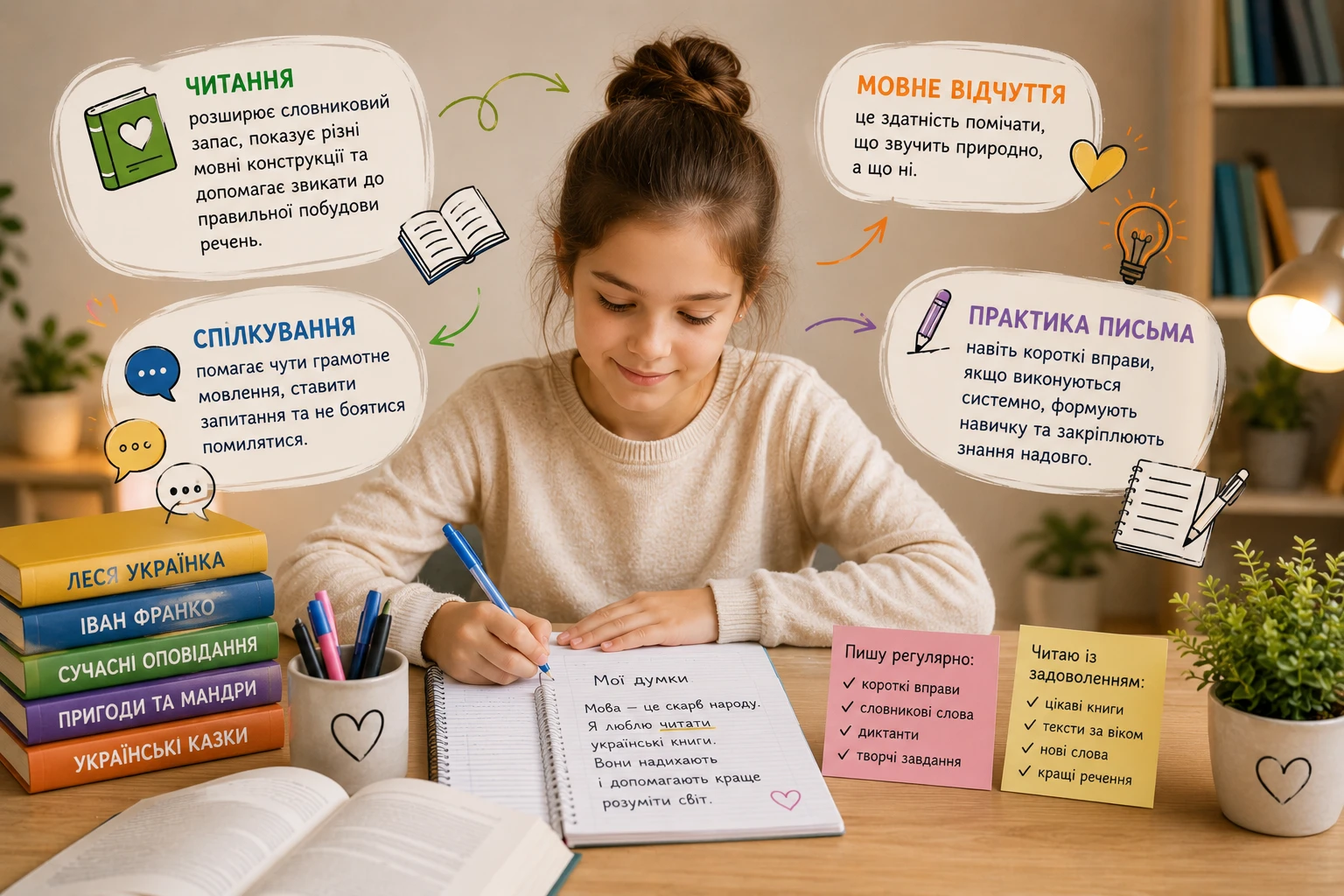
No less important is regular writing practice. Even short exercises, if done systematically, provide more benefit than rare intensive repetition before a test. A child learns the material better when they return to it several times in different formats.
Motivation depends on the presentation of the material
Sometimes a child does not want to learn Ukrainian not because the subject is difficult, but because they have already gotten used to considering themselves "illiterate." Constant mistakes, remarks, and comparisons with others lower their confidence. As a result, the student avoids tasks, does not ask questions, and loses interest even before they have truly understood the topic.
Proper presentation of the material helps change this attitude. When complex topics are explained sequentially and without unnecessary terminology, it becomes easier for the child to engage in learning. They begin to see that language can be not only "passed" but also used: to write clear texts, express thoughts better, and respond more confidently in lessons.
The Ukrainian language without rote learning is possible when education becomes practical, regular, and understandable. Some children find it easier not because they were born literate, but because they had more quality practice, reading, support, and explanations that correspond to their level.
Like it?React
🧵
This post doesn't have any additions from the author yet.