Ford is not just a name; it is a symbol of industrial breakthrough, mass production, and the accessibility of cars for the general public. Founded in the early 20th century, the company changed the course of history by making the automobile not a luxury item but a part of everyday life. Its influence extended not only to technology but also to culture, social change, and the global economy.
Origins: Henry Ford and the Model that Changed the World
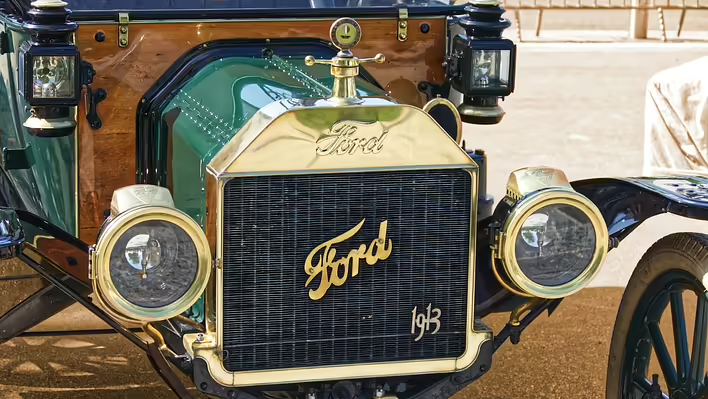
In 1903, Henry Ford along with a group of investors founded Ford Motor Company. However, the real breakthrough came in 1908 with the launch of the Ford Model T — an affordable, reliable, and easy-to-maintain car. This vehicle became so popular that by 1927, over 15 million units had been sold.
Henry Ford also revolutionized manufacturing by introducing assembly line production in 1913, which allowed for a reduction in the cost of the car and made it accessible to the average American. This marked the beginning of mass mobility.
Outstanding Figures
Henry Ford — an innovator who not only created an automotive company but also changed the philosophy of work and industrial production. He introduced the eight-hour workday and doubled wages, setting new social standards.
Lee Iacocca — president of Ford in the 1970s, known for his role in creating the Ford Mustang and later rescuing Chrysler.
Bill Ford Jr. — great-grandson of Henry Ford, a modern executive chairman leading the company towards electrification and sustainability.
Iconic Cars
Over its more than 120 years of existence, Ford has released numerous legendary models:
Ford Model T (1908–1927) — the first car to become truly mass-produced.
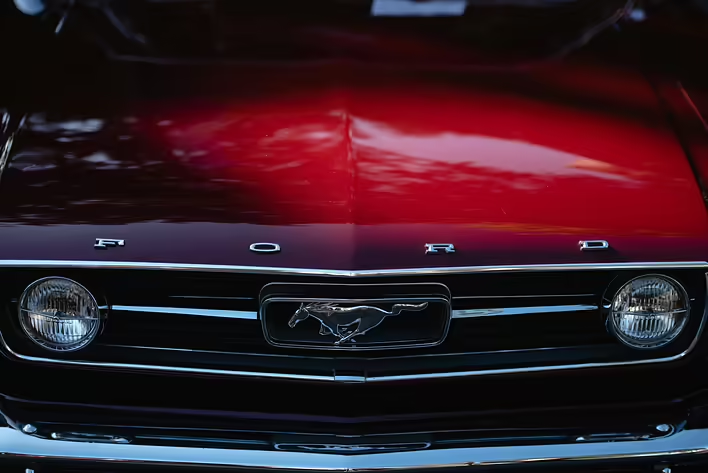
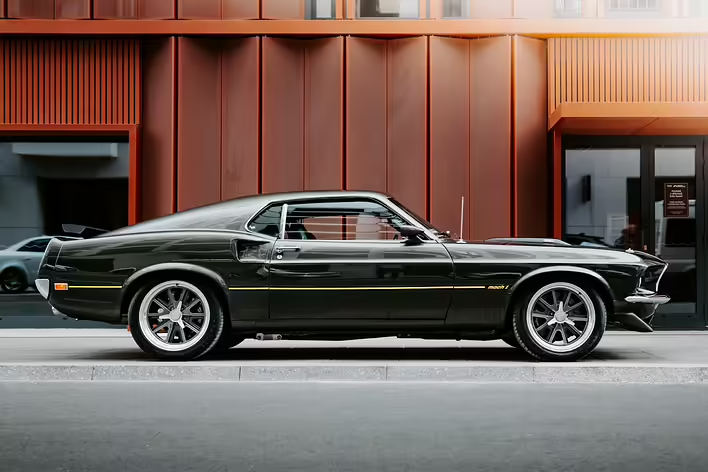
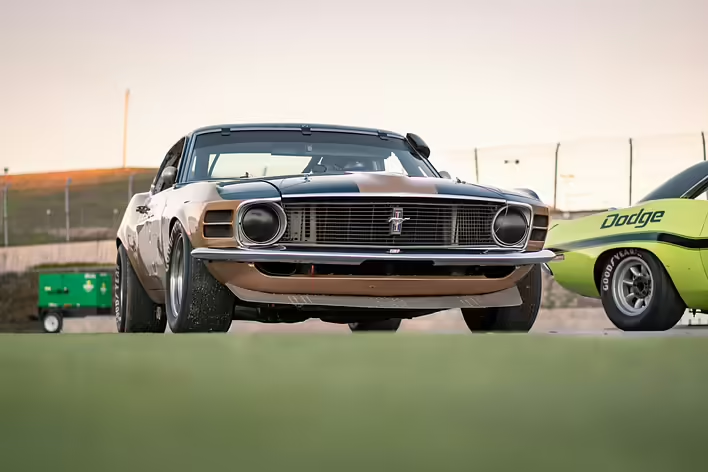
Ford Mustang (since 1964) — a symbol of American freedom and style, a beloved hero of films and tracks.
Ford GT40 (1960s) — a race car built to defeat Ferrari at Le Mans, and successfully did so for four consecutive years (1966–1969).
Ford F-Series (since 1948) — the most popular pickup in the USA, a legend of reliability and power.
Ford Explorer and Bronco — SUVs that symbolize adventure, freedom, and the American spirit.
Ford Mach-E and F-150 Lightning — modern electric vehicles that open a new era for the company.
Ford in Sports
Ford has participated in various racing series — from NASCAR to WRC and Formula 1. The loudest triumph occurred in 1966 when Ford GT40 defeated Ferrari at the Le Mans race, marking the beginning of a legendary rivalry. This victory became not only a technical achievement but also a symbolic one — proof that the American engineering spirit can triumph on the world stage.
Ford in Culture: Movies and Books
The story of Ford has often been the subject of books and films, especially due to the dramatic races with Ferrari:
Movies:
Le Mans '66 / Ford v Ferrari (2019) — an Oscar-winning story of the battle between two giants for victory at Le Mans. The leading roles were played by Matt Damon and Christian Bale.
The 24 Hour War (2016) — a documentary about the epic rivalry between Ford and Ferrari.
The Henry Ford’s Innovation Nation — an educational series about innovations inspired by the legacy of Henry Ford.
Books:
"Go Like Hell" (A.J. Baime) — a gripping account of the creation of the GT40 and the race with Ferrari.
"Iacocca: An Autobiography" — the autobiography of Lee Iacocca, one of Ford's most influential executives.
"Ford: The Men and the Machine" (Robert Lacey) — a detailed history of the Ford family and the company.
Ford is not just a brand. It embodies the dream that anyone can get behind the wheel and drive into a great life. With deep roots in history and a vision for the future, the company continues to evolve — from oil to electricity, from racetracks to city streets. Its legacy is not just cars but also the transformation of the world.