This content has been automatically translated from Ukrainian.
Sustainable development is a concept that involves a harmonious combination of economic growth, environmental preservation, and social justice. In simple terms: it is development that meets the needs of the present generation without compromising the ability of future generations to live well. It is not just about ecology, but about a way of thinking, managing resources, and conducting business.
How did the idea of sustainable development come about?
The idea became known in 1987 thanks to the UN report "Our Common Future" (also known as the Brundtland Report), which provided the first official definition of sustainable development. In 1992, at the Earth Summit in Rio de Janeiro, countries of the world began to develop specific actions in this direction.
The three "pillars" of sustainable development:
- Economic The economy must develop steadily and efficiently, but not at the expense of depleting resources or exploiting people. The idea is to create jobs, invest in education, innovation, and clean technologies.
- Environmental Environmental protection is a key component: reducing CO₂ emissions, transitioning to renewable energy, combating climate change, preserving biodiversity, reducing waste, and cleaning water and air.
- Social This is about justice, equality, and respect for human rights. Sustainable development entails access to quality education, healthcare, equal opportunities for all, reducing poverty, and gender discrimination.
Global Goals for Sustainable Development
In 2015, the UN adopted 17 Sustainable Development Goals that countries are to achieve by 2030. Among them:
- Ending poverty
- Quality education for all
- Clean water and sanitation
- Affordable and clean energy
- Responsible consumption and production
- Climate action
- Peace, justice, and strong institutions
These goals are a roadmap for a world striving for a sustainable, just, and secure future.
Examples of sustainable development in action:
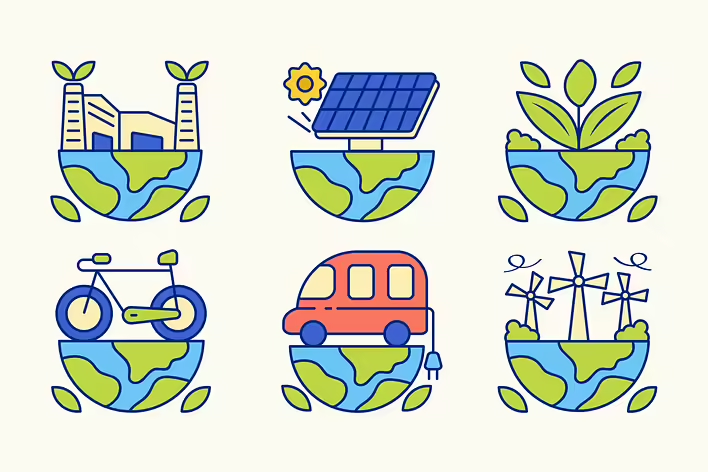
- Solar power plants instead of coal-fired power plants — clean energy without harmful emissions.
- Eco-packaging and waste sorting — reducing pollution on the planet.
- Development of public transport — an alternative to private cars and reducing harmful emissions.
- Fair Trade — supporting producers from developing countries without exploitation.
Why is this important for everyone?
Sustainable development is not just a task for governments or corporations. Every individual can contribute:
- Saving energy and water
- Sorting waste
- Buying responsibly (less is better, ethical brands)
- Supporting local production
- Voting for politicians who care about the future of the planet
Sustainable development is not about giving up progress, but about a smart way forward. It is development with the awareness that we are part of a complex, interconnected system: nature, economy, society. If we want to leave our children a world that has not only technology but also clean air, water, and a decent life — sustainable development must become part of our everyday choices.
Like it?React
🧵
This post doesn't have any additions from the author yet.