This content has been automatically translated from Ukrainian.
Mate (or yerba mate) is not just a drink, but a true cultural phenomenon of South America. It is consumed hot in the cool Andes, cold in the heat of Paraguay, and in Argentina, almost no passerby goes without a thermos of mate on the street. For locals, it is something more than tea or coffee — it is a symbol of unity, hospitality, and tranquility.
From “the herb of the gods” to a national drink
The plant from which mate is made has the scientific name Ilex paraguariensis. It grows in the humid subtropical forests of Argentina, Brazil, and Paraguay. It was there that the Guarani Indians first began to use it, calling the leaves kaa — “herb.” According to their legends, the goddess brought this plant to people as a gift that grants strength, clarity of thought, and endurance.
When Spanish colonizers arrived on the continent, they quickly adopted the local custom. Jesuit missionaries were particularly active in cultivating mate — they began to grow the plant on organized plantations and spread the drink among Europeans. Although some church officials initially considered it “devilish brew” (due to its stimulating effects), over time, mate became a favorite drink not only in the colonies but also in Spain itself.
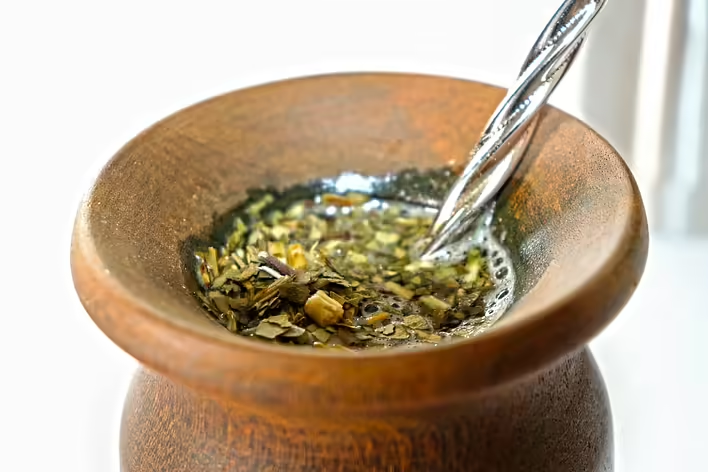
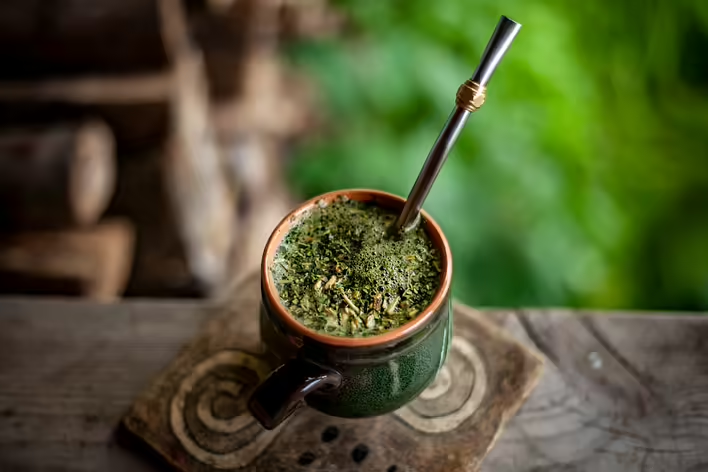
The true ritual of drinking begins with a vessel — calabash, a dried gourd or wooden cup, and bombilla — a metal straw with a filter. The crushed yerba mate leaves are placed in the calabash, hot (but not boiling) water is poured over them, and it is sipped, often passing the calabash around in a circle. This is not just a way to quench thirst or get an energy boost — it is a social ritual, a gesture of trust and friendship.
There is also a summer version — tereré, which is prepared with cold water, juice, or ice. It is popular in Paraguay and the northern regions of Argentina, where the heat does not allow for hot drinks.
Etymology and symbolism
The name “mate” comes from the Quechua language, where mati means “drinking vessel.” And “yerba” is a Spanish word that translates as “herb.” Together, “yerba mate” literally means “herb for the vessel,” but for millions of people in South America, it is rather “herb for the soul.”
- Mate contains caffeine, theobromine, and theophylline — natural stimulants that act more gently than in coffee, so the drink invigorates but does not cause a sharp rise in blood pressure or accelerated heartbeat. - In each country, there is its own brewing style. In Argentina, mate is drunk strong and rich, in Uruguay — almost without sugar, while in Brazil, they love the soft taste of the greenish “chimarrão.” - Mate is often depicted in films when it is necessary to emphasize the atmosphere of a calm morning somewhere in Buenos Aires or Montevideo — it has become a recognizable cultural symbol, like a café in Italy or a tea ceremony in Japan.
Modern popularity
Today, mate is experiencing a true revival. It is exported to dozens of countries, and sales in Europe and the USA are growing every year. More and more people are discovering it as a natural alternative to coffee — a drink that invigorates but does not exhaust. Leading producers — Argentina, Brazil, and Paraguay — supply yerba to over 60 countries around the world. Even in Ukraine, specialized mate shops have appeared in recent years, and in cafés, you can find “mate latte” or “tereré-tonic.”
Mate is more than just tea from South America. It is a piece of culture, a way of communication, and a philosophy of tranquility amid daily hustle. In every sip — the aroma of the forest, the echoes of ancient legends, and the warmth of those who drink with you from the same calabash.
Like it?React
🧵
This post doesn't have any additions from the author yet.