Tits are among the most recognizable and closest birds to humans. They do not hide deep in the thickets, readily settling in parks and gardens, coming to feeders in winter, and often becoming the first birds that people learn to distinguish. However, behind the familiar image of the "yellow tit" lies much more diversity than meets the eye.
There are over 60 species of tits in the world, predominantly found in Eurasia and partially in Africa. In Ukraine, one can observe 7–8 species throughout the year, depending on the classification approach. The thing is that the penduline tit was previously classified among the tit family, but today it is distinguished as a separate family. Formally, it is no longer a tit, although it is still often mentioned alongside them in popular descriptions — so we will mention it too. Additionally, this list usually includes two more "tits," although they do not belong to the tit family. These are the long-tailed tit (family Aegithalidae) and the bearded tit (family Panuridae). They will also be discussed further.
So, we have clarified the formalities: we have figured out who is who, determined that there are seven species of true tits in Ukraine, and now we can finally move on to the birds themselves.
First, some general information. Tits belong to the family Paridae — these are small, agile, very "energetic" birds. They hardly sit still: constantly checking something, peeking under the bark, inspecting branches and leaves. In warm weather, their diet mainly consists of insects, while in winter, they eat seeds, berries, and anything found near human dwellings.
Another important feature is their high intelligence and adaptability. Tits learn quickly, remember food sources, easily adapt to artificial nesting sites, and feel comfortable in urban environments. This is why they have become a symbol of "winter birds," although most of them are active all year round.
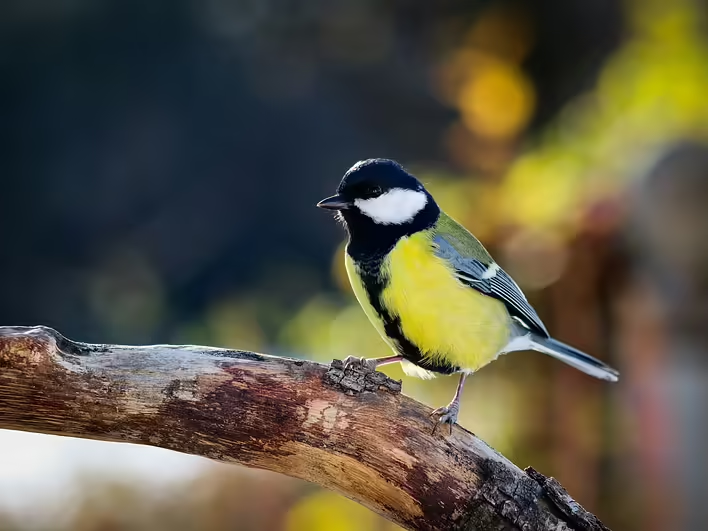
Great tit Parus major
This is the most famous and largest of our tits — the very yellow bird with a black "tie" on its chest. It lives almost everywhere: in forests, parks, yards, and even in city centers.
The great tit is resident, meaning it does not migrate in winter, and it is the one most often seen at feeders. These birds are very bold, clever, and capable of adapting to various conditions, so they feel comfortable around humans.
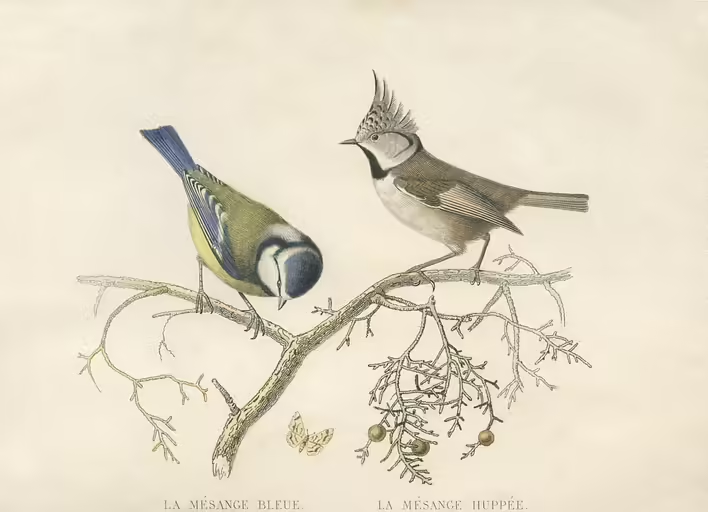
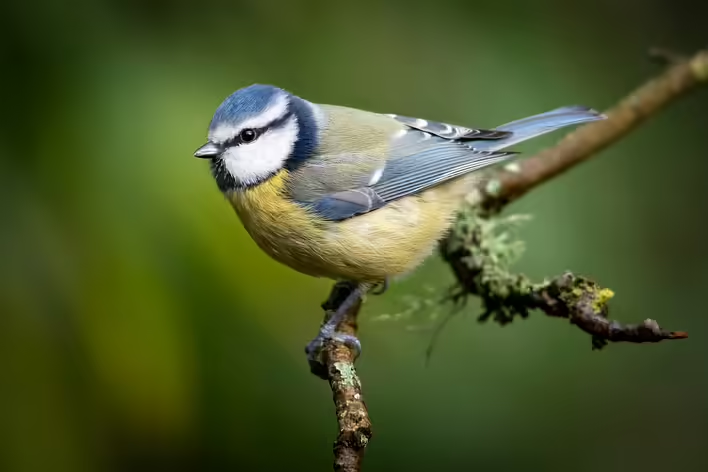
Blue tit Cyanistes caeruleus
A smaller and brighter relative of the great tit. It is easily recognized by its blue "cap" and yellow belly. It looks almost painted — especially against the backdrop of snow or winter branches.
The blue tit is also predominantly resident, although it may wander a bit. It is very agile, nimble, and often hangs upside down, searching for food in the most unexpected places.
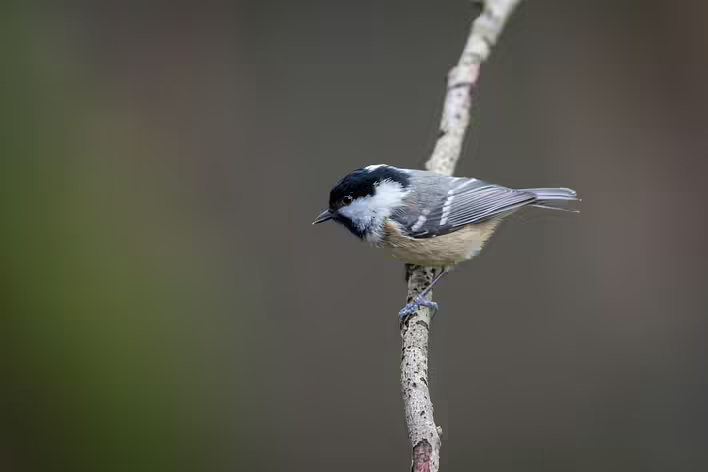
Coal tit Periparus ater
A small dark tit with a characteristic white spot on the nape. It is more often found in coniferous and mixed forests, but can also appear in parks.
The coal tit winters in Ukraine, not migrating far. It is less conspicuous than the great tit, but an attentive observer will quickly learn to recognize it by its contrasting coloration and quieter behavior.
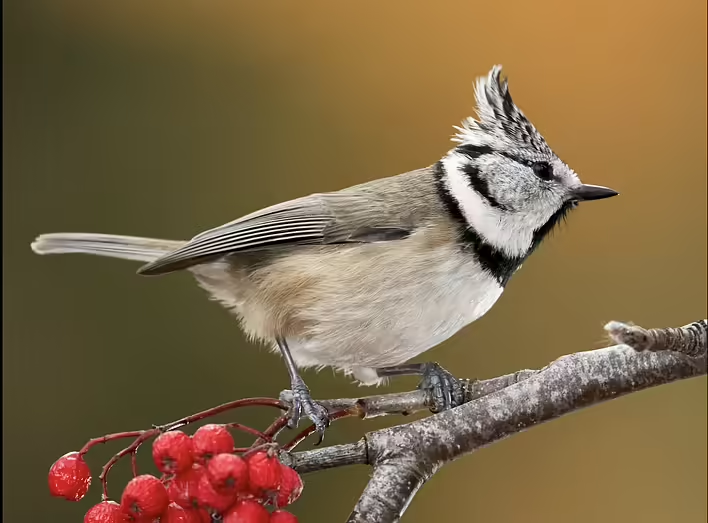
Crested tit Lophophanes cristatus
One of the most charismatic tits — thanks to the small crest on its head. It usually inhabits coniferous forests, where it camouflages well among the branches.
This species is resident but not very numerous. The crested tit looks a bit "fairy-tale-like" and often becomes a real find for those who carefully observe birds in the forest.
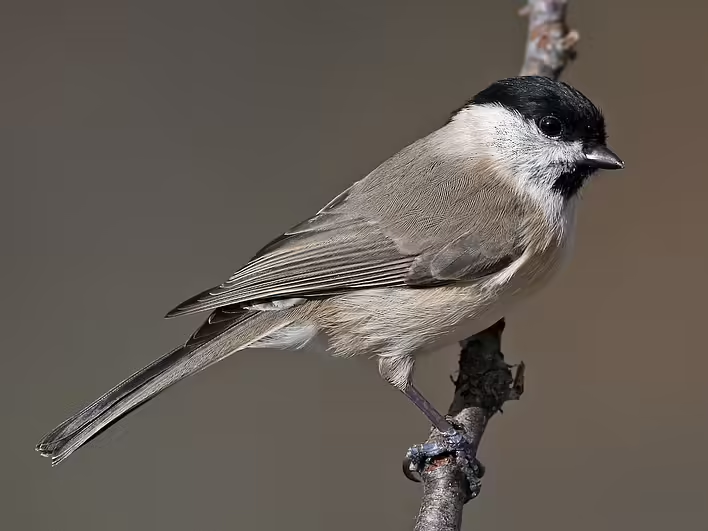
Marsh tit Poecile palustris
An inconspicuous tit at first glance with a dark cap and light cheeks. It lives in forests, thickets, and near wet areas.
The marsh tit is resident and active throughout the year. However, it is associated with one of the biggest "ornithological mysteries" for beginners.
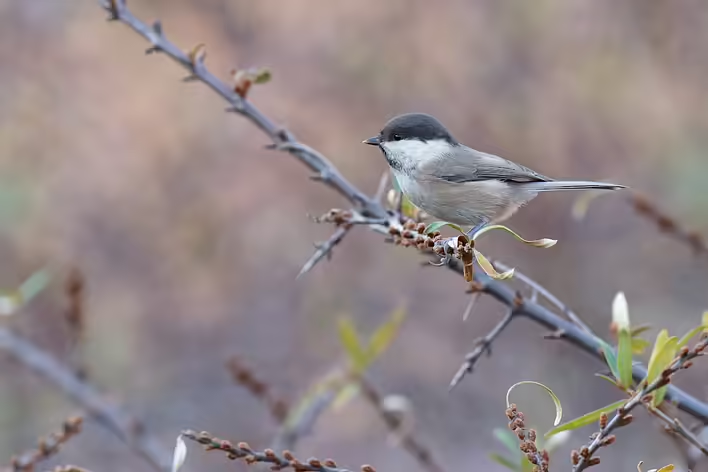
Willow tit Poecile montanus
The closest "twin" of the marsh tit. They are so similar that even experienced observers cannot always confidently distinguish them in the field.
The differences lie in small details: shades of plumage, the shape of the black spot on the throat, voice, and habitat. The pair "marsh — willow" is considered one of the most challenging to recognize among Ukrainian birds.
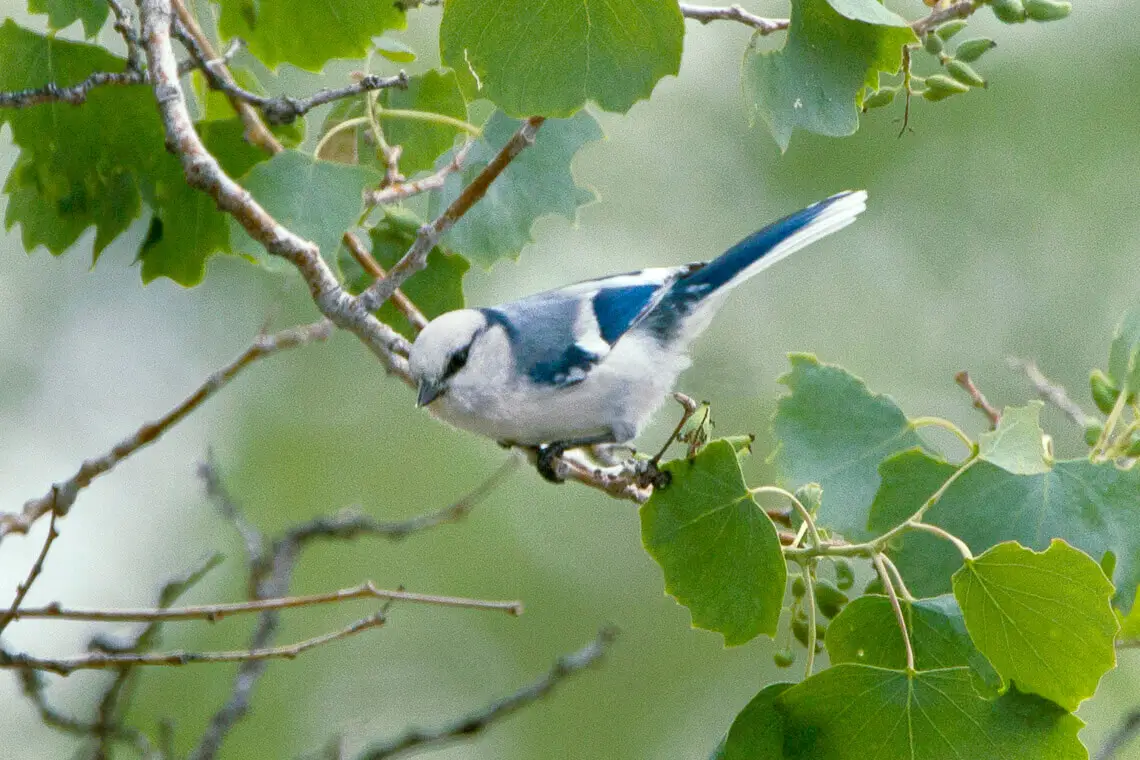
White tit Cyanistes cyanus
A rare and sparse species for Ukraine. It is significantly lighter than other tits, with white plumage and blue elements.
It occurs locally, not everywhere and not every year. Part of the population winters, while part migrates. For most people, encountering a white tit is a real stroke of luck.
Penduline tit Remiz pendulinus
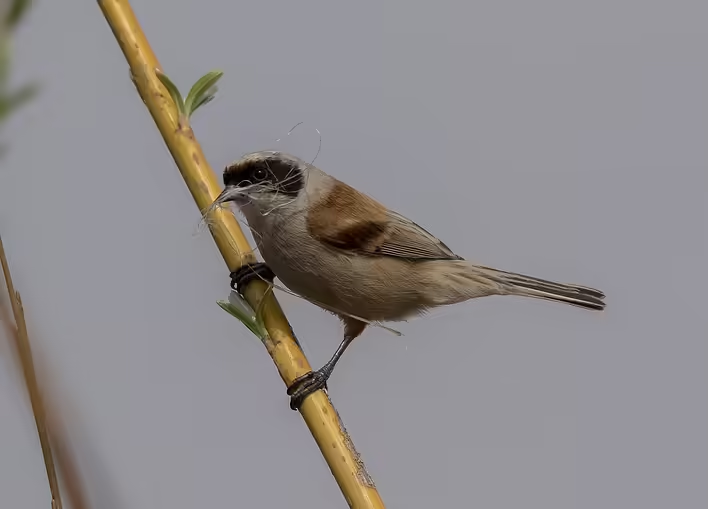
Formally, the penduline tit is now classified as a separate family, but historically it has often been mentioned alongside tits. It is a very small bird known for its incredible, "suspended" nests.
In Ukraine, the penduline tit is migratory or nomadic, inhabiting areas near water bodies and marshes. It is hard to confuse it with anyone else, but it is rather a "relative" than a classic tit.
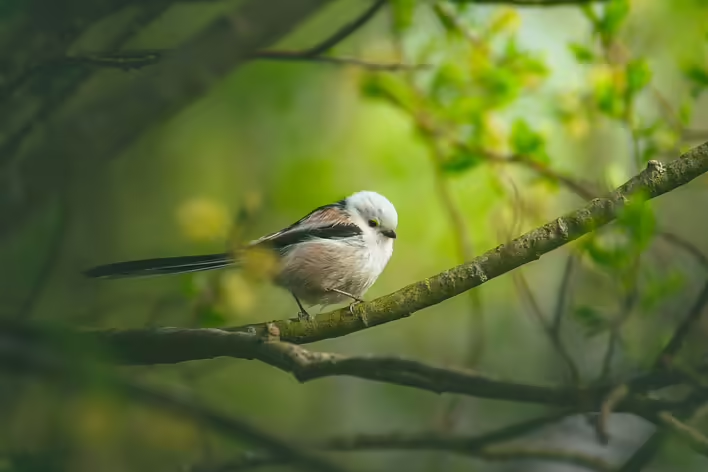
This is a small, very fluffy bird with an disproportionately long tail, which makes it seem even smaller than it actually is. In Ukraine, it is quite common, especially in forests, parks, and even green areas of cities. It is resident and stays in flocks during winter. It builds complex, "felted" nests from moss, lichens, and spider silk, which look like small balls.
It is often confused with "exotics" because it looks very decorative, but in fact, it is a year-round resident of Ukraine.
Bearded tit (Reedling) Panurus biarmicus
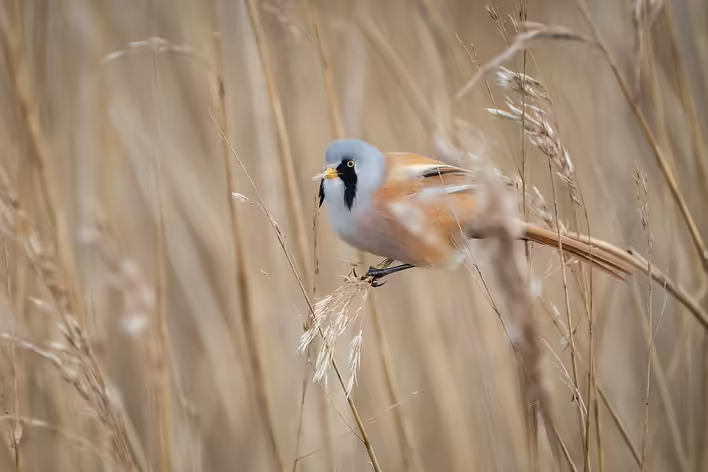
Another species that is traditionally called a tit, although scientifically it is classified in a separate family. It got its name due to the black "whiskers" in males — a very recognizable feature.
The bearded tit lives exclusively near water bodies: in reeds, marshes, along rivers and lakes. You will not find it in forests or parks. It is a very specialized bird — if there are no reeds, there are no bearded tits. It is predominantly resident but may wander within the region.