This content has been automatically translated from Ukrainian.
In everyday life, Ukrainians still use the seemingly bizarre exclamations “heave!” and “lower!”, especially when working together — pulling, lifting, or lowering something. They can be heard on construction sites, in workshops, or even in agriculture when a coordinated action is needed. But what are these words, really? Why “heave,” and why “lower”?
Origin: traces of labor and rituals
The word “heave!” is used as a command to lift, while “lower!” is for lowering. They have no direct meaning in modern language, which often causes surprise, especially among the youth. But their origin is deeper than it seems.
“Heave!” is most likely a distorted or symbolic word related to the belief in the power of joint action. According to another version, it is a simplification of a phrase like “Heave, brother!” — that is, trust, lift together with me. In maritime practice, it could have been a command like “together!” or “lift!”.
“Lower!” has clearer maritime roots. In the fleets of many countries, there exists the word "maina" (Italian, Spanish, French) — a command for lowering, reducing tension, or lowering a load or sail. It is likely that the Ukrainian “lower” is an adapted form of these maritime commands. By the way, a similar word exists in Polish: “majna”.
Where these words are used now
Although these exclamations are archaic, they are still alive in some professional or everyday environments:
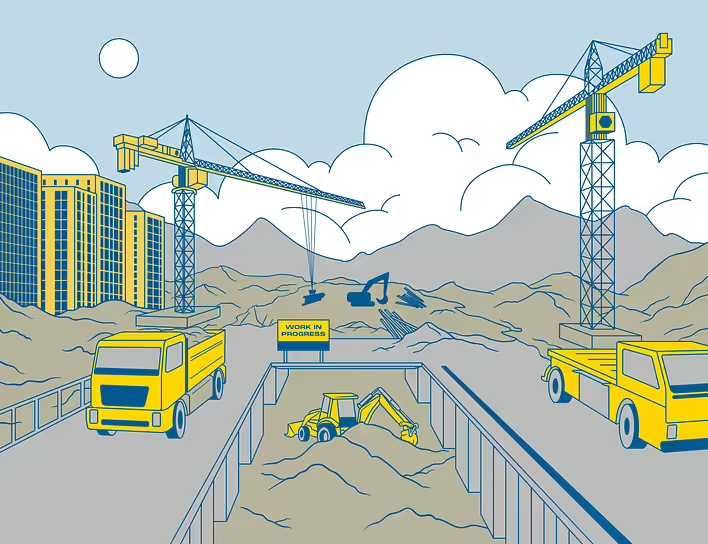
- Construction: when several people lift a heavy load — “One, two… heave!”
- Agriculture: for example, when unloading hay or setting up structures.
- Repair work: coordinated lowering of a heavy object — “Lower! Carefully!”
- Cossack reenactments, folk games, theatrical performances — as part of authentic language.
- In some Ukrainian songs or proverbs, the word “lower” could be used in the sense of “to lower” or even “to depart” (in a figurative sense). - Similar commands exist in other cultures. For example, the English “heave-ho!” or the German „Hau-ruck!” — both are used for synchronized effort.
“Heave” and “lower” are not just strange words from the past. They are signal exclamations that helped people act in unison during physical labor. Their origin is linked to maritime commands and labor traditions, and the form has been preserved through oral culture. Even if we do not know the exact etymological root of the word “heave” in this context — it continues to live on as part of linguistic memory.
This post doesn't have any additions from the author yet.