This content has been automatically translated from Ukrainian.
Have you ever argued with someone, and on the way home or in the evening you start thinking — “If only I had said this back then! It would have been both witty and convincing!” But the moment has already passed, the opponent has left, the scene is closed. And only in your head plays out an alternative version of the conversation, in which you are brilliant and invincible.
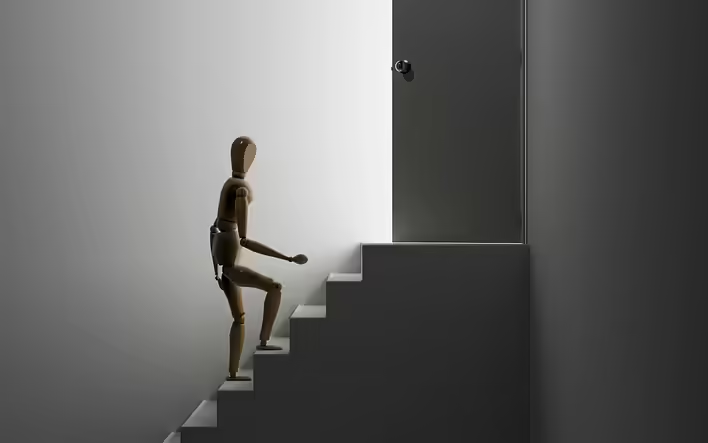
This familiar state has a nice French name — l’esprit de l’escalier. In translation — “wit of the staircase” or “spirit of the staircase”.
What is it?
It is a phenomenon when a clever thought, perfect argument, or witty reply comes to us only after the moment has passed. We have already left the room, are going down the stairs, or riding on a tram, and the brain — like a screenwriter — suddenly throws out the perfect response. Usually — too late.
The term was introduced by the French philosopher Denis Diderot in the 18th century. He described how once at a dinner party he couldn’t respond to a sharp comment, and only when he was going down the stairs did he remember the perfect reply. Thus, this beautiful metaphor was born.
Why does this happen?
When we are at the center of a conflict or discussion, the brain is busy with emotional processing — stress, tension, the desire to “win.” It is then harder to find a brilliant thought or formulation. But as soon as the situation passes and emotions subside — the rational parts of the brain activate, and thoughts “align.”
Like it?React
🧵
This post doesn't have any additions from the author yet.