All original content is created in Ukrainian. Not all content has been translated yet. Some posts may only be available in Ukrainian.Learn more
This content has been automatically translated from Ukrainian.
Primroses are plants that bloom among the first after winter. Most of them belong to the so-called spring ephemeral plants — plants that have a very short period of active life. They quickly appear right after the snow melts, bloom for a few weeks, and then the above-ground part dies back until the next spring.
In the forests, meadows, and mountains of Ukraine, you can see many such flowers. Some of them grow very abundantly, forming entire floral carpets, while others have become rare and are under protection.
Below are the most famous primroses of Ukraine, their characteristics, distribution areas, and blooming periods.

Snowdrop
phil-hearing-tXE_ho0Z4ow-unsplash.jpg
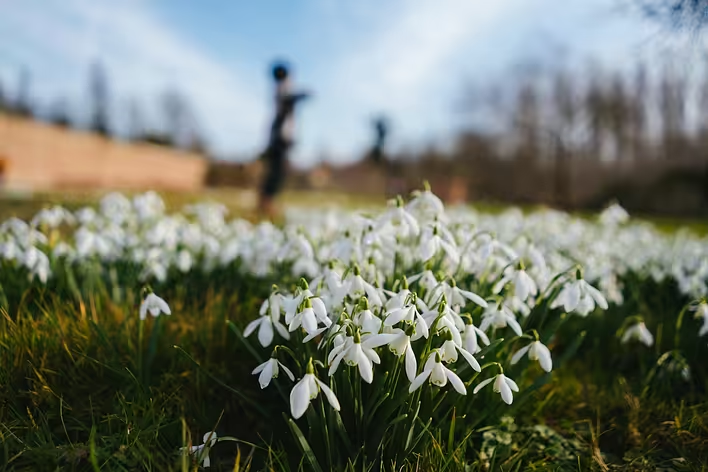
The snowdrop is one of the most famous symbols of early spring. It is a small plant with white drooping flowers that appear literally from under the snow. The flower consists of six petals: three longer outer ones and three shorter inner ones with green spots.
Snowdrops mainly grow in deciduous forests, on forest edges, and near streams. They are most often seen in the Carpathians, in Polissia, and in the western regions of Ukraine.
Snowdrops have an interesting adaptation to the cold: their tissues contain substances that act as a natural "antifreeze," allowing the plant to sprout even through the snow. Snowdrops are also a source of the alkaloid galantamine — a substance used in medicine to treat certain neurological diseases.
They usually bloom in February or March and can continue blooming until April. Due to mass gathering, this plant is listed in the Red Book of Ukraine.

Spring Snowflake
andres-siimon-_B_FOPwW5SU-unsplash.jpg
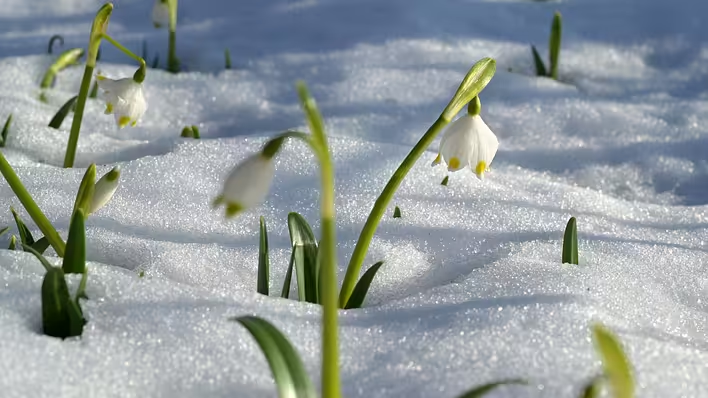
The spring snowflake resembles the snowdrop externally, but its flowers have a bell-shaped form and all petals are of equal length. Yellowish-green spots are noticeable at the tips of the petals.
The spring snowflake contains toxic alkaloids, making it poisonous to humans and animals. Despite this, the plant has historically been used in folk medicine, although its use is limited today due to its toxicity.
This plant grows in moist forests, river valleys, and meadows. It is most commonly found in the Carpathians and the western part of Ukraine.
It blooms in March or April. The plant is rare and is also under protection.

Two-leaved Snowdrop
andreas-pajuvirta-7FJtV5q-Aow-unsplash.jpg
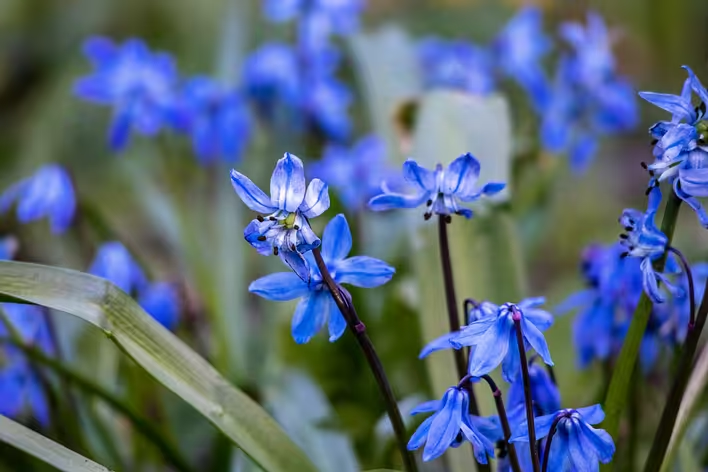
The two-leaved snowdrop is a delicate blue or blue flower that has two broad leaves and small star-shaped flowers.
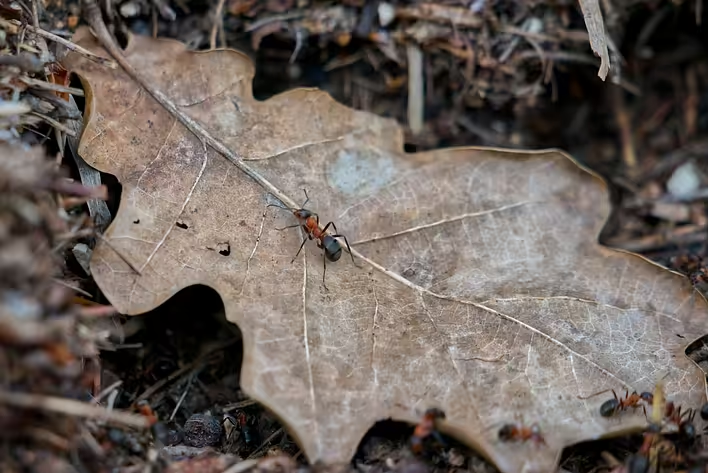
Snowdrops often form large solid carpets in spring forests, as their bulbs actively reproduce vegetatively. Additionally, the seeds of the snowdrop are dispersed by ants — this phenomenon is called myrmecochory.
It is found in deciduous and mixed forests of the Carpathians, Polissia, and Forest-Steppe. It usually blooms in March – April.

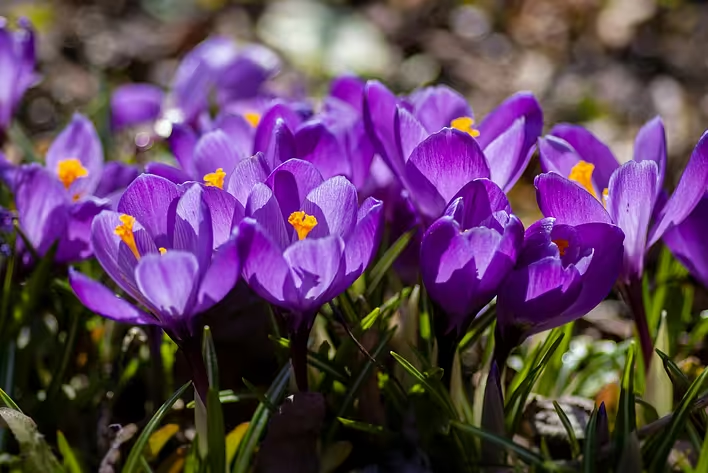
Heufel's Crocus
yoksel-zok-3GhPGzE-bOA-unsplash.jpg
This is one of the most beautiful spring flowers of the Carpathians. Its petals can be purple, lilac, or light-lilac, with bright yellow stamens inside.
It mainly grows in the Carpathian mountains — in meadows, glades, and mountain clearings. It blooms immediately after the snow melts, in March or early April.
This species is listed in the Red Book of Ukraine.
Origin of the Name "Crocus"
The name crocus comes from the Latin scientific genus Crocus. This is how botanists refer to a group of plants from the iris family. This genus includes about 90 species of flowers that grow in Europe, Asia, and the Middle East.
Therefore, when people say "crocuses," they usually mean all decorative flowers of this genus that bloom in early spring or autumn.
Why the Name "Saffron" Appeared
The word saffron comes from the Arabic za‘farān, which means "yellow" or "golden." This name arose because of the bright orange-red stamens of one specific plant.
This refers to the species Crocus sativus, from which the expensive spice — saffron — is obtained.
It is the dried stigmas of this flower that are the famous spice.
How It Works in Practice
Simply put:
  • Crocus is the botanical name for all plants of the genus Crocus.
  • Saffron is either a culinary spice or the name of a specific species of crocus from which it is obtained.
Why "Saffron" is Often Used in Ukraine
In many Slavic languages, spring crocuses are traditionally called saffrons, even if they have nothing to do with the spice. For example, the Carpathian species Heufel's Crocus is simply a wild crocus that grows in the mountains and blooms in early spring. No spice is obtained from it.

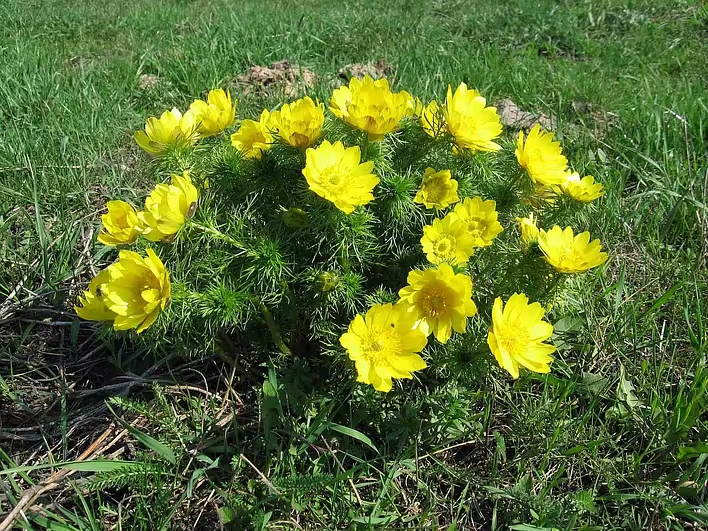
Spring Adonis
adonis_vesnyaniy_6.jpg
The spring adonis has large bright yellow flowers and finely dissected leaves. It is a plant of steppe and forest-steppe regions.
The spring adonis is a valuable medicinal plant. It contains cardiac glycosides that affect heart function, so preparations made from it are used in cardiology. Due to active gathering in the past, the populations of this plant have significantly decreased.
It is found on steppe slopes, meadows, and forest edges. It blooms in April – May.
Due to the destruction of natural steppes, this plant has also become rare and is listed in the Red Book of Ukraine.

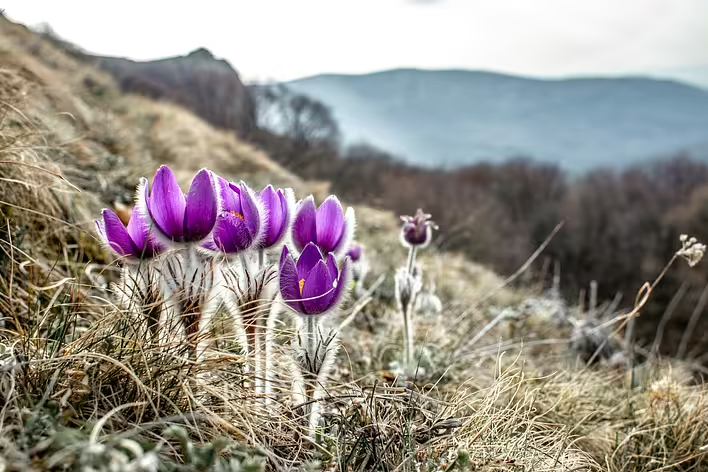
Sleep Grass
alexandra-vo-3QDCkSjnxF8-unsplash.jpg
Sleep grass is easily recognizable by its large purple flowers and silvery hairs on the stems. The plant looks very decorative and often attracts the attention of tourists.
It has dense hairs that protect the plant from spring cold and strong sunlight. After flowering, its fruits turn into fluffy "balls" that are easily carried by the wind.
It grows in dry meadows, sandy slopes, and light pine forests. It blooms in April – May.
Most species of sleep grass are listed in the Red Book of Ukraine.

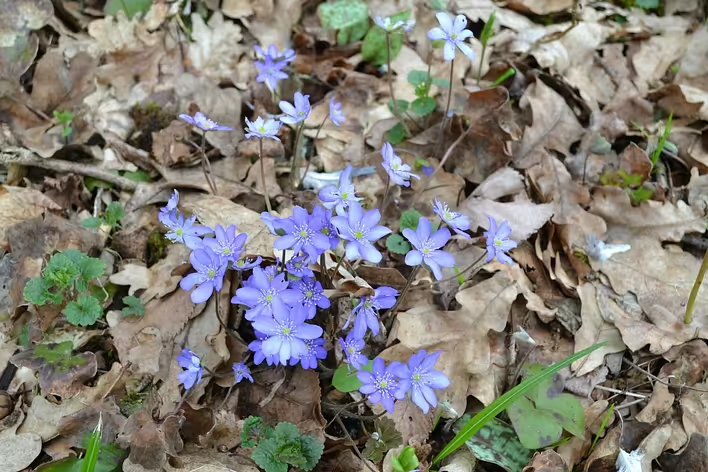
Liverwort
eugene-5CcSE4eN0g4-unsplash.jpg
This is a small forest plant with blue or purple flowers. The name of the plant comes from the shape of its leaves, which resemble a liver. In the Middle Ages, there was a theory of "signs of nature," which led to the use of liverwort for treating liver diseases.
It grows in deciduous forests, especially in the Carpathians and Polissia. It blooms in March – April, often even before the new leaves appear.

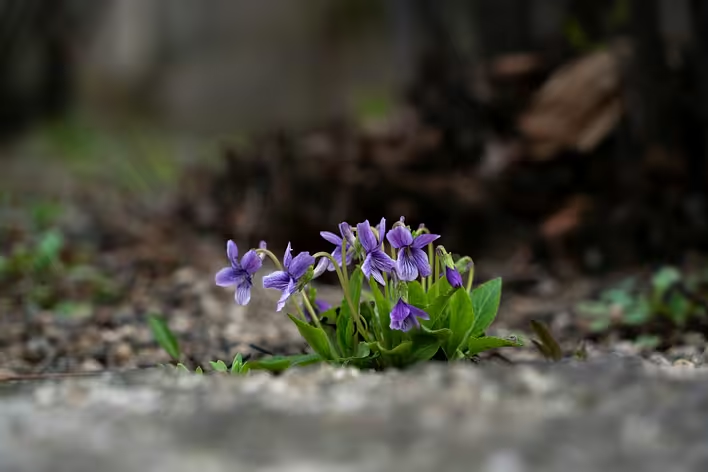
Fragrant Violet
hoyoun-lee-23UkgCBREaQ-unsplash.jpg
The fragrant violet is one of the most aromatic spring flowers. Its small purple flowers have a strong sweet scent.
The scent is so strong that it has long been used in perfumery. In the 19th century, popular sweets were even made in France — candied violet flowers.
It grows in forests, gardens, parks, and on forest edges. It blooms in April – May. This species is quite common and is usually not under protection.

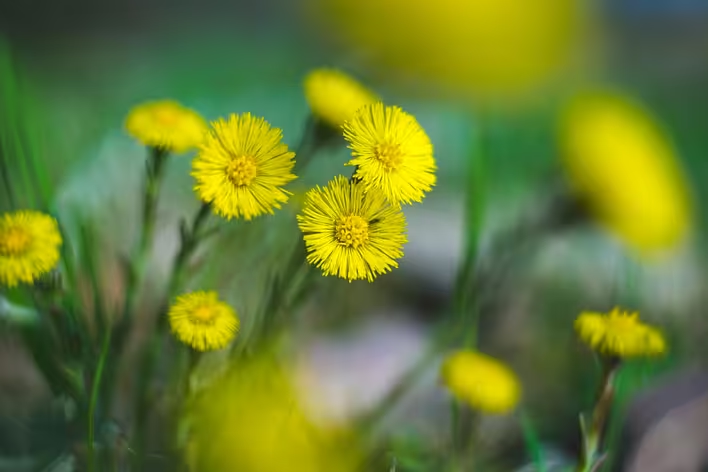
Mother-and-Stepmother
olli-kilpi-txj10Oi9qYs-unsplash.jpg
This yellow flower often appears even before the leaves. It can be seen on the roadside, slopes, riverbanks, and wastelands.
The name of the plant comes from the peculiarity of its leaves: the upper part of the leaf is smooth and cold ("stepmother"), while the underside is soft and warm ("mother"). This plant has long been used in folk medicine as a remedy for coughs.
It blooms very early — in March or even at the end of February. The plant is widespread and is not under protection.

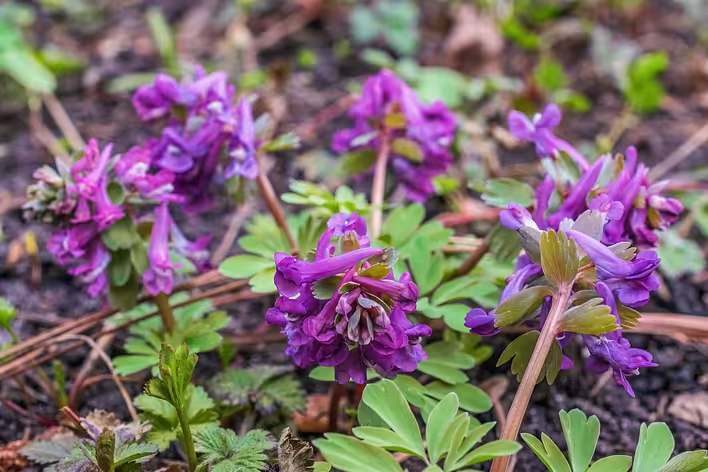
Corydalis
29769dsc_0031.jpg
Corydalis is a typical spring ephemeral with purple, pink, or white flowers.
There is a Ukrainian saying "to trample corydalis," which means to live. It comes from the spring custom of walking through the forest when the ground was covered with corydalis flowers — a symbol of nature's rebirth.
It grows in deciduous forests and parks, where it often forms dense floral carpets. It blooms in March – April.

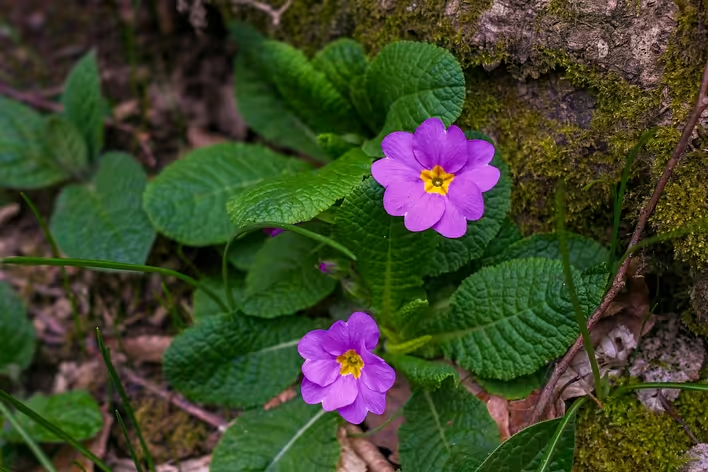
Spring Primrose
irfan-simsar-NjB_1DN3CmE-unsplash.jpg
The primrose has bell-shaped flowers gathered in small inflorescences. The leaves form a rosette at the base.
The primrose contains a lot of vitamin C, so its young leaves were sometimes used in spring salads. In folk medicine, the plant was used as an expectorant.
It grows in meadows, forest edges, and mountain clearings. It blooms in April – May.

Wood Anemone
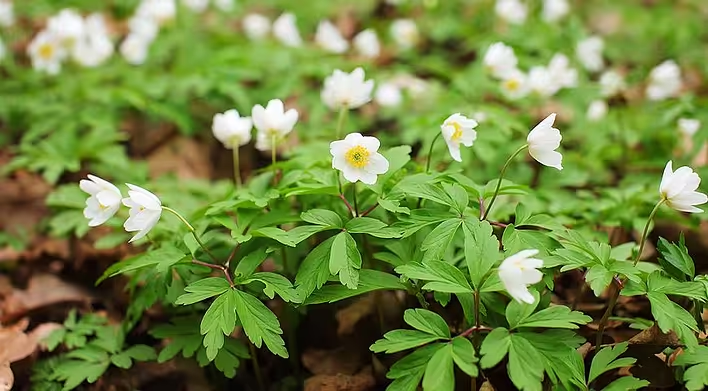
anemona_5.jpg
Anemones have delicate white or yellow flowers. They often cover the forest in spring with entire carpets.
The name "anemone" comes from the Greek word for "wind." It is believed that the flowers quickly respond to gusts of wind and can close before bad weather.
They grow in deciduous forests and on forest edges. They bloom in March – April.

Medicinal Lungwort
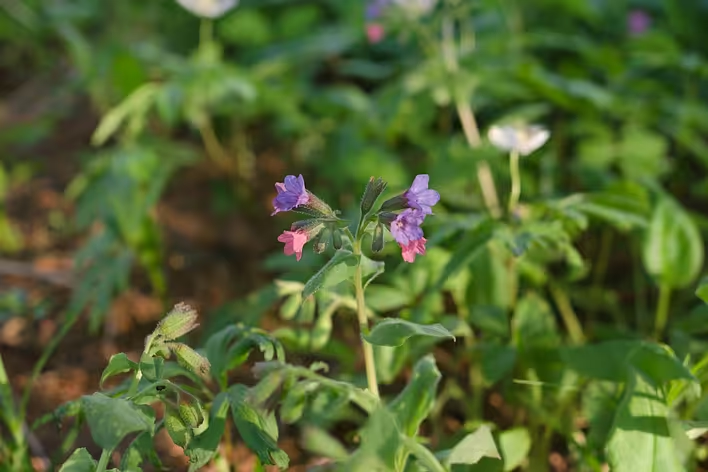
andrew-6yqcpaa0HrE-unsplash.jpg
Lungwort is one of the first spring honey plants. Its flowers change color during blooming, which helps insects determine which flowers still have nectar.
It grows in moist forests and ravines. It blooms in March – April.

Forest Tulip
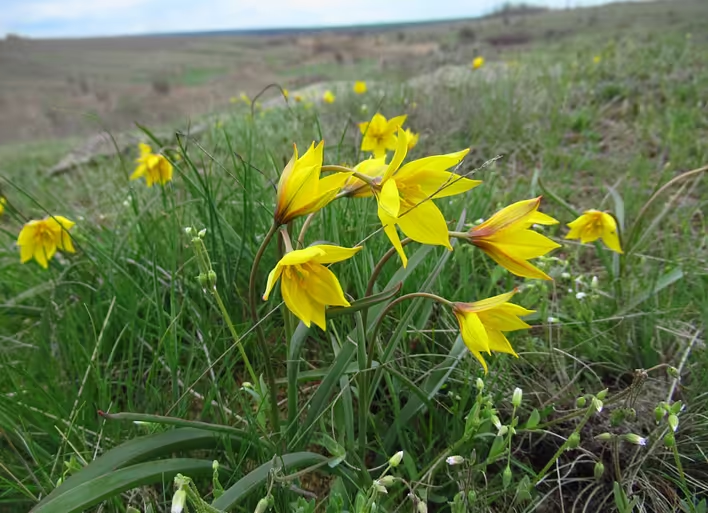
012 zelbalka.jpg
This is a wild relative of garden tulips. The flowers are usually yellow or yellow-orange.
It grows in steppes, on forest edges, and slopes. It blooms in April – May. Many wild tulips are under protection.

Dwarf Irises
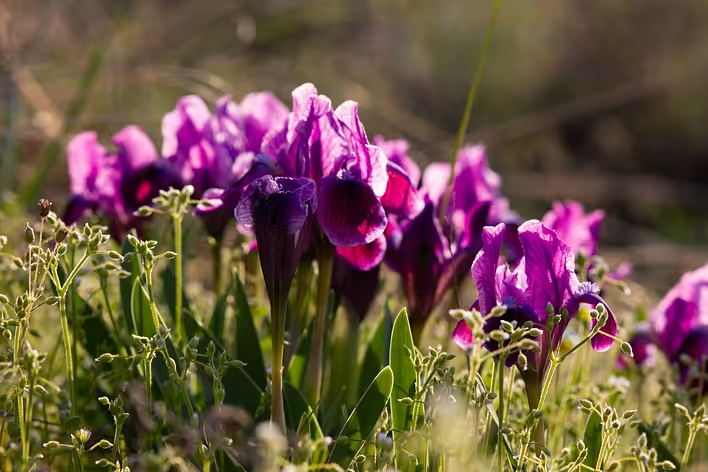
yanamoseiko-Oiqg4M9IFYQ-unsplash.jpg
Small wild irises with purple or blue flowers. Well adapted to the dry conditions of the steppe. Their rhizomes help the plant survive long periods without water.
They grow in steppe areas, on dry meadows and slopes. They bloom in April – May. In some regions, these plants are protected.

Marsh Buttercup
esther-heidsiek-schmitten-N9M0TKjYqvw-unsplash.jpg
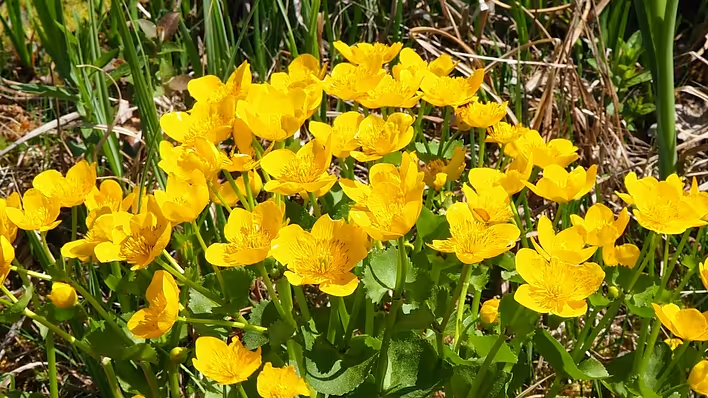
The marsh buttercup begins to bloom in April, sometimes as early as late March, when many plants are just waking up after winter. At this time, it forms bright yellow flowers that are well visible against the still not fully green spring vegetation. Due to its love for water, it is often found where the snow melts and water accumulates.
All parts of the marsh buttercup are toxic when fresh, but after drying or heat treatment, the toxicity decreases. In some countries, young buds have even been used as a spice, pickling them like capers.

This post doesn't have any additions from the author yet.
Listerine: from surgical antiseptic to daily care product
20 Feb 14:13

Listerine: from surgical antiseptic to daily care product

Пу-пу-пу
Пу-пу-пу@schrute
A small bus — a big story: the phenomenon of the Volkswagen T1 in miniature
20 Feb 14:53

A small bus — a big story: the phenomenon of the Volkswagen T1 in miniature

Пу-пу-пу
Пу-пу-пу@schrute
Android or iOS: two philosophies, one choice
26 Feb 11:15

Android or iOS: two philosophies, one choice

Пу-пу-пу
Пу-пу-пу@schrute
Books to start reading fantasy: cult classics of the genre
09 Mar 10:54

Books to start reading fantasy: cult classics of the genre

Пу-пу-пу
Пу-пу-пу@schrute
Spices in the kitchen: how and what they are added to
06 Mar 18:58

Spices in the kitchen: how and what they are added to

Пу-пу-пу
Пу-пу-пу@schrute
15 simple and delicious dressings for vegetable salads
06 Mar 19:10

15 simple and delicious dressings for vegetable salads

Пу-пу-пу
Пу-пу-пу@schrute
Myrmecochory: how ants help plants to disperse
09 Mar 12:23

Myrmecochory: how ants help plants to disperse

Пу-пу-пу
Пу-пу-пу@schrute
Books in the dark fantasy genre that are most often recommended by readers
11 Mar 11:45

Books in the dark fantasy genre that are most often recommended by readers

Пу-пу-пу
Пу-пу-пу@schrute
Loafers: the history of popular footwear and main types
12 Mar 12:00

Loafers: the history of popular footwear and main types

Пу-пу-пу
Пу-пу-пу@schrute
Who is Robert Galbraith and why does Rowling use a pseudonym?
12 Mar 20:05

Who is Robert Galbraith and why does Rowling use a pseudonym?

Пу-пу-пу
Пу-пу-пу@schrute
Who is a neophyte?
12 Mar 20:15

Who is a neophyte?

Пу-пу-пу
Пу-пу-пу@schrute
Cult detective series worth reading (and which are published in Ukrainian)
13 Mar 14:11

Cult detective series worth reading (and which are published in Ukrainian)

Пу-пу-пу
Пу-пу-пу@schrute