This content has been automatically translated from Ukrainian.
Primroses are plants that bloom among the first after winter. Most of them belong to the so-called spring ephemeral plants — plants that have a very short period of active life. They quickly appear right after the snow melts, bloom for a few weeks, and then the above-ground part dies back until the next spring.
In the forests, meadows, and mountains of Ukraine, you can see many such flowers. Some of them grow very abundantly, forming entire floral carpets, while others have become rare and are under protection.
Below are the most famous primroses of Ukraine, their characteristics, distribution areas, and blooming periods.
Snowdrop
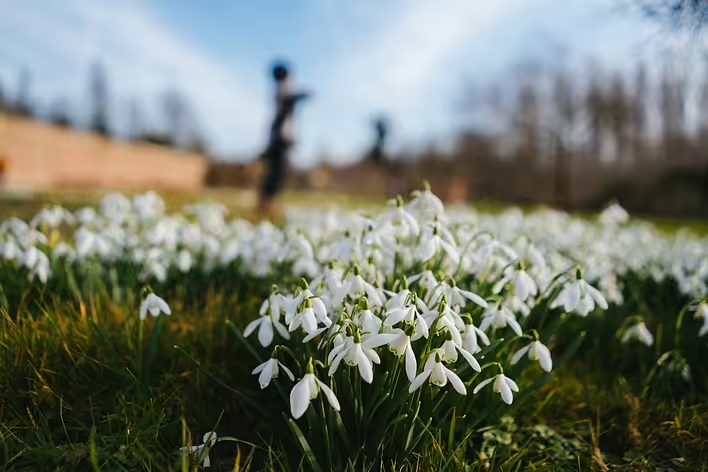
Snowdrops mainly grow in deciduous forests, on forest edges, and near streams. They are most often seen in the Carpathians, in Polissia, and in the western regions of Ukraine.
Snowdrops have an interesting adaptation to the cold: their tissues contain substances that act as a natural "antifreeze," allowing the plant to sprout even through the snow. Snowdrops are also a source of the alkaloid galantamine — a substance used in medicine to treat certain neurological diseases.
They usually bloom in February or March and can continue blooming until April. Due to mass gathering, this plant is listed in the Red Book of Ukraine.
Spring Snowflake
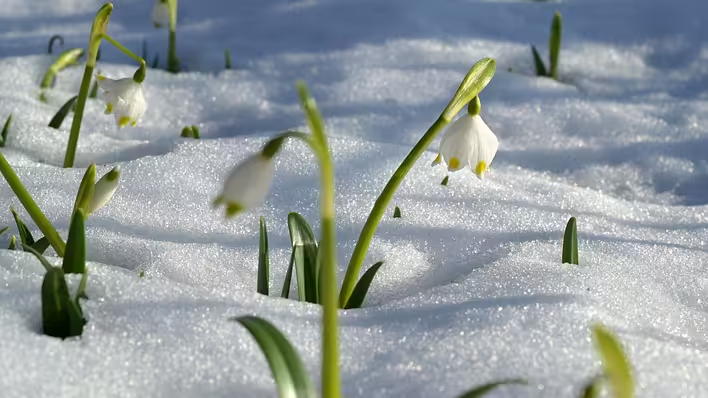
This plant grows in moist forests, river valleys, and meadows. It is most commonly found in the Carpathians and the western part of Ukraine.
It blooms in March or April. The plant is rare and is also under protection.
Two-leaved Snowdrop
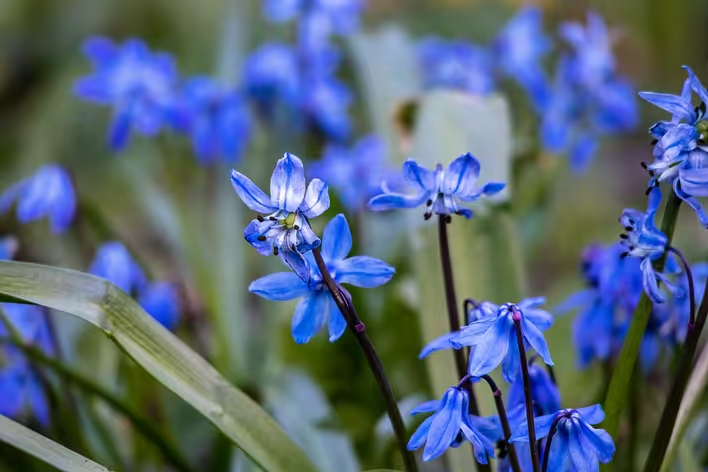
It is found in deciduous and mixed forests of the Carpathians, Polissia, and Forest-Steppe. It usually blooms in March – April.
Heufel's Crocus
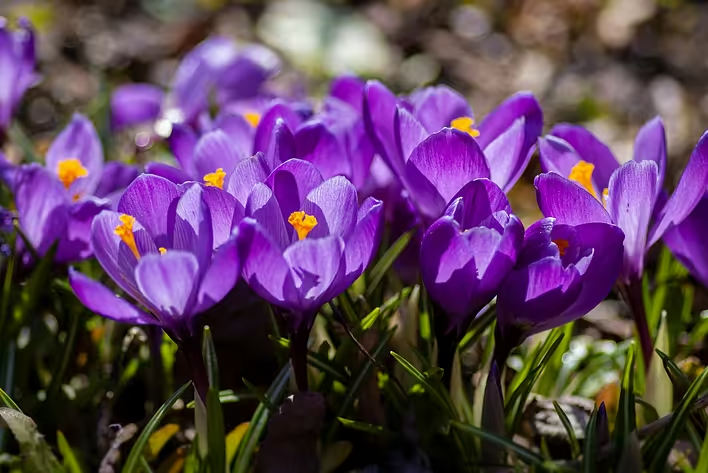
It mainly grows in the Carpathian mountains — in meadows, glades, and mountain clearings. It blooms immediately after the snow melts, in March or early April.
This species is listed in the Red Book of Ukraine.
Origin of the Name "Crocus"
The name crocus comes from the Latin scientific genus Crocus. This is how botanists refer to a group of plants from the iris family. This genus includes about 90 species of flowers that grow in Europe, Asia, and the Middle East.
Therefore, when people say "crocuses," they usually mean all decorative flowers of this genus that bloom in early spring or autumn.
Why the Name "Saffron" Appeared
The word saffron comes from the Arabic za‘farān, which means "yellow" or "golden." This name arose because of the bright orange-red stamens of one specific plant.
This refers to the species Crocus sativus, from which the expensive spice — saffron — is obtained.
It is the dried stigmas of this flower that are the famous spice.
How It Works in Practice
Simply put:
- Crocus is the botanical name for all plants of the genus Crocus.
- Saffron is either a culinary spice or the name of a specific species of crocus from which it is obtained.
Why "Saffron" is Often Used in Ukraine
In many Slavic languages, spring crocuses are traditionally called saffrons, even if they have nothing to do with the spice. For example, the Carpathian species Heufel's Crocus is simply a wild crocus that grows in the mountains and blooms in early spring. No spice is obtained from it.
Spring Adonis
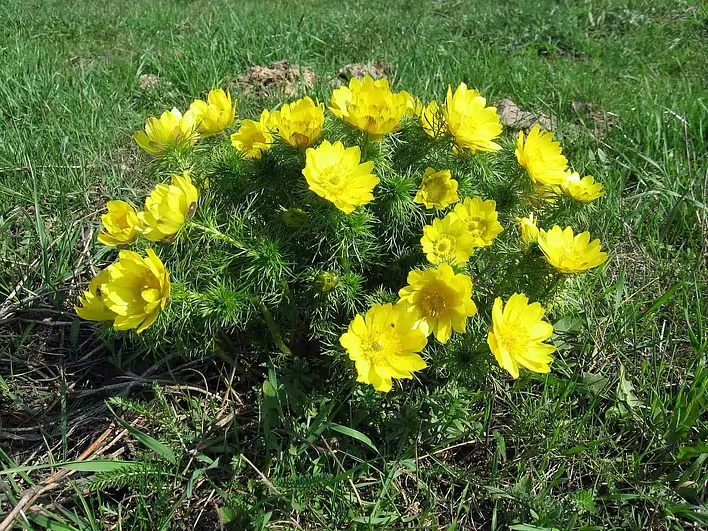
It is found on steppe slopes, meadows, and forest edges. It blooms in April – May.
Due to the destruction of natural steppes, this plant has also become rare and is listed in the Red Book of Ukraine.
Sleep Grass
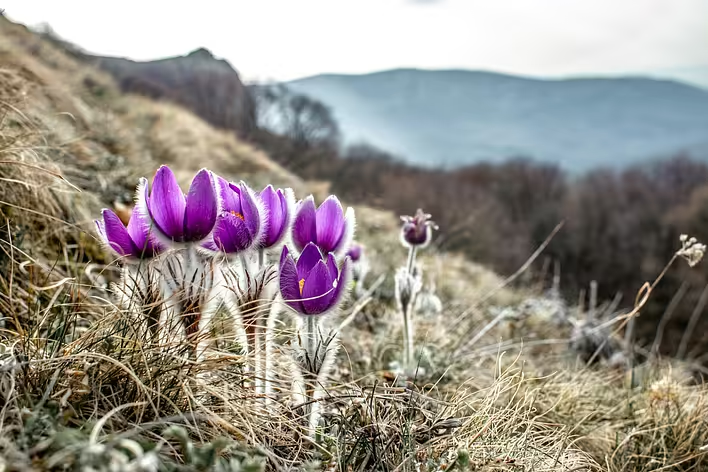
It grows in dry meadows, sandy slopes, and light pine forests. It blooms in April – May.
Most species of sleep grass are listed in the Red Book of Ukraine.
Liverwort
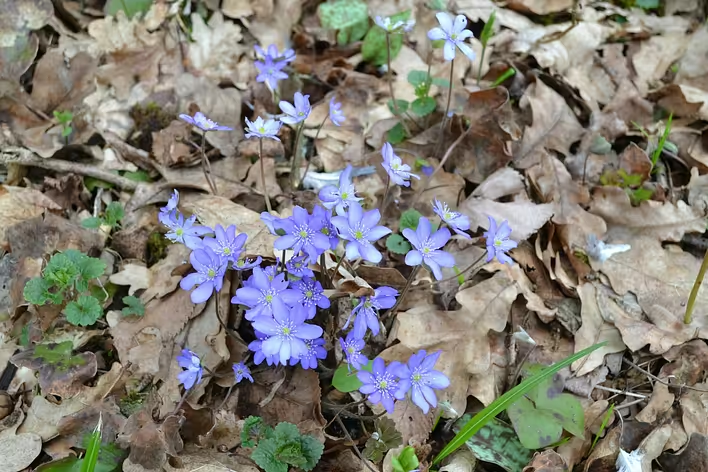
It grows in deciduous forests, especially in the Carpathians and Polissia. It blooms in March – April, often even before the new leaves appear.
Fragrant Violet
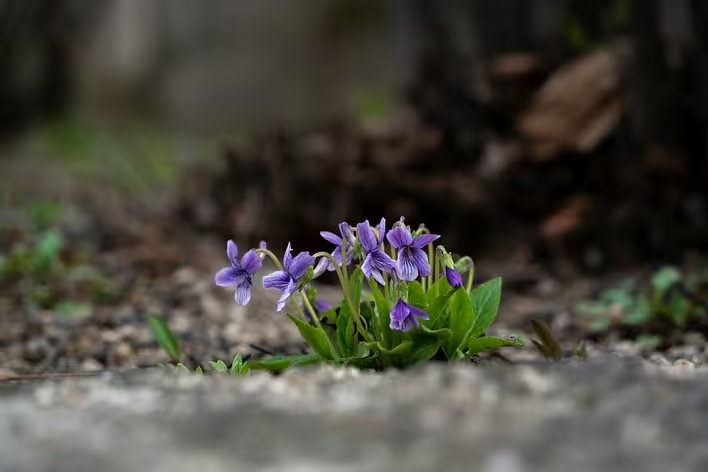
It grows in forests, gardens, parks, and on forest edges. It blooms in April – May. This species is quite common and is usually not under protection.
Mother-and-Stepmother
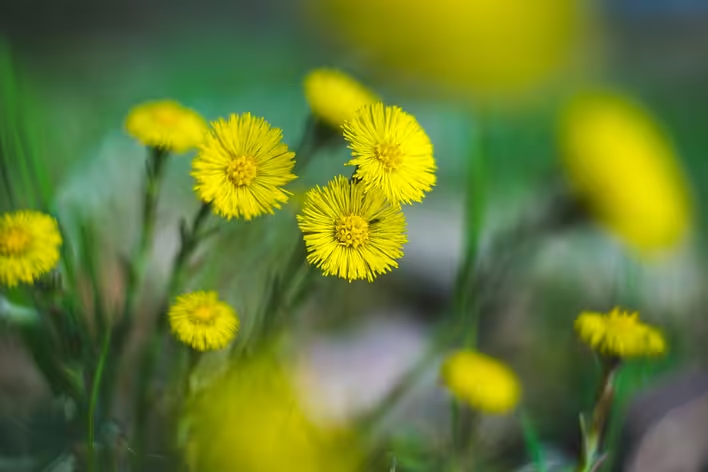
It blooms very early — in March or even at the end of February. The plant is widespread and is not under protection.
Corydalis
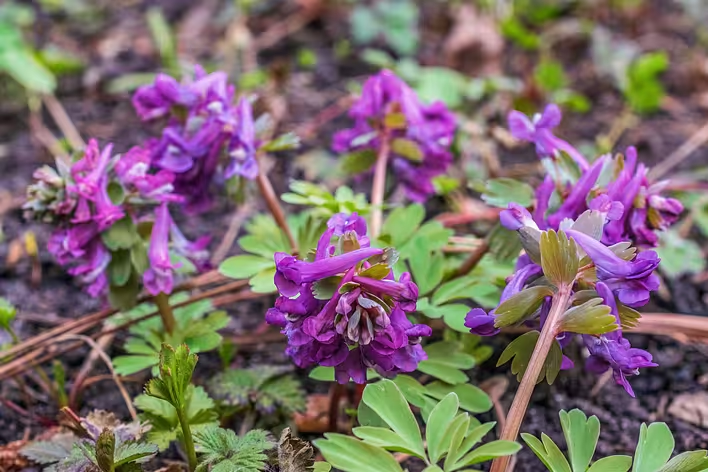
It grows in deciduous forests and parks, where it often forms dense floral carpets. It blooms in March – April.
Spring Primrose
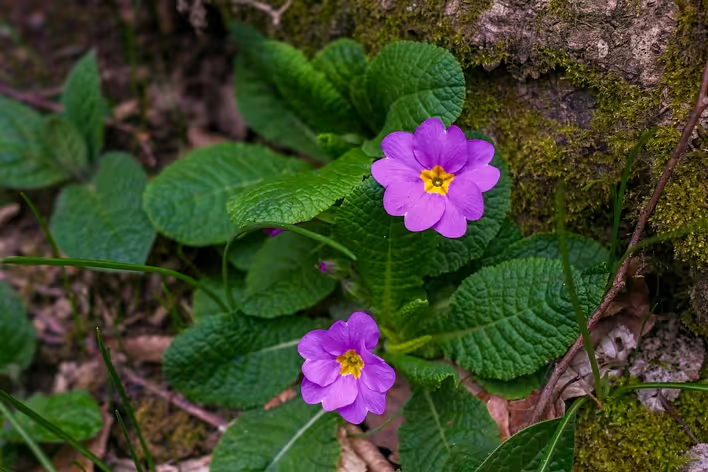
It grows in meadows, forest edges, and mountain clearings. It blooms in April – May.
Wood Anemone
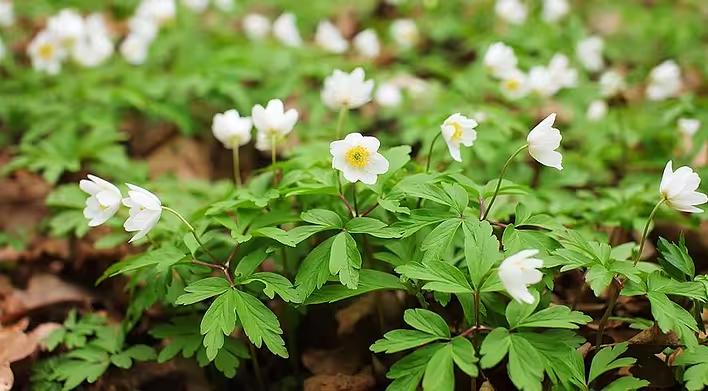
They grow in deciduous forests and on forest edges. They bloom in March – April.
Medicinal Lungwort
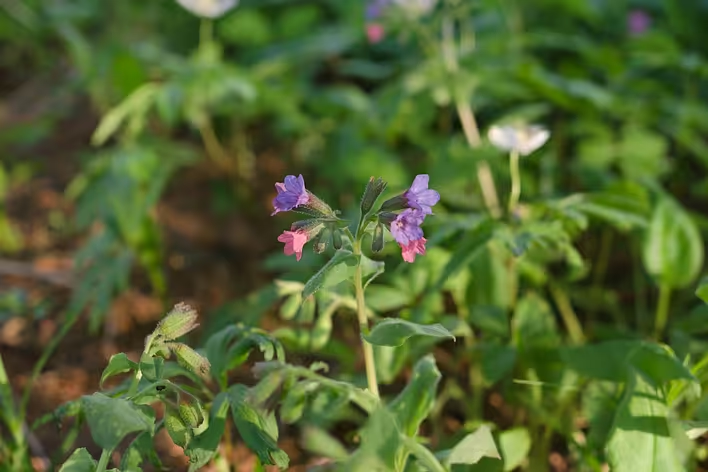
It grows in moist forests and ravines. It blooms in March – April.
Forest Tulip
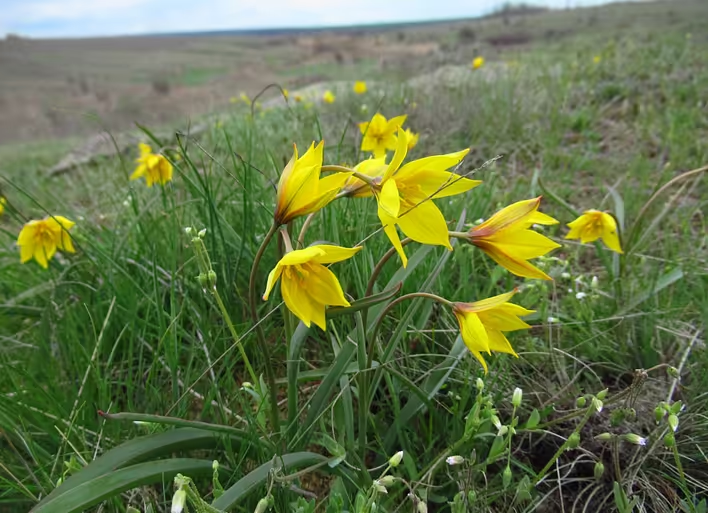
It grows in steppes, on forest edges, and slopes. It blooms in April – May. Many wild tulips are under protection.
Dwarf Irises
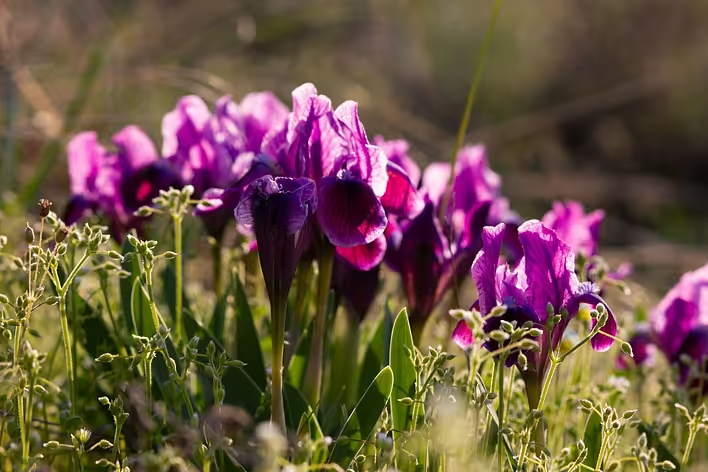
They grow in steppe areas, on dry meadows and slopes. They bloom in April – May. In some regions, these plants are protected.
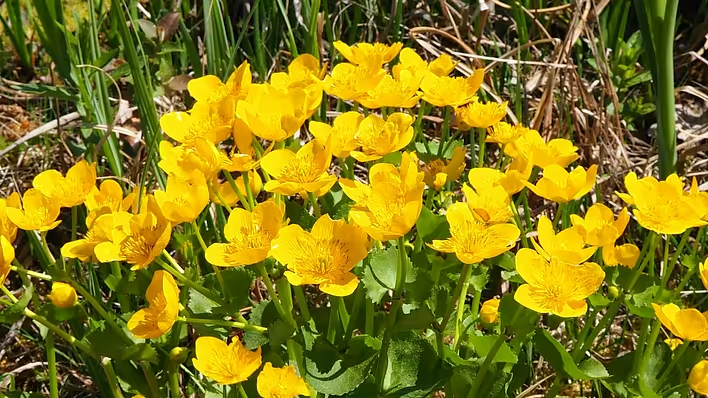
Marsh Buttercup
Like it?React
🧵
This post doesn't have any additions from the author yet.