This content has been automatically translated from Ukrainian.
Smartwatches in 2026 are not a luxury or a gadget for enthusiasts. They are a full-fledged tool for health, communication, and productivity. The market offers hundreds of models in various price categories, and it is difficult to navigate them without preparation. The catalog of the store Techno Hedgehog covers current models with detailed specifications. This guide discusses the key selection parameters to consider before making a purchase.
Which operating system to choose for a smartwatch
The first step in the selection process is compatibility with the smartphone. This determines which features will be available and how well the devices will work together.
Three main platforms:
- watchOS from Apple — works exclusively with iPhone, has a wide ecosystem of applications and stable support;
- Wear OS from Google — compatible with Android smartphones, supported by Samsung, Fossil, and other manufacturers;
- proprietary OS (Garmin OS, Huawei HarmonyOS, etc.) — usually focused on sports, less dependent on the smartphone.
Android users cannot use Apple Watch, and iPhone will not unlock the full potential of devices on Wear OS. Therefore, it is essential to first determine which smartphone the person uses and only then move on to selecting a model.
Which features are truly important
Manufacturers are actively equipping smartwatches with medical sensors, but not all of them are equally useful for everyday use. In 2026, the basic set of most models includes a pulse oximeter, heart rate monitoring, sleep tracking, and a pedometer. This minimum is sufficient for most buyers.
Advanced features worth considering:
- ECG (electrocardiogram) — available in Apple Watch Series 9+, Samsung Galaxy Watch 7, and some Fitbit models;
- body temperature measurement — useful for tracking cycles or early detection of illness;
- stress and heart rate variability sensor — helps assess recovery after workouts;
- GPS module — essential for runners and cyclists who want accurate routes without a smartphone.
A watch with an accurate heart rate sensor and quality GPS will provide more real benefits than a device with a dozen secondary features.
Battery life and case materials: what to consider
Battery life is one of the most common criteria for disappointment after purchase. Apple Watch lasts about a day with active use, while Garmin Fenix can operate for up to 14 days without recharging. For active users who track sleep at night, a battery life of 2-3 days is a reasonable minimum.
The material of the case affects durability and comfort:
- aluminum — lightweight, affordable, but scratches faster than other materials;
- stainless steel — heavier but more scratch-resistant, looks more presentable;
- titanium — an optimal combination of lightness and strength, found in flagship models;
- plastic (polymer) — typical for budget and sports models, practical for workouts.
The degree of water resistance is also important: for swimming, a minimum of 5ATM or ISO 22810:2010 is required. The IP68 standard provides protection against splashes and short-term immersion but is not designed for prolonged submersion in water.
How size and design affect choice
Smartwatches are worn daily, so appearance and fit on the wrist matter. The case size typically ranges from 40 to 47 mm. Smaller models are suitable for people with thin wrists, while larger ones provide better screen readability.
Form factors vary significantly:
- round dials look more classic and are closer to traditional watches;
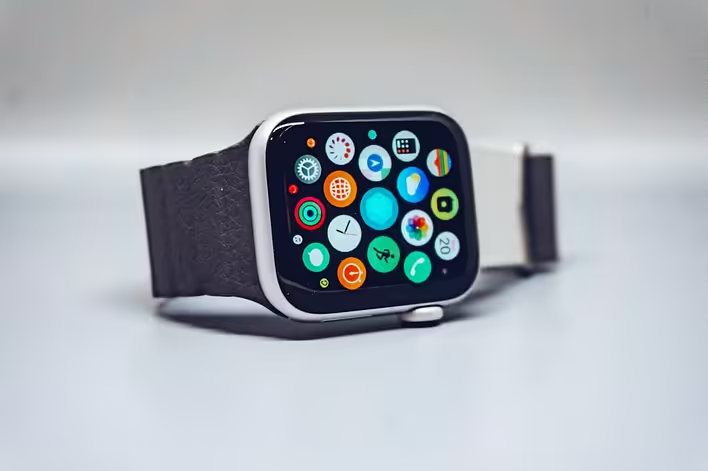
- rectangular (like in Apple Watch) provide more space for displaying information and are more convenient for notifications;
- square with rounded corners — a compromise option, common among Android models.
The strap should also be considered: silicone is practical for sports, while leather or nylon is better suited for business style. Most modern models support standard strap sizes of 20 or 22 mm, making them easy to change.
Choosing a smartwatch in 2026 comes down to four questions: which platform is compatible with the smartphone, which features are truly needed, how long the battery should last, and which design fits the lifestyle. Answers to these questions will help narrow down the selection to a few specific models and eliminate the need to overpay for unnecessary features.
Like it?React
🧵
This post doesn't have any additions from the author yet.