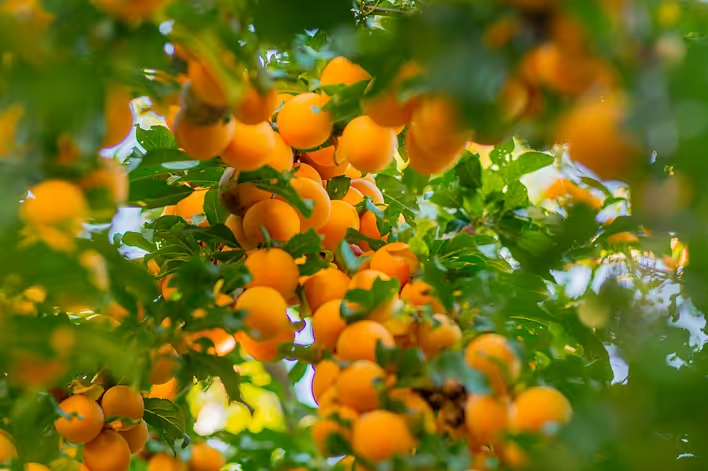
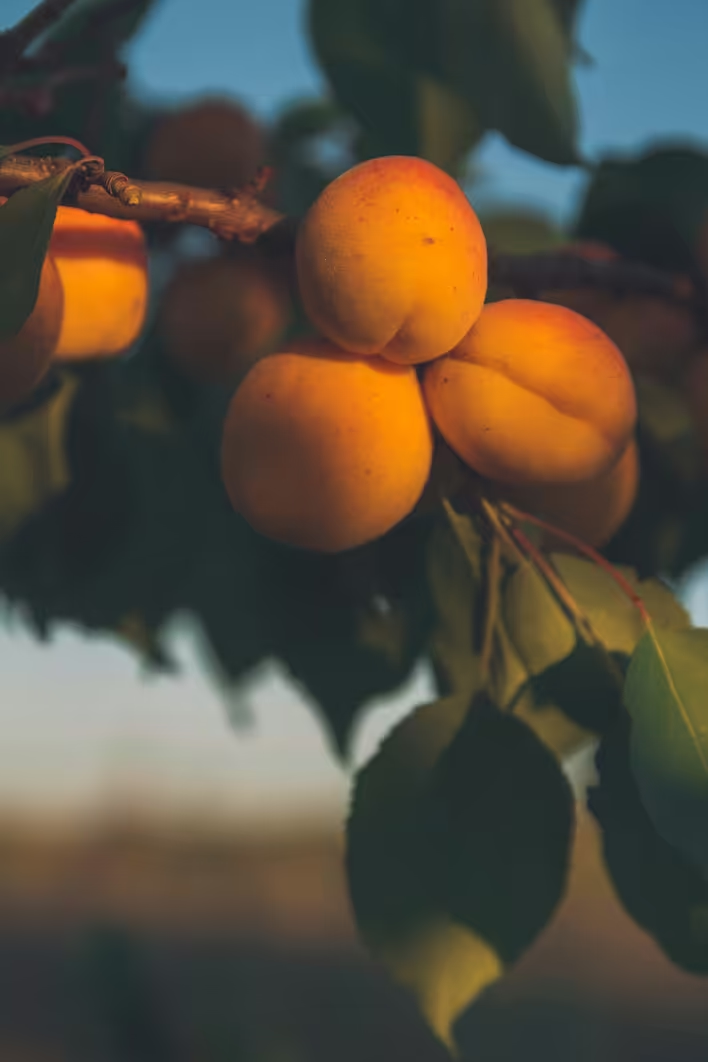
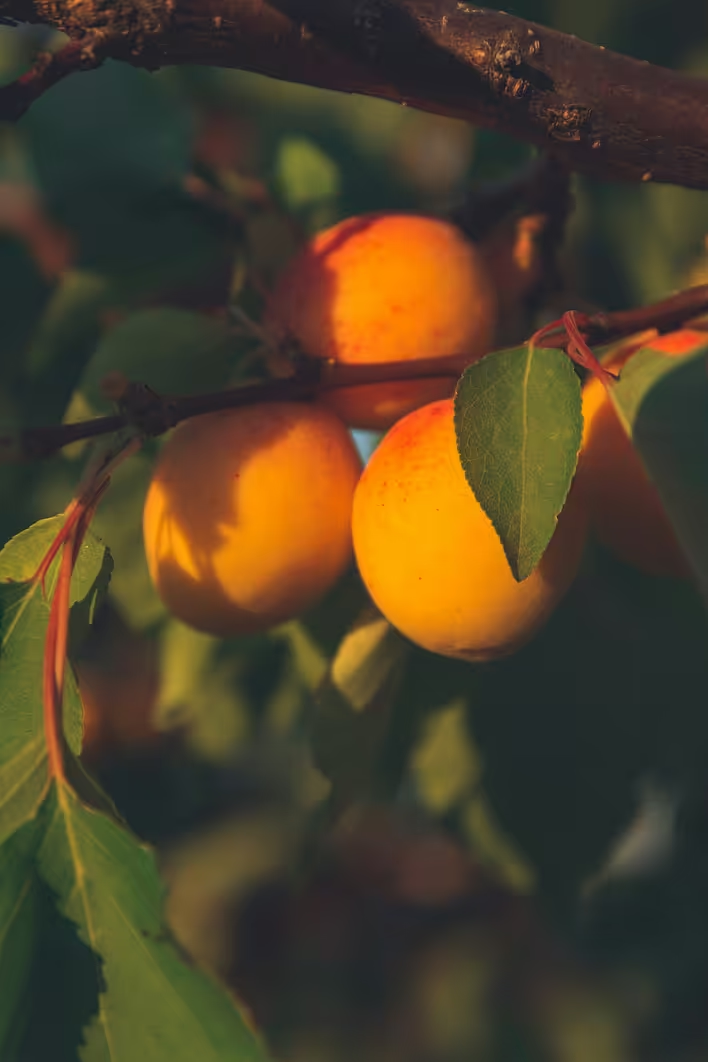
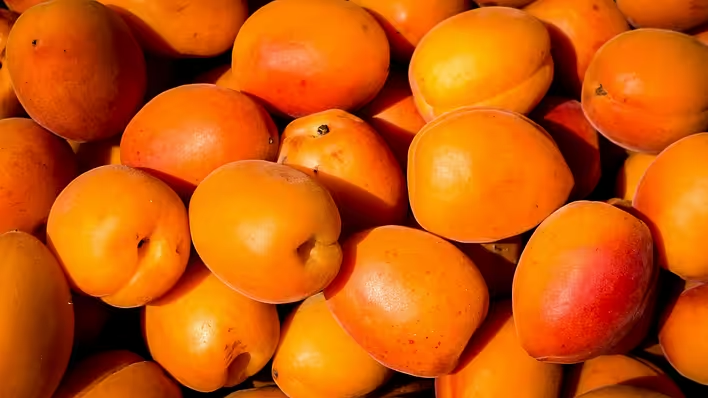
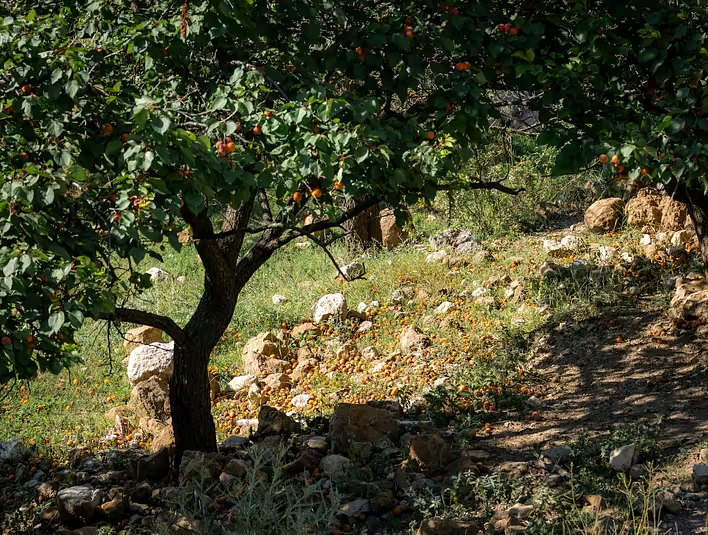
Apricot is one of the favorite summer fruits of many Ukrainians. Its sweet, juicy fruits are associated with childhood, homemade compotes and jams, July sunshine, and vacations at grandma's. For residents of eastern and southern Ukraine, the apricot is almost an inseparable part of the local landscape. In Luhansk, Donetsk, Zaporizhzhia, and Dnipropetrovsk regions, trees grow in the yards of apartment buildings, near village houses, along roadsides, and even in forest belts. During the season, the streets are literally covered with yellow-orange fruits, and locals joke that "apricot grows here like a weed".
In contrast, in western Ukraine, apricot trees are much rarer. There, they often freeze, bear fruit poorly, or require much more careful maintenance. Why has the same culture become so "eastern" within one country? The reason lies in the combination of climate, soils, and history.
Climate — the main ally or enemy of the apricot
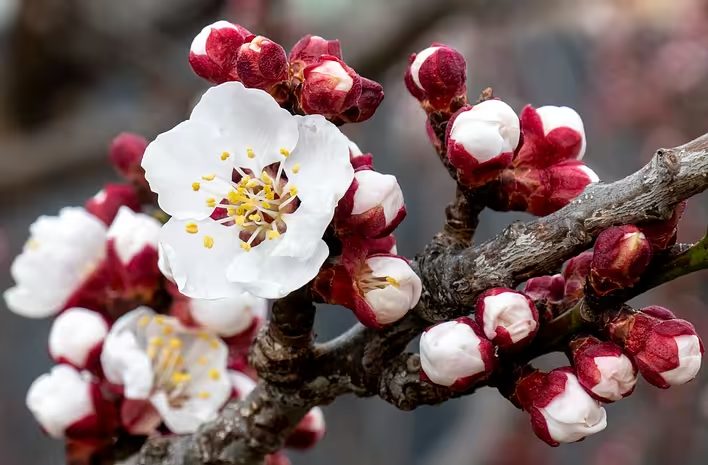
The apricot (Prunus armeniaca) originates from Central Asia and belongs to cultures that love dry warmth and predictable springs. Its main feature is very early awakening after winter. Often the tree begins to bloom as early as March, and during warm winters — even at the end of February. This is why the apricot is considered one of the riskiest fruit trees in a temperate climate.
The flowers of the apricot are extremely sensitive to frost. A temperature of only -2…-4 °C during flowering can destroy the future harvest literally overnight. For the tree, it is not so much the frost itself that is dangerous, but rather the sharp temperature fluctuations.
And here begins the main difference between the east and west of Ukraine.
In the east of the country, winters are usually colder but more stable. If frost comes, it lasts longer without sharp thaws. Spring also arrives gradually: the soil and air warm up slowly, so the tree does not wake up too early. For the apricot, these are almost ideal conditions.
In western Ukraine, the situation is different. Here, winters are milder and wetter, and there are often prolonged thaws in the middle of January or February. The tree perceives this as the arrival of spring: sap flow activates, and buds begin to swell. But after warming, frosts often return, damaging both the flowers and young shoots. This is why even mature trees in the west can bear almost no fruit for years.
Paradoxically, for the apricot, stable cold is often better than unstable warmth.
The apricot loves dryness
Another important factor is humidity. The apricot does not tolerate excess water well. Its root system does not like marshy or heavy soils where water is retained after rains or snowmelt.
The east of Ukraine is significantly drier. There is less precipitation, more sunny days, and hotter summers. Such conditions help the fruits to ripen well, accumulate sugar, and get sick less. Additionally, in the steppe regions, there are often light sandy or loamy soils that allow water to pass through well.
In the west, however, the climate is wetter. Frequent rains, fogs, and dampness create ideal conditions for fungal diseases. Apricots particularly suffer from moniliosis — a disease that causes flowers, branches, and even entire trees to dry out. In rainy years, the harvest can almost completely disappear.
Because of this, it is significantly easier to grow apple trees, plums, or pears in the western regions — they are better adapted to the local climate.
Why there are so many apricots in the east
History has also played a role. The apricot spread to Ukraine mainly from the south and east — through Crimea, the Caucasus, and steppe trade routes. It was there that the culture took root faster and gradually became almost a "folk" tree.
In many eastern regions, apricots have been planted for decades not only in orchards but also along roads, near schools, in the yards of apartment buildings, and in protective forest belts. The tree turned out to be surprisingly resilient to heat and drought, and thus quickly became widespread.
Over time, a kind of natural selection emerged. Trees that could not withstand the local climate disappeared, while the hardiest produced new generations. This is why in many cities of the east, you can see old apricots that have been growing almost without care for decades.
In some areas of Luhansk or Donetsk, the tree is so widespread that part of the plantings has actually gone wild. People gather the fruits directly from the trees by the roads or abandoned yards, dry them, make jams, or sell them at markets.
The apricot as part of local culture
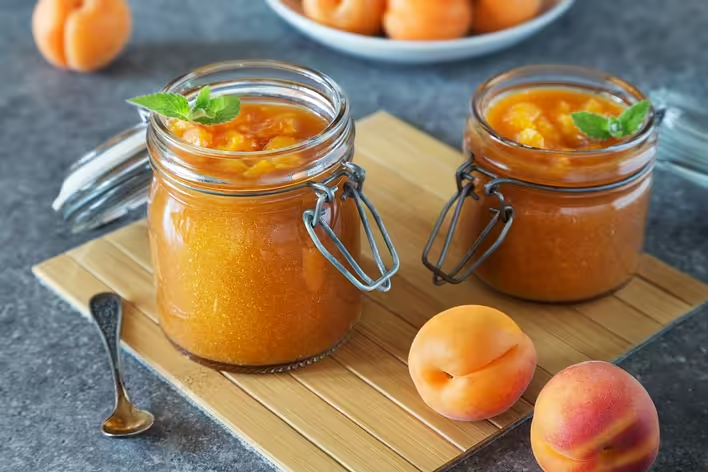
In eastern Ukraine, the apricot is more than just a fruit. For many families, it has become part of summer traditions. During the season, housewives massively make jams, jellies, compotes, prepare pastila and dried apricots. Apricot is added to pies, pancakes, homemade ice cream, and even meat sauces.
For many residents of the east, the smell of ripe apricot is a separate symbol of summer, as recognizable as the smell of the steppe after rain or hot dust in July. In the yards, children collect fallen fruits in buckets, while adults argue about which variety is sweeter — early or late.
Interestingly, apricot trees were often planted not only for their fruits. They grow quickly, provide dense shade, and withstand drought well. Therefore, during Soviet times, they were actively used for greening cities in the steppe regions.
Will the situation change in the future
In recent years, the climate in Ukraine has been gradually changing. Winters are becoming warmer, and breeders are developing new frost-resistant varieties of apricot. Because of this, trees are increasingly being seen even in western regions, where they were previously considered exotic.
However, the main problem remains the same — unstable spring. If frosts return after early warming, the apricot harvest can be lost even in the hardiest varieties.
Therefore, the apricot in Ukraine still remains a tree of contrasts. In the east, it is so familiar that it is sometimes almost unnoticed. In the west, however, each tree is a small victory for the gardener over capricious weather.