This content has been automatically translated from Ukrainian.
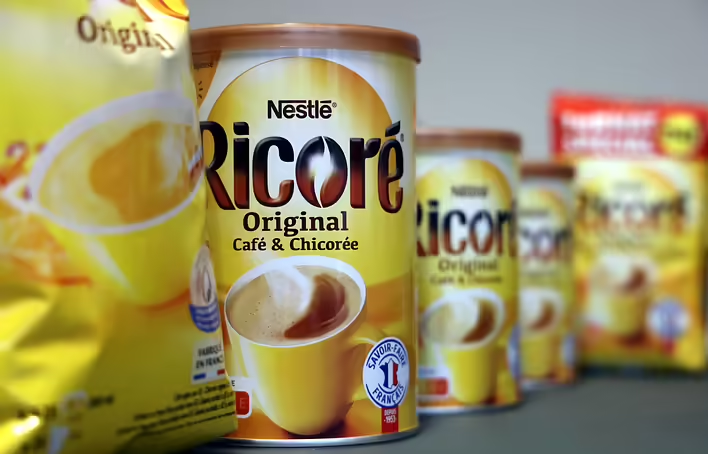
Although Ricoré is most often associated with France, the combination of coffee and chicory is far from a unique phenomenon. In various countries, such drinks have arisen for similar reasons: coffee shortages, frugality, a desire for a milder taste, or simply habit. Over time, many of them ceased to be "substitutes" and transformed into a distinct tradition.
Soluble chicory (France)
In addition to Ricoré, pure soluble chicory without coffee is very popular in France. It is simply called chicorée. This is a caffeine-free drink that is often consumed in the evening or given to children. For many French people, chicorée is not an alternative to coffee but a separate drink with its own flavor and ritual. It is less bitter, has caramel notes, and is often associated with "quiet" breakfasts or evenings.
Café de chicorée (Belgium and northern France)
In Belgium and the northern regions of France, there is a tradition of ground coffee with added chicory, brewed like regular filter coffee. Here, chicory is not a soluble product but a full-fledged part of the grind. The drink turns out rich, dark, with a characteristic bitter-sweet note. This is a more "adult" version of coffee with chicory, without associations with childhood, but with a strong regional identity.
Café du chicory / New Orleans coffee (USA)
In New Orleans, coffee with chicory is a true cultural symbol. The tradition emerged in the 19th century, particularly solidified during the Civil War in the USA when coffee was scarce. Unlike Ricoré, regular ground coffee is usually used here with the addition of roasted chicory, without soluble formats. The drink is often served in cafes alongside beignets and is perceived not as a compromise but as "proper" local coffee.
Ricoffy (South Africa)
Ricoffy is a drink often referred to as the South African relative of Ricoré. It consists of coffee and chicory and became extremely popular in South Africa in the 20th century. Unlike France, where Ricoré is more of a breakfast classic, Ricoffy in South Africa has almost national drink status. It is consumed at home, at work, in large quantities, and for many, it completely replaces regular coffee.
Cereal and chicory drinks of Central Europe
In Poland, Germany, the Czech Republic, and Ukraine, there is a separate category of drinks based on chicory, barley, rye, or beet. The most famous examples are the Polish Inka and the German Caro. They often contain no coffee at all but function similarly to Ricoré — a warm "everyday" drink, mild, without a sharp stimulating effect. They also have a strong nostalgic dimension and are often perceived as childhood drinks.
What is the main difference from Ricoré
Ricoré occupies an intermediate position between coffee and coffee substitutes. It contains real coffee but does not attempt to be "full-fledged" coffee in the classical sense. Other drinks either lean towards pure coffee with chicory added (as in New Orleans) or completely forgo coffee (like chicorée or cereal drinks).
It is this in-betweenness that has made Ricoré successful: it does not deny coffee, but it also does not require the consumer to love its bitterness and strength.
Drinks similar to Ricoré exist in many cultures and are almost always associated with everyday life rather than luxury. They rarely become trendy but remain in everyday use for a long time. Ricoré is just the most well-known example of how a simple blend can transform into a cultural marker and part of national taste.
This post doesn't have any additions from the author yet.