This content has been automatically translated from Ukrainian.
In Japan, reuse is not just a trend, but a part of the worldview. There is even a separate word — mottainai (mottainai). It means regret over wastefulness, the feeling that an item has not been fully utilized, that there remains unused potential in it. This concept has Buddhist roots and is connected to respect for labor, materials, and nature.
In everyday life, mottainai manifests in small things: careful storage of packaging, repairing appliances instead of immediate replacement, using things “to the last.” For many Japanese, throwing away something that still works is not just economically unwise, but internally uncomfortable. That is why the resale culture here is organic, rather than artificially imposed by an eco-trend.
Second-hand in Japanese
In Japan, resale store chains, such as Book Off, are extremely popular. They started with used books in the 1990s but later expanded to clothing, household appliances, musical instruments, video games, and even luxury goods. Today, it is a vast network with hundreds of stores across the country.
A distinctive feature is the condition of the items. Most products look almost new: Japanese culture of cleanliness and care plays its part. Before hitting the shelves, items are checked, cleaned, and sorted by quality categories. Because of this, second-hand in Japan is not associated with poverty or “forced choice” — it is rather about rationality and the habit of not overpaying for new when you can buy something almost perfect at a lower price.
Moreover, for young people, it is also a way to find unique items — vintage, old clothing collections, or items that are no longer produced.
Luxury consignment shops
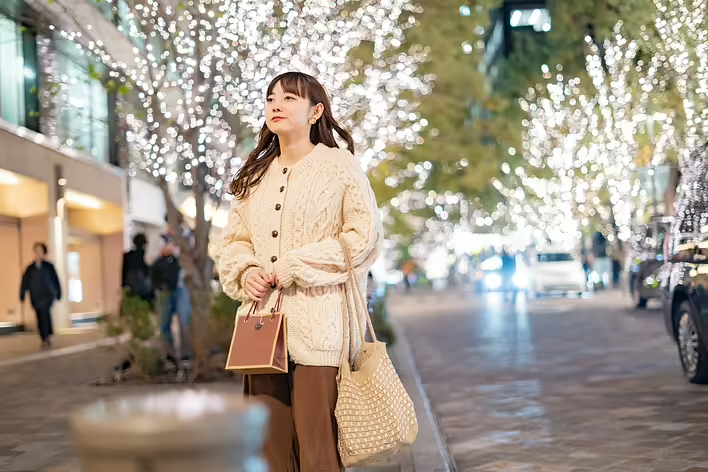
Another interesting niche is the resale of designer brands. In areas like Tokyo, you can find entire neighborhoods with stores specializing in bags, watches, and accessories from world fashion houses. The Japanese second-hand luxury market is considered one of the largest in the world.
There are several reasons for this. First, Japanese consumers take great care of their belongings, so even used bags are often in excellent condition. Second, the country has strict legislation against counterfeits, and stores carefully verify the authenticity of products. Because of this, the level of trust is very high.
For many, it is an opportunity to buy a designer item at a lower price or sell their own if it is no longer used. Luxury here also “circulates,” rather than settling permanently in a wardrobe.
Minimalism and small apartments
Japanese homes are often compact, especially in large cities. Limited space literally forces regular reassessment of belongings. There is simply no room to store “just in case.” This fosters a culture of constant renewal — without accumulation.
Additionally, Japan has a complex waste disposal system: large items cannot simply be placed next to the trash. You need to order special pickup and pay a fee. Therefore, selling an item or donating it to a resale shop is often easier and cheaper than disposing of it.
This combination of economy, space, and a culture of minimalism creates a favorable ground for resale.
Online platforms
Reuse has also actively moved online. Platforms like Mercari allow you to easily sell items through an app in just a few minutes. The user takes a photo of the item, sets a price, and the system organizes delivery.
Online resale is especially popular among young people. They sell everything — from children's clothing to rare anime character figurines and gadgets. It is fast, convenient, and socially acceptable. Selling the excess is just as normal as buying new.
In fact, digital services have made mottainai a part of the modern economy.
Why this is interesting for Ukraine
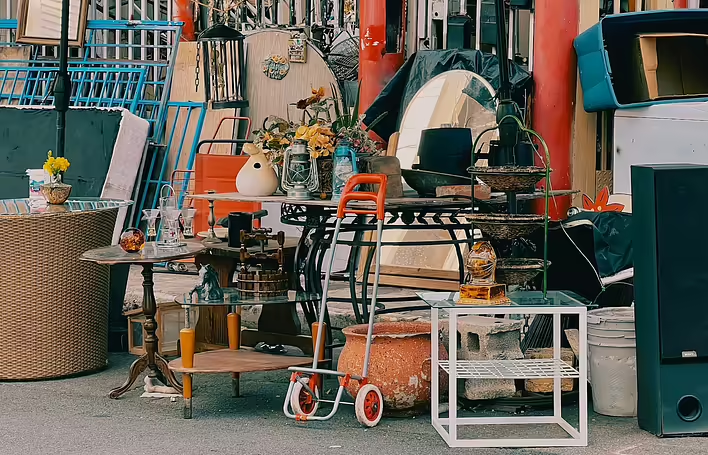
In Ukraine, the culture of reuse is also developing: second-hand shops have long been popular, and interest in resale, local flea markets, and marketplaces is growing. But the Japanese example shows another perspective — when reuse is not just about saving money.
In Japan, it is a matter of respect for resources, time, and labor invested in creating an item. There, resale is not a compromise, but a logical part of the life cycle of objects. And perhaps this approach is gradually becoming a global trend that combines economy, ecology, and the culture of everyday life.
Like it?React
🧵
This post doesn't have any additions from the author yet.