This content has been automatically translated from Ukrainian.
Albedo effect is a phenomenon where different surfaces reflect sunlight differently. Light surfaces reflect a larger portion of solar energy back into space, while dark ones absorb it and heat up.
That is why the color and type of surface matter for the temperature not only of a specific area but also of entire regions and the planet as a whole.
Perhaps someone remembers how parents would dress their children with dark hair in a sun hat on a hot summer day.
What is albedo
Albedo is an indicator that characterizes the ability of a surface to reflect solar radiation. It is usually expressed as a number from 0 to 1 or in percentages.
- 0 - the surface reflects almost nothing and absorbs nearly all radiation;
- 1 (100%) - the surface completely reflects sunlight;
- the higher the albedo, the less solar energy the surface absorbs.
For example, fresh snow has a very high albedo - it can reflect a significant portion of sunlight. In contrast, asphalt or dark soil has a low albedo and actively heats up in the sun.
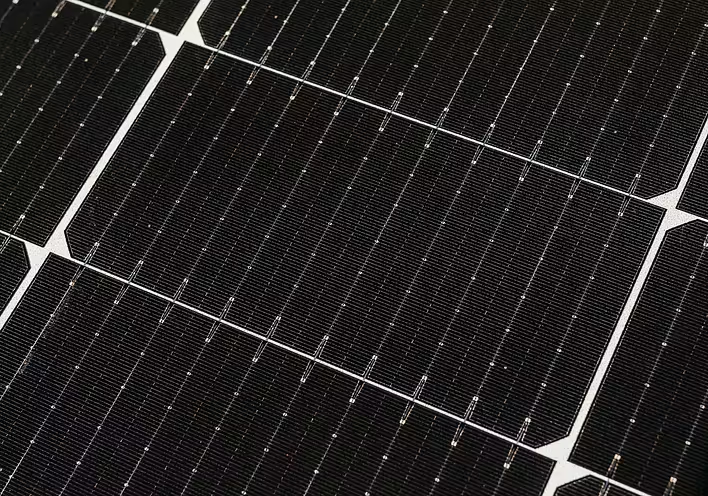
I saw this term when I was watching reviews of solar panels (bifacial). And I remembered that I also saw this indicator in the specifications of roofing materials (this is important given the constant rise in temperatures in summer).
How the albedo effect works
Imagine a sunny day in winter. Sunlight hits white snow. A significant portion of the light is reflected back, so the snow absorbs relatively little energy.
If that same snow melts and dark soil is exposed, the situation changes. The dark surface will absorb more solar energy and heat up more.
This can be simplified to the following chain:
light surface → more reflection → less absorption → less heating
dark surface → less reflection → more absorption → more heating
This property is the basis of the albedo effect.
Examples of albedo of different surfaces
Different natural and artificial surfaces have different abilities to reflect light.
These values are approximate: the actual albedo depends on humidity, angle of illumination, surface structure, season, and other factors.
Why snow matters
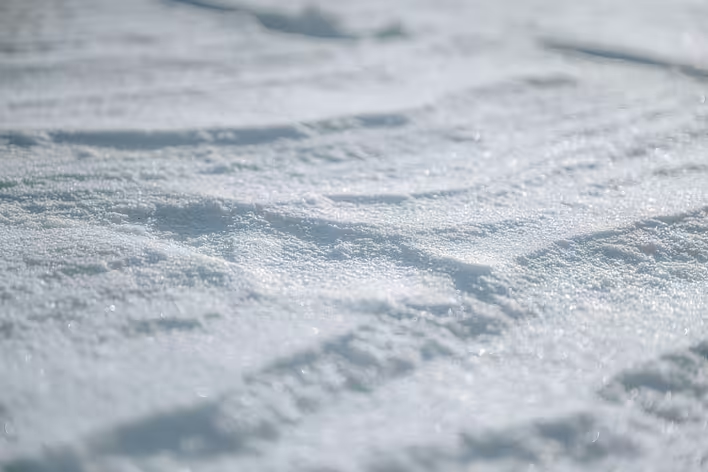
One of the most well-known examples of the albedo effect is related to snow and ice.
The snow cover reflects a significant portion of solar radiation. When the temperature rises and the snow begins to melt, the white surface gradually disappears. Instead, darker ground, water, or vegetation is exposed.
The darker surface absorbs more solar energy → heats up more → snow and ice melt faster.
This creates a positive feedback loop:
warming → melting of snow and ice → decrease in albedo → more absorption of solar energy → additional warming.
The reverse process is also possible: an increase in snow cover enhances the reflection of sunlight and can contribute to cooling the surface.
This aspect interests me in the context of solar panels and installation at 90 degrees. I hope to see the effect this winter.
Albedo effect and global warming
Albedo is one of the factors that affect the Earth's energy balance.
Our planet receives energy from the Sun. Part of this energy is reflected by clouds, the atmosphere, and the Earth's surface back into space. Another part is absorbed and converted into heat.
If the Earth's surface becomes darker, for example, due to a decrease in the area of snow and ice, it can absorb more solar energy.
At the same time, albedo is not the only reason for changes in the planet's temperature. The climate is also influenced by the concentration of greenhouse gases, cloudiness, oceans, atmospheric circulation, volcanic activity, and other processes. Overall, this issue is very complex.
Does albedo affect cities
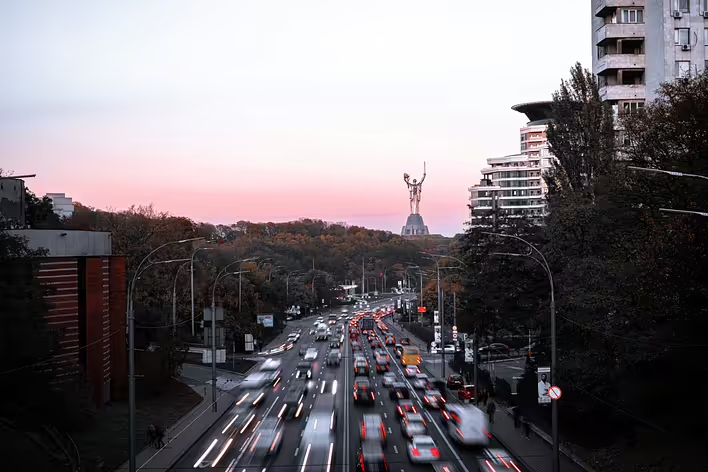
The albedo effect can be observed even in an ordinary city.
Dark roofs, paved roads, and other dark surfaces absorb a lot of solar energy and heat up. Light roofs and facades reflect more solar radiation and may heat up less.
This is related to the phenomenon of urban heat island, where the temperature in urban areas can be higher than in the surrounding rural areas.
Therefore, during the design of buildings, light roofing materials and surfaces with high albedo are sometimes used. This can reduce the heating of buildings during hot periods.
Can we change the Earth's albedo?
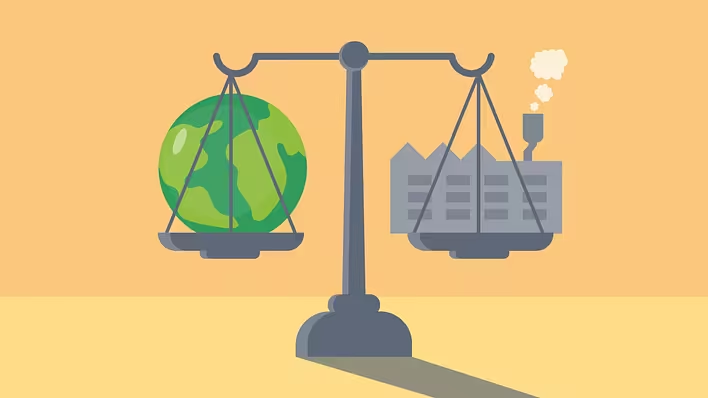
Humans constantly change the characteristics of the planet's surface. Deforestation, urban development, agriculture, changes in the area of snow cover and glaciers can affect the albedo of specific areas.
For example, converting forested areas into agricultural land changes the ability of the surface to reflect solar radiation. However, the impact of such a transition is not always the same - evaporation of water, amount of vegetation, cloudiness, and other factors are also important.
That is why albedo is considered not in isolation but as part of a complex climate system.
The albedo effect is the influence of the ability of a surface to reflect solar radiation on its heating. Light surfaces, such as snow and ice, reflect a lot of solar energy, while dark surfaces - asphalt, forest, or dark soil - absorb it significantly more.
Like it?React
🧵
This post doesn't have any additions from the author yet.