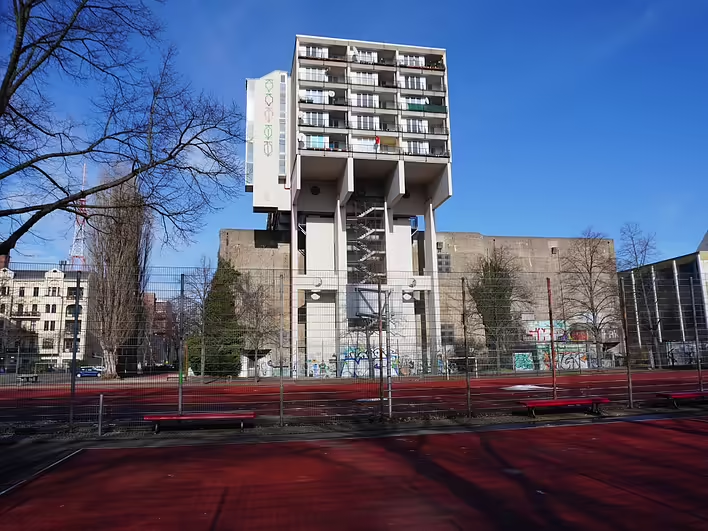
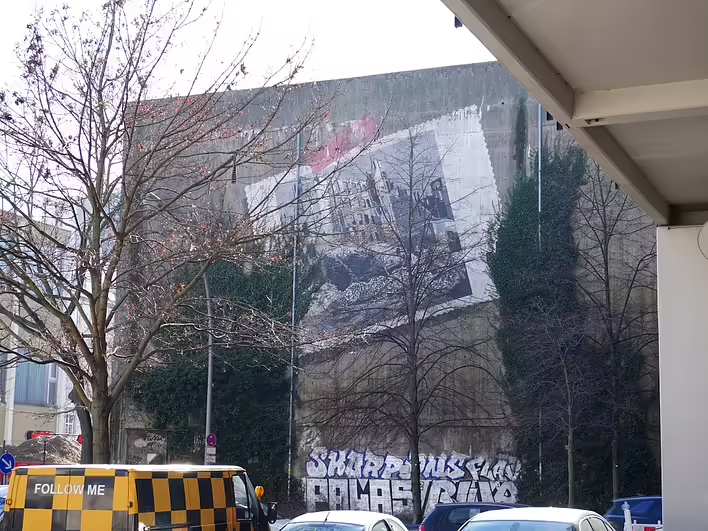
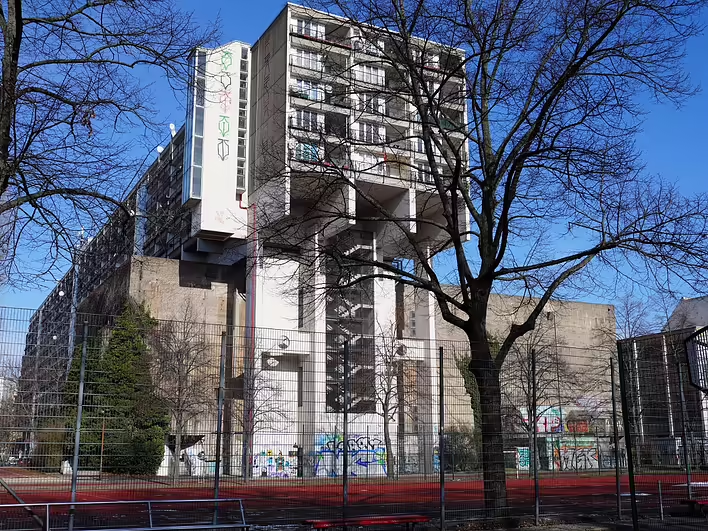
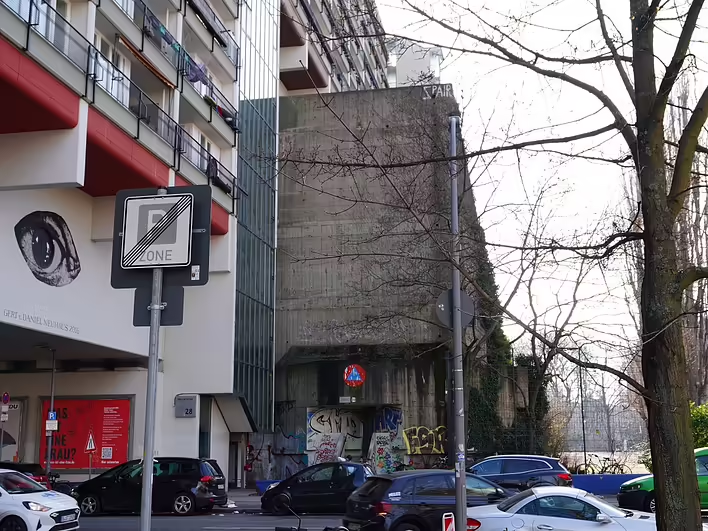
Berlin is a city where history is literally inscribed in the urban landscape. Ruins, restored buildings, and Cold War monuments remind us of the past. But there is one structure that stands out in particular. This is Der Hochbunker an der Pallasstraße – an above-ground bunker that survived World War II and became the foundation for a multi-story residential building. It is one of the most astonishing architectural curiosities of the German capital.
The History of the Bunker
The bunker on Pallasstraße was built in 1943 during World War II. Its purpose was clear: to protect the residents of Berlin from the massive bombings by the Allies. Its walls, up to 3 meters thick, provided a reliable shelter for hundreds of people.
After the war, a problem arose: what to do with this massive concrete structure? Demolishing such an object would require significant financial costs and technological solutions that were not available at the time. The bunker stood idle until 1977 when an unconventional solution was found: not to demolish it, but simply… to incorporate it into a residential complex.
A House on the Bunker: How Is This Possible?
At first glance, the modern residential building at Pallasstraße 24 looks ordinary, until you pay attention to the lower part. The bulky gray concrete structure beneath it is the very Hochbunker. It looks as if the high-rise simply grew on its base. The building consists of 15 floors and is part of a large residential complex, with the bunker serving as a kind of foundation. An architectural solution that seems unreal has actually become a forced necessity.
Life Next to the Ghost of the Past
Berliners have different attitudes towards this structure. For some, it is a historical witness and a reminder of a tragic past; for others, it is just an inconvenient concrete monster overshadowing the courtyard. Despite this, it remains part of the urban landscape and a kind of symbol of how the city changes while not forgetting its history.
Today, the bunker is partially used – in particular, for tours. Its walls hold the memory of the war, and although most of the interior spaces are closed, some can be visited to feel the atmosphere of the military years.
The Future of Hochbunker: Preserve or Demolish?
From time to time, discussions arise in Berlin about the future of this structure. Some believe that the bunker should be preserved as a historical object, while others propose to dismantle or repurpose it. Considering that demolition would cost millions of euros, it is likely to remain where it is for many decades to come.
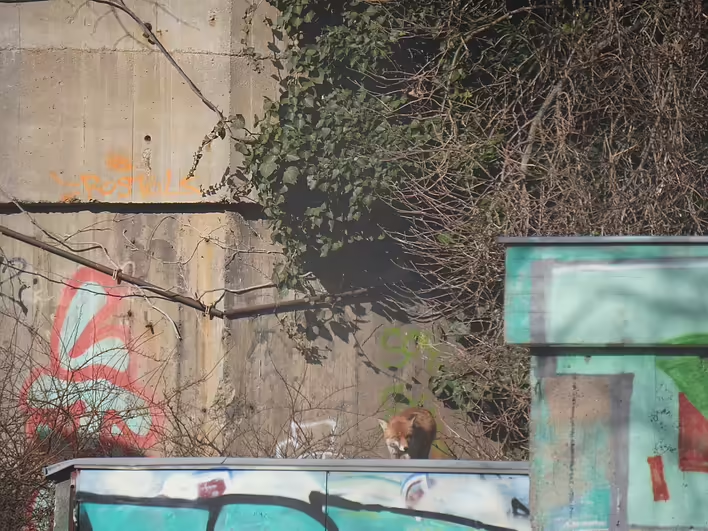
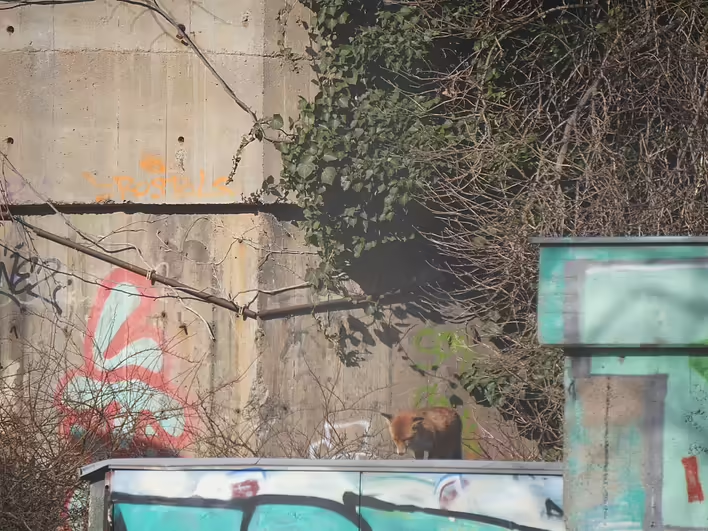
The bunker on Pallasstraße is not just a construction artifact, but a symbol of adaptation, resilience, and historical memory. It reminds us that the city evolves, changes, but never forgets its past. Interestingly, just next to this structure, forests thrive, adding even more contrast to this unique place.