This content has been automatically translated from Ukrainian.
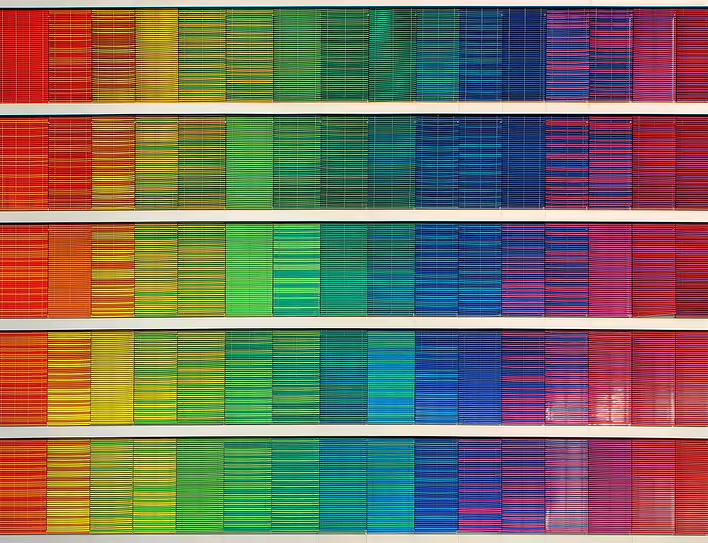
HSL is a color representation system based on three parameters: hue (Hue), saturation (Saturation), and lightness (Lightness). Each of these parameters defines different aspects of color:
- Hue: Defines the type of color and its position on the color wheel. Hue is measured in degrees and can take values from 0 to 360.
- Saturation: Defines the intensity of the color. Saturation values range from 0 to 100%, where 0% means no color (hue in a gray state), and 100% represents maximum saturation.
- Lightness: Defines the brightness of the color. Lightness values also vary from 0 to 100%, where 0% represents black, 100% represents white, and values in between represent various shades of gray.
HSL is often used in web design and graphics for the convenience of defining and working with colors, as this system provides intuitive parameters that reflect the ways in which people perceive and describe colors.
Number of Possible HSL Colors
Hue can have 360 different values (from 0 to 359). Saturation and lightness can each have 101 different values (from 0 to 100). The total number of possible colors: 360×101×101=3,656,400.
So this is less than in RGB and HEX.
HSL Transparency
The alpha channel is absent in the original HSL model. However, there are extended versions of HSL, such as HSLA (Hue, Saturation, Lightness, Alpha), where an alpha channel is added to define the transparency of the color. The HSLA format allows using HSL to define the color and adding an alpha channel to control transparency.
Like it?React
🧵
This post doesn't have any additions from the author yet.