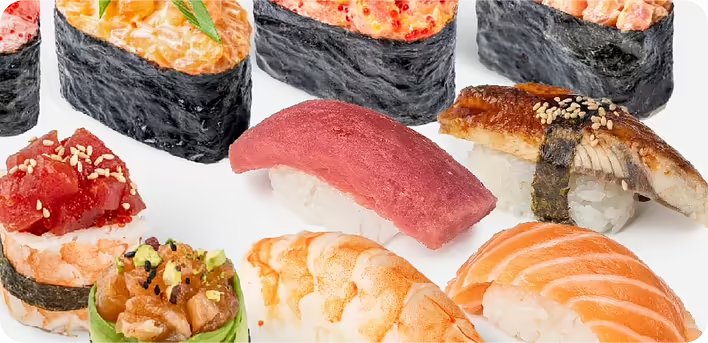
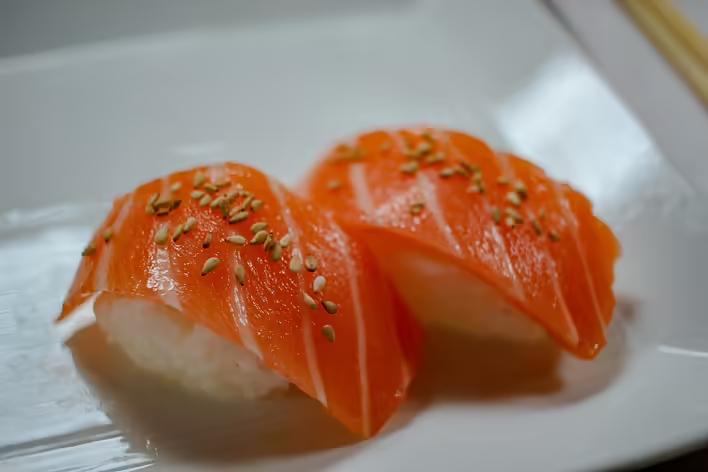
Sushi is not just food, but a whole cultural tradition that dates back centuries. Although today they are associated with Japan, their roots lead to China, where as early as the 2nd century BC, fermented fish was preserved in cooked rice for conservation. The Japanese borrowed this practice but improved it, creating sushi in its modern form – not just a means of preserving fish, but a delicacy that emphasizes the freshness of the ingredients.The first sushi resembling the modern kind appeared during the Edo period (17th–19th century), when Edomae-zushi (江戸前寿司) became a popular street fast food. These were nigiri – rice balls with fish, prepared quickly.Over time, sushi evolved, and various variations appeared, but they all preserved the main principle – a balance between rice, seafood, and spices.
What are rolls?
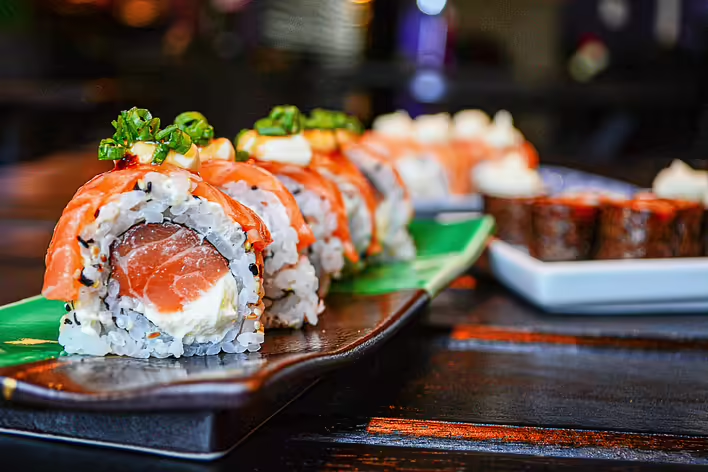
Rolls are a modern adaptation of sushi that was born outside of Japan. They are known in traditional Japanese cuisine as makizushi (巻き寿司) – "rolled sushi," but it was in the USA and Europe that they transformed into a separate category of dishes with their own rules and cooking techniques.
If you are looking for sushi and rolls that combine Japanese quality with a modern approach, it's worth visiting the restaurants of the Ninja Sushi chain. Here, they know the perfect balance of flavors, so each roll or nigiri is not just a dish, but a true gastronomic experience.
In classic Japanese rolls, rice and filling are wrapped in nori seaweed, and they are small and minimalist. But Europeans and Americans reimagined this idea, making rolls:
bigger – in Asia, rolls are compact, while in the West they became significantly more substantial;
more diverse – adding cream cheese, avocado, mango, smoked fish, mayonnaise sauces;
brighter – instead of traditional nori on the outside, they began using rice, sesame, or even frying rolls in batter (tempura).
One of the most famous examples is "California", created by Japanese chef Ichiro Mashita in the 1970s in Los Angeles. Since Americans did not like nori, he wrapped it inside and sprinkled tobiko roe on top.
Classic sushi vs. European rolls: what to choose?
Traditional Japanese sushi is an art of minimalism: fresh fish, rice, vinegar, seaweed. Nothing superfluous. The main focus is on the quality of the ingredients. That is why in Japan, sushi is eaten in small portions, savoring each piece.
Western rolls are an experimental approach: cream cheese, frying, additional sauces that add brightness to the flavor. They are more filling and often served with a large number of accompaniments.
Interesting facts about sushi and rolls
In Japan, sushi masters train for up to 10 years before they are allowed to prepare sushi independently in a restaurant. A large part of the training is dedicated to the proper cooking and shaping of rice.
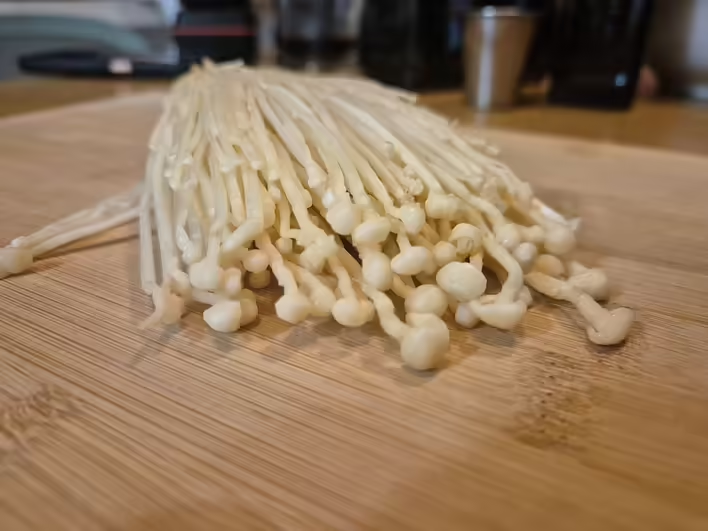
Sushi without fish is also a traditional dish! For example, shitake-mae-zushi (椎茸前寿司) – sushi with shiitake mushrooms, and inari-zushi (稲荷寿司) – with marinated tofu.
Rolls appeared in Japan as early as the 18th century, but their appearance was different – they were very simple, without complex fillings and sauces.
One of the most expensive types of sushi is otoro nigiri, made from the fattiest part of the tuna. Its price can reach hundreds of dollars per serving.
In traditional sushi bars in Japan, serving wasabi separately is considered bad manners. The chef adds just the right amount needed for the perfect balance of flavor.
If you want to experience true Japanese culture, pay attention to nigiri, gunkan, sashimi. They reflect the traditional approach to sushi.
If you prefer heartier and richer flavors, choose Philadelphia, California, tempura rolls. This is the perfect option for gatherings and informal meetings.
And most importantly – it doesn't matter what you choose: classic sushi or modern rolls. The main thing is that they are of high quality and fresh.