This content has been automatically translated from Ukrainian.
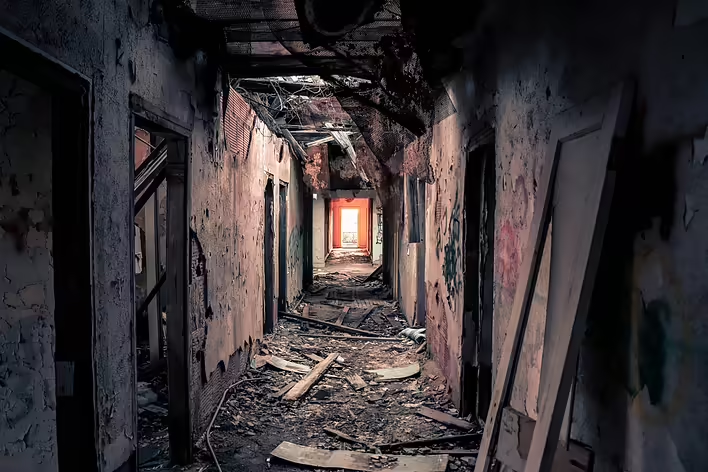
Squatting is the practice of unlawfully occupying abandoned or unoccupied buildings without the owner's permission. People who engage in squatting are called squatters. For some, it is a forced necessity due to homelessness, while for others, it is a political act or a lifestyle.
How did squatting originate?
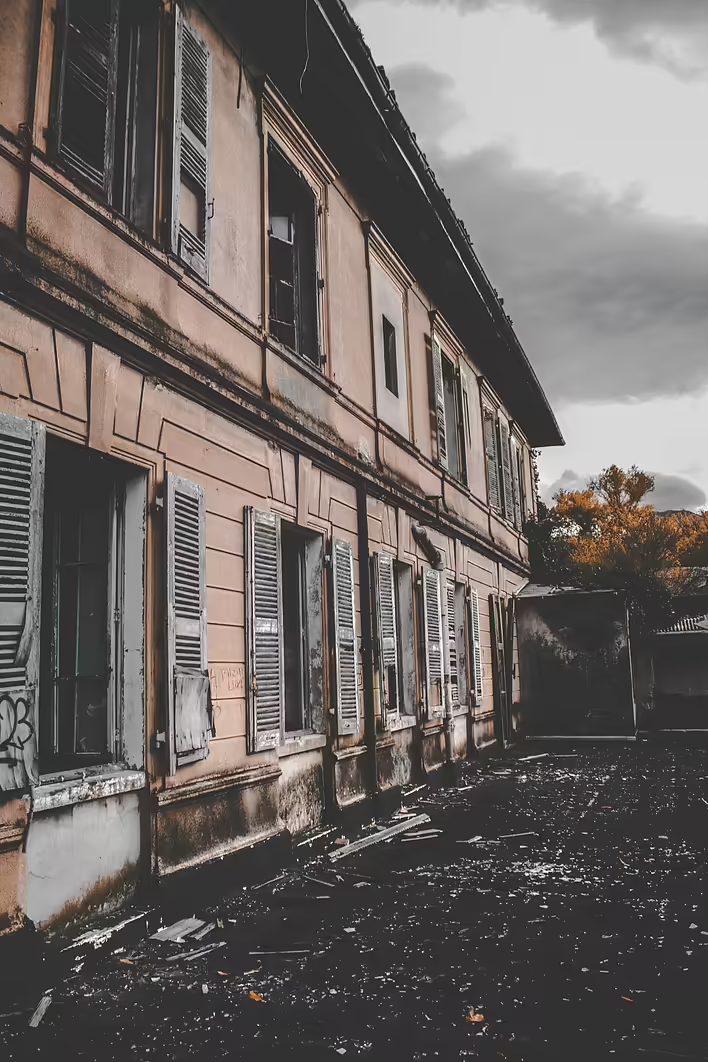
The roots of squatting go back centuries. Even in the Middle Ages, peasants could seize unworked lands and inhabit them. In the 19th century, a similar practice existed in the USA, where colonists and settlers unlawfully settled on unoccupied lands, which were later even legalized.
In the 20th century, squatting became an important social movement. After World War II, thousands of people in Europe and the USA were left homeless, leading them to occupy abandoned houses. However, the squatter movement gained the most momentum in the 1960s and 70s, when it was actively supported by anarchists, punks, left radicals, and subcultures fighting against consumer society.
Squatters: who are they?
Among squatters, several main groups can be identified:
- Homeless people who are simply looking for a roof over their heads.
- Activists who oppose the housing crisis and inequality.
- Artists and creative communities that turn squats into cultural spaces.
- Anarchists and anti-capitalists who use squats for autonomous living outside the market economy.
Often, squats turn into alternative cultural centers – galleries, music stages, theaters are opened in them, and lectures and discussions about society and politics are held.
Where has squatting been (and remains) popular?
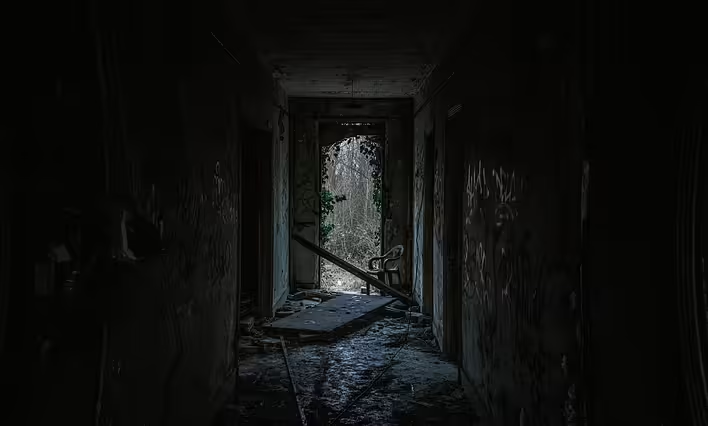
Squatting exists all over the world, but it has gained particular popularity in some cities:
- Amsterdam (Netherlands) – in the 1980s, thousands of squats operated here, becoming part of urban life. In 2010, the authorities banned squatting, but the movement did not disappear.
- Berlin (Germany) – after the fall of the Berlin Wall, many abandoned buildings appeared in the city, which were occupied by squatters. Some of them turned into well-known art spaces, such as Tacheles.
- London (United Kingdom) – since the 1960s, London has become the capital of European squatting. Even famous musicians like Joe Strummer from The Clash started their lives in squats. In 2012, a law was passed in England that made residential squatting a criminal offense.
- Barcelona (Spain) – the squatter movement here is very strong. Some squats, such as Can Vies, have become centers of community life.
- Copenhagen (Denmark) – the famous free town of Christiania, founded in 1971, is the most well-known squat in the world.
Squatting in Ukraine
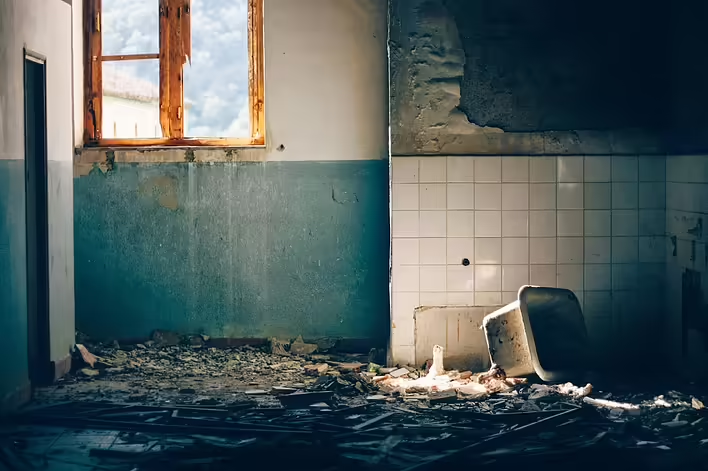
In Ukraine, the phenomenon of squatting also exists, although it is less developed than in Western Europe. After the collapse of the USSR, many industrial buildings, factories, and dormitories were left without owners. In Kyiv, Kharkiv, and Lviv, there have been attempts to create cultural squats where concerts, exhibitions, and film screenings were held. The most famous case is the art center "Pasika" in Kyiv, which operated in an abandoned building.
Is squatting legal?
The legal status of squatting depends on the country. In the Netherlands, the United Kingdom, and Germany, laws have tightened in recent years, and squatters are often evicted. At the same time, in some cities, local authorities negotiate with squatters and grant them legal status. For example, in Berlin, some squats have become official housing cooperatives.
Like it?React
🧵
This post doesn't have any additions from the author yet.