This content has been automatically translated from Ukrainian.
The word "bohemian" is one of those words that at first glance seems foreign and distant, but in reality, it has long taken root in our culture. It is not as popular among the youth as some modern slang expressions, but it is hard to imagine stories about high society and the elite without it. And this is where the real story begins. Let's explore how this word appeared in our language, what it means, and how it is used today.
The Origin of the Word
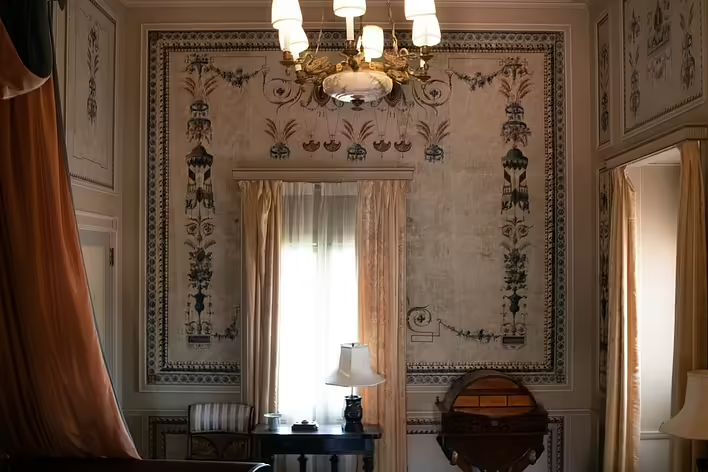
“Bohemian” (beau monde) comes from the French language and literally means “beautiful world.” In this context, it refers not to nature or architecture, but to people - those who belong to the upper echelons of society. The term was used to describe the social elite, particularly the aristocracy, representatives of high society who attended social events, receptions, balls, theatrical performances, and so on.
In the 18th-19th centuries, “bohemian” in France was closely associated with the image of refined, educated people who had good manners, exquisite tastes, and a love for art. These were the ones referred to as the "cream" of society, whose social manners set the trends of the time. Can you feel the scent of perfumes wafting from luxurious dresses and precious jewelry? These are the people who defined the lifestyle of contemporary Europe.
How the Word Entered the Ukrainian Language
The word “bohemian” did not remain exclusive to France. With the development of European culture and the influence of France on the social life of other countries, the term firmly entered the lexicon of many languages. Ukrainian was no exception. This word gained popularity back in the pre-revolutionary Russian Empire, where the French language was a sign of education and high status.
The word became established in Ukrainian culture as a characteristic of the “upper world.” And although after the revolutionary events and changes in the social structure such a division of society into classes became less pronounced, the term “bohemian” continued to live on. It has evolved along with society and continues to exist to this day.
Modern Usage
Today, the word “bohemian” is associated not only with aristocracy or refined aristocrats. It refers rather to a certain group of people who have influence, status, and, of course, money. These are representatives of show business, politicians, businesspeople, famous actors, singers, athletes, designers, and other public figures. Those who frequently attend social events, charity parties, premieres, and other gatherings where the elite of society congregate.
The modern “bohemian” does not always appear as refined and perfect as it was in the 18th century, but it remains a symbol of luxury, status, and a certain lifestyle. Sometimes this word even carries an ironic undertone when referring to a showy social lifestyle, detached from the real problems of society.
“Bohemian” and Social Life in Ukraine
In our country, the concept of “bohemian” has retained its relevance and is an integral part of the media landscape. We regularly see articles, reports, or photographs from various events where the so-called “Ukrainian bohemian” gathers. Whether it’s the opening of a new restaurant, a film festival, or a fashion show - these people define the direction of modern social culture.
Now, as the popularity of social networks and public life continues to grow, the boundaries between the “bohemian” and the rest of society are gradually blurring. Social life is becoming more accessible, and the meaning of the word “bohemian” is increasingly losing its aristocratic connotation. But still, when we talk about “bohemian,” we imagine people shining at social events and leaving a mark in history through their public activities.
Like it?React
🧵
This post doesn't have any additions from the author yet.