Table of contentsClick link to navigate to the desired location
This content has been automatically translated from Ukrainian.
How the bystander effect explains why people intervene less often when there are many witnesses around
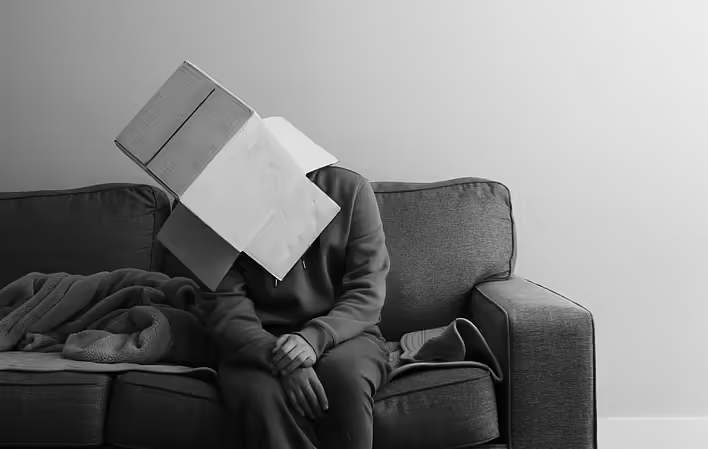
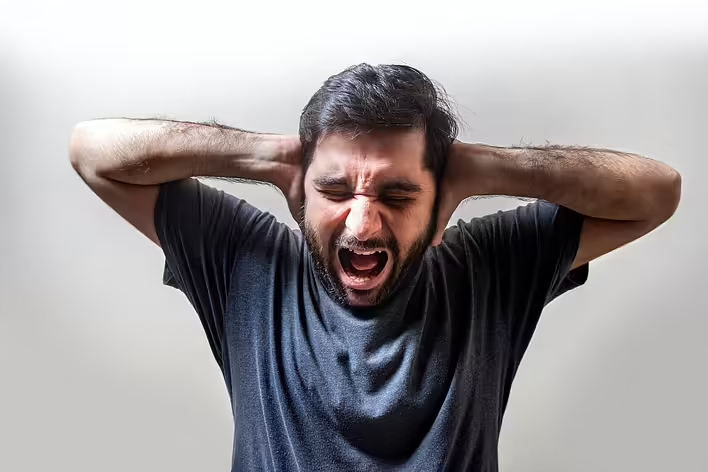
Imagine a situation: you are walking down the street and see someone who is unwell. There are many people around, all witnessing the same thing, but no one is rushing to help. You hesitate: maybe someone has already called an ambulance? Why is no one acting? This is a classic example of the bystander syndrome – a psychological phenomenon that causes us not to intervene when other witnesses are also present.
What is the bystander syndrome?
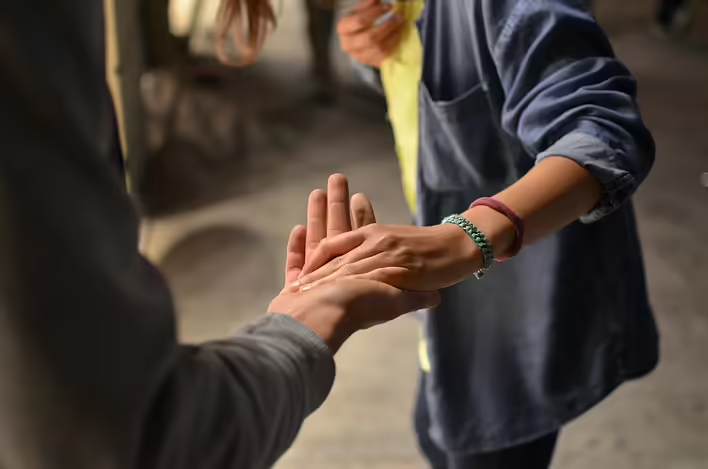
The bystander syndrome (or bystander effect) is a phenomenon where a person is less likely to help in an emergency situation when other observers are present. The more witnesses there are, the less likely it is that someone will intervene.
This phenomenon was first studied in the 1960s by social psychologists John Darley and Bibb Latané after the horrific murder of Kitty Genovese in New York. The woman was fatally attacked near her home, and although the assault lasted about 30 minutes, none of the numerous witnesses intervened. This case became a symbol of crowd indifference, although it later turned out that some people did attempt to call the police.
The bystander effect
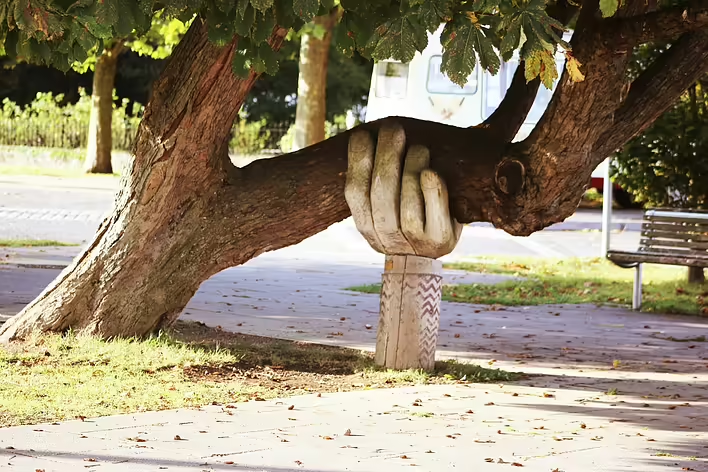
The main reason for the bystander syndrome is diffusion of responsibility. When a person is alone with a problem, they realize that the solution depends solely on them. However, if there are many witnesses, the responsibility seems to dissolve among all those present. People think:
- “Someone else has already helped”
- “Maybe it’s not that serious since no one is intervening”
- “I’m not sure I know what to do; it’s better to let someone more competent handle it”
This mechanism works even at a trivial level – for example, if someone in the office needs to take out the trash but no one does it because everyone thinks it should be done by someone else.
Factors that amplify the effect
In addition to diffusion of responsibility, there are other factors that influence a person’s decision to help or remain passive:
🔹 Fear of doing something wrong – people may be afraid to intervene because they don’t know how to act correctly or fear judgment from others. 🔹 Social comparison – if others are not reacting, then the situation may not be that serious. We subconsciously look for cues in the behavior of those around us. 🔹 Anonymity – in a large crowd, people feel less responsibility because their identity seems to dissolve among others.
Can the bystander syndrome be overcome?

Yes! There are ways to help overcome this effect and make society more responsive.
✔ Address people personally – if you need help, don’t just call out in general, but point to a specific person: “You in the red jacket, call an ambulance!”✔ Take the initiative – if you see that no one is acting, take the first step. This can prompt others to join in helping.✔ Raise awareness – understanding the diffusion of responsibility effect helps people consciously decide to help, even when others remain silent.
The bystander syndrome is not an expression of indifference but a natural psychological effect that arises from diffusion of responsibility. However, we can consciously counteract it if we learn to take the initiative and act even when others are passively observing. Sometimes a single brave action can change someone’s life – or even save it.
This post doesn't have any additions from the author yet.