This content has been automatically translated from Ukrainian.
Not long ago, a home network was limited to a laptop and a smartphone. Today, in an ordinary apartment, it is easy to have 10–20 connected devices: phones, TVs, gaming consoles, laptops, surveillance cameras, smart home systems, voice assistants. Such a load changes the requirements for the internet, and the changes are not just related to the need for increased speed.
How do problems manifest?
Each device uses network resources in its own way:
- Smart TVs consume streaming in 4K;
- gaming consoles use traffic for online games and downloads;
- laptops use resources for video calls, cloud work;
- smart home systems constantly run in the background;
- cameras are set for continuous video transmission.
Devices operate simultaneously, not sequentially. In such conditions, providers Lviv advise to pay attention to the following points:
- the network may "lag" due to a large number of connections;
- delays occur during video calls;
- the quality of streaming deteriorates.
But to fix these situations, it is not the data transfer speed that is important, but stability under load. Most problems are not with the provider, but with the user, due to the use of budget router models that are not designed to work with 8–10 devices. When choosing a model, it is necessary to consider support for Wi-Fi 5 and Wi-Fi 6, the router's processor power, and the number of simultaneous connections.
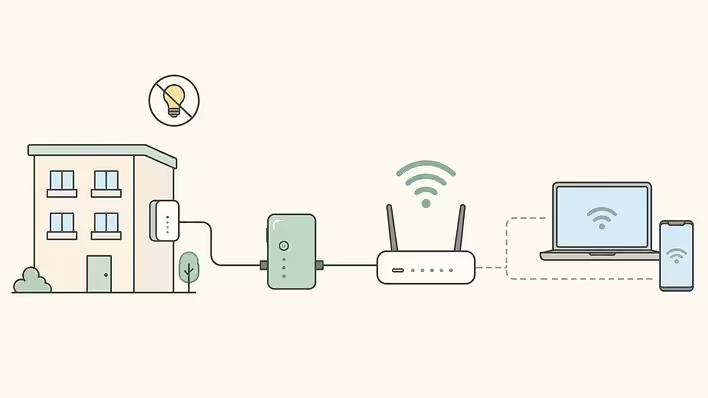
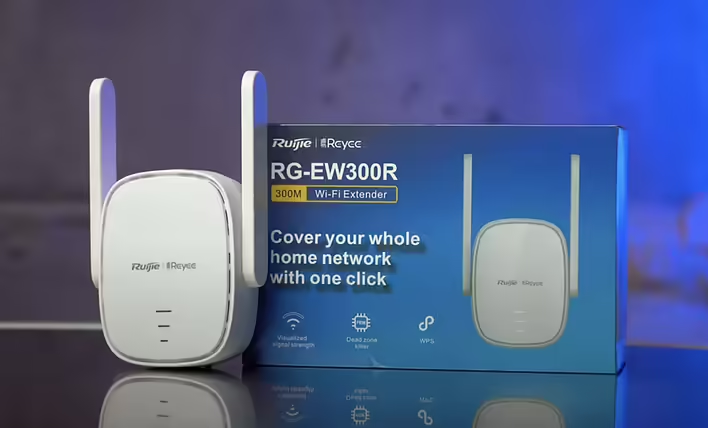
With a large number of devices, the factor of delays appears, and Wi-Fi coverage becomes a bottleneck. Even with good internet, there are "dead zones," the signal drops through walls, and the speed varies greatly in different rooms.
What requirements become relevant?
For a home where many devices are connected to the Internet simultaneously, providers recommend:
- ensuring a speed of at least 300 Mbps;
- installing a modern router released no more than 3–4 years ago, with support for a large number of connections and stable coverage throughout the area;
- using a Mesh system (a set of several Wi-Fi modules) for large apartments;
- connecting stationary devices (personal computer, TV) via cable.
Operating a network with many devices requires not just fast internet, but a well-structured configuration. Stability of operation is a more important factor than speed. A quality router is a key element.
The number of subscribers wishing to use many devices simultaneously in their home or apartment is increasing. To ensure their effective operation, it is worth choosing the services of a reliable provider. And although most problems are related to the home network, an experienced service provider can identify and quickly resolve them. The company "Kopiyka", an operator in Lviv with many years of experience, receives excellent reviews.
Like it?React
🧵
This post doesn't have any additions from the author yet.