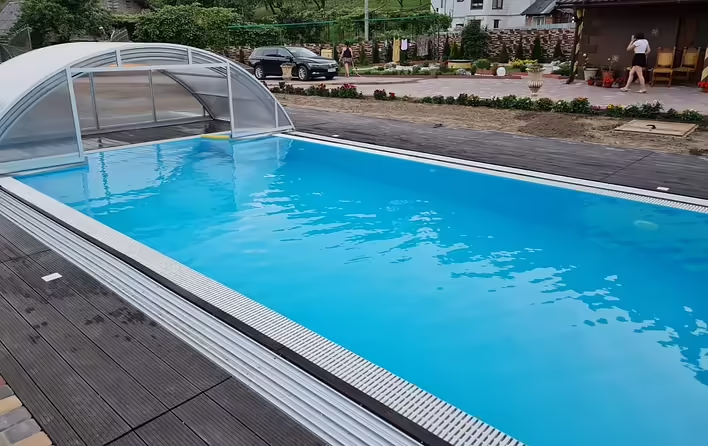
Imagine this: a hot summer day, cool water, refreshing drinks, and pleasant company. Sounds like the perfect vacation, right? What if this vacation could be available to you right in your own backyard? A pool is not just a luxury, but an investment in your comfort, health, and quality of life. Today we will explore how the dream of having your own water body can become a reality, thanks to the solution turnkey pool.
What is a turnkey pool: definition and advantages
A turnkey pool is a comprehensive solution that includes all stages of creating a water body: from project development to commissioning. In other words, you get a fully ready-to-use pool without worrying about organizational issues, finding various contractors, and overseeing the work. Everything is done by one team of professionals.
Who is the "turnkey pool" solution suitable for
This solution is ideal for those who:
Do not have the time or desire to independently organize the construction of a pool.
Want a guaranteed result performed by professionals.
Value their comfort and seek to minimize risks associated with construction.
Why choose a turnkey pool: saving time and effort
Building a pool is a complex and labor-intensive process that requires significant effort and time. By ordering a turnkey pool, you free yourself from the need to:
Search for and coordinate the work of various contractors (architects, builders, plumbers, electricians).
Handle the procurement of materials and equipment.
Control the quality of work performed.
Resolve unforeseen problems that may arise during construction.
However, saving time is just one aspect. The main thing is confidence in the result, as you trust the work to professionals.
Stages of building a turnkey pool: detailed overview
So, what does the process of building a turnkey pool consist of? Let's take a closer look at each stage:
Planning and design
This is, without exaggeration, the most important stage, as this is where the foundation of the future water body is laid. At this stage, the following occurs:
Determining the needs and wishes of the client: What size pool do you need? What shape do you like? What depth will be optimal for you and your family? Do you need additional features such as a jacuzzi or waterfall?
Choosing the type of pool: Stationary, inflatable, composite – each type has its advantages and disadvantages.
Project development: Based on your wishes and technical requirements, a detailed project of the pool is created, taking into account dimensions, shape, depth, location, as well as necessary equipment and systems.
Determining the necessary equipment and systems: Filtration, heating, lighting – all of this must be considered at the design stage. For example, sand filters or diatomaceous earth filters can be used for water purification.
Approval of the project and budget: After the project is developed, it is agreed upon with you, and a detailed budget is drawn up, indicating all costs for materials, equipment, and work.
Site preparation
After the project is approved, site preparation begins, which includes:
Soil and landscape assessment: It is important to consider the type of soil, groundwater level, and other site features to ensure the reliability and durability of the pool.
Clearing the area: Trees, bushes, stones, and other obstacles are removed from the site.
Excavation work: A pit is dug according to the dimensions and shape of the pool.
Construction work
At this stage, the actual construction of the pool takes place, which includes:
Preparing and pouring the foundation: The foundation provides strength and stability to the pool structure.
Installing the pool shell: The shell can be concrete, composite, or plastic. Concrete pools are considered the most reliable and durable, but their construction requires more time and effort. Composite pools are installed faster and have a smooth surface. Plastic pools are the cheapest option, but they have a limited lifespan.
Waterproofing the pool shell: Waterproofing prevents water leakage and protects the pool structure from destruction.
Equipment installation
After the pool shell is installed, the necessary equipment is installed, namely:
Installing the water filtration and circulation system: The filtration system cleans the water from impurities, while the circulation system ensures even distribution of chemicals and water temperature.
Installing the water heating system (if necessary): If you plan to use the pool in cold weather, it is necessary to install a water heating system.
Installing pool lighting: Lighting makes the pool more attractive and safe in the evening. Various types of lighting can be used, such as LED lamps, halogen lamps, or fiber optic lighting.
Connecting additional equipment (waterfalls, jacuzzi, etc.): If desired, additional equipment can be installed to make your pool more functional and comfortable.
Finishing work
Finishing work is the final touch in creating your water body, which includes:
Tiling the pool shell: Tiling can be done with tiles, mosaics, or PVC film. Tiles and mosaics are the most popular options as they look good and are durable. PVC film is a cheaper option but is less resistant to mechanical damage.
Laying tiles or decking around the pool: Tiles or decking create a comfortable and safe relaxation area.
Arranging the relaxation area around the pool: You can install sun loungers, umbrellas, tables, and other elements that will make your relaxation area more cozy and functional.
Testing and commissioning
After all construction and finishing work is completed, it is necessary to test the pool and put it into operation, namely:
Checking the tightness of the pool shell: It is checked whether there are any leaks in the pool shell.
Testing the operation of all systems and equipment: The operation of the filtration system, heating system, lighting, and other equipment is checked.
Adjusting water parameters: Water parameters such as pH, chlorine, and others are adjusted.
Client instruction on the operation and maintenance of the pool: The client is provided with instructions for the operation and maintenance of the pool.
Types of turnkey pools: a brief overview
As we have already mentioned, turnkey pools can be of various types. Let's look at the main ones:
Stationary pools (concrete, composite)
Stationary pools are the most reliable and durable water structures that are built directly on the site. They can be concrete or composite. Concrete pools are built from concrete and reinforcement, while composite pools are made from composite materials such as fiberglass and polyester resin. In terms of quality and reliability, the construction company "Dniprobud" stands out, which has an impeccable reputation in this field.
Inflatable pools (frame, frost-resistant)
Inflatable pools are a more affordable and quicker option that consists of ready-made elements assembled on-site. They can be frame or frost-resistant. Frame pools have a metal frame that supports the pool shell. Frost-resistant pools are made from materials resistant to low temperatures.
Plastic pools
Plastic pools are the cheapest and simplest option, made from plastic. They are easy to install and dismantle but have a limited lifespan.
Pool maintenance after construction
After the pool is built, it is important to ensure its proper maintenance, which includes:
Regular cleaning of the pool: It is necessary to regularly clean the pool from leaves, dirt, and other impurities. For this, you can use a manual vacuum cleaner, an automatic vacuum cleaner, or a skimmer.
Monitoring water parameters: It is necessary to regularly monitor water parameters such as pH, chlorine, and others. For this, special tests can be used.
Technical maintenance of equipment: Regular technical maintenance of equipment such as the filtration system, heating system, and others is necessary.
For example, if you have a filtration system with a sand filter installed, it is necessary to regularly backwash the sand. If you have a water heating system with a heat pump installed, it is necessary to regularly check the refrigerant level.
Conclusion
Ordering a turnkey pool is a convenient and profitable solution for those who want to have their own pool without unnecessary hassle. The main thing is to choose a reliable contractor who has experience and positive reviews. After all, a pool is not just a place for swimming; it is an investment in your comfort, health, and quality of life. Make your home even better by ordering a turnkey pool!