This content has been automatically translated from Ukrainian.
You may have seen in movies or series how a bride before the wedding tries to find “something old, something new, something borrowed, and something blue.” For many, this seems like a sweet wedding ritual, but behind these words lies an ancient Victorian tradition with rich symbolism.
“Something old, something new, something borrowed, something blue, and a sixpence in your shoe”
This rhyme originated in England, in Lancashire, back in the 19th century. It was first recorded in print in 1871. It was believed that such little things would protect the bride from the evil eye and ensure a happy marriage. Each of the elements had its meaning:
- something old symbolized a connection to family and the past;
- something new — the beginning of a shared life and hope for the future;
- something borrowed — luck from a happy married woman;
- something blue — fidelity and purity;
- and a sixpence in your shoe was meant to promise material prosperity.
This rhyme quickly made its way from England to the USA, where it became almost a mandatory element of wedding culture. In Scotland and Ireland, a sixpence is sometimes added as a sign of luck. Today, the tradition is known throughout the English-speaking world, and thanks to cinema and television — far beyond its borders.
Even British princesses have not missed this custom.
- Kate Middleton at her wedding to Prince William in 2011 had 19th-century lace as “something old,” earrings from her parents as “something new,” a Cartier tiara borrowed from Queen Elizabeth as “something borrowed,” and a blue ribbon sewn into her dress as “something blue.”
- Megan Markle in 2018 also adhered to the rhyme: “something old” was a piece of fabric from Princess Diana's wedding dress, “something new” was her Givenchy dress, “something borrowed” was Queen Mary's tiara, and “something blue” was Diana's aquamarine ring and forget-me-nots in her bouquet.
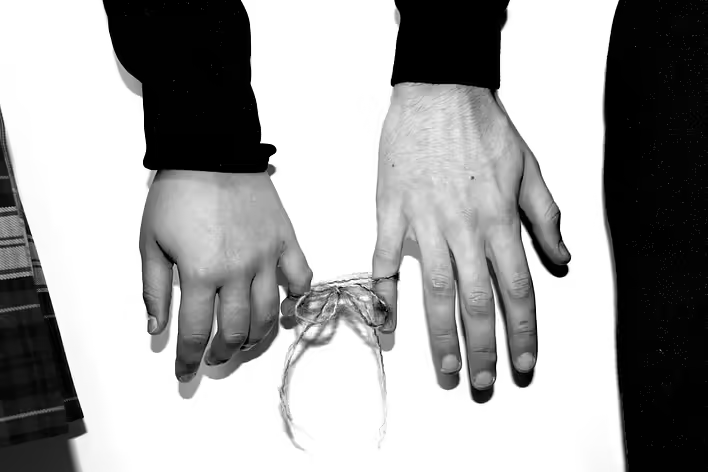
There are no similar rhymes in Europe, but symbolic rituals exist everywhere. In Germany, newlyweds hold a Polterabend and break dishes “for luck.” In Scotland and Ireland, they practice handfasting, where the hands of the bride and groom are tied with ribbons as a sign of unity. In Italy, the bride sometimes chooses a green detail as a symbol of luck, while in ancient Ireland, even blue wedding attire was considered blessed.
Like it?React
🧵
This post doesn't have any additions from the author yet.