This content has been automatically translated from Ukrainian.
Crossover is an artistic technique in which characters, locations, or events from different, usually independent, works meet in a single narrative space. In film and literature, a crossover means the merging of different universes or storylines, creating a new story where heroes who usually do not intersect interact. This can be a combination of heroes from different works by the same author or a meeting of characters from entirely different franchises, sometimes even genres.
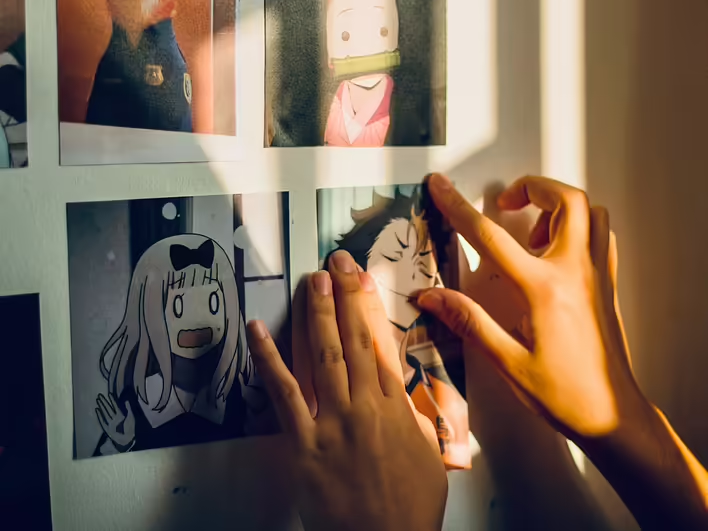
Crossovers can be official, sanctioned by rights holders and realized within the same company or studio, or unofficial — created by fans in the form of fanfiction or fan art.
Crossovers in Literature
In literature, crossovers existed even before the term itself appeared. One of the early examples is the novel The Mesmerian Novel by Théophile Gautier (1832), which features characters from other works of Romanticism. Other examples include works where authors voluntarily allow characters from one novel to appear in another. For instance, in the works of William Faulkner or Stephen King, many stories take place in the same fictional county or universe, and characters intersect in different books.
Fans create entire worlds where Harry Potter can meet Batman, or the heroes of The Hunger Games cross paths with characters from Divergent. Such fan crossovers are often published on platforms like Archive of Our Own (AO3) or Wattpad.
Crossovers in Film
In film, crossovers became particularly popular in the 21st century with the development of large franchises. The most famous examples include:
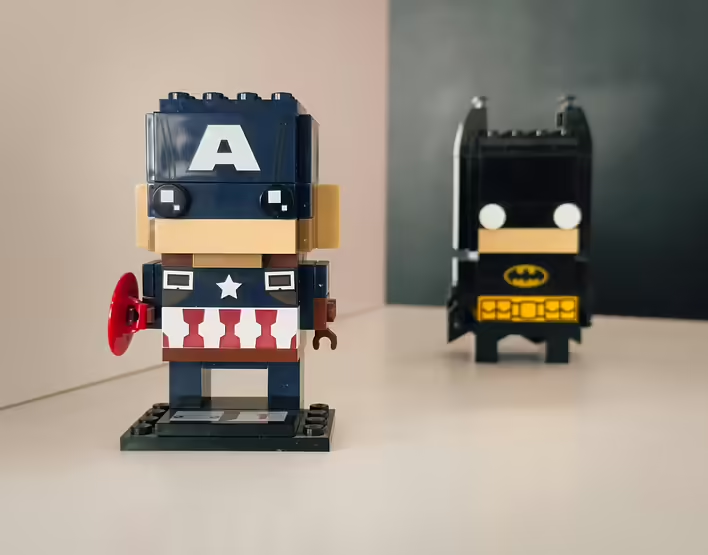
- Marvel Cinematic Universe (MCU): an example of a well-structured universe where each film can serve as a standalone story while including characters from previous or subsequent films. For example, The Avengers is a crossover of heroes from separate films: Iron Man, Thor, Captain America, etc.
- DC Extended Universe (DCEU): crossovers between films about Batman, Superman, Wonder Woman, and other heroes.
- Freddy vs. Jason (2003): a cult horror crossover where characters from two different horror film series — A Nightmare on Elm Street and Friday the 13th — meet.
- Godzilla vs. Kong (2021): an example of merging two major cinematic universes within the MonsterVerse.
- Spider-Man: No Way Home (2021): a landmark crossover that brought together three versions of Spider-Man (Tobey Maguire, Andrew Garfield, and Tom Holland), creating a meta-universe with references to previous franchises.
Reasons for the Popularity of Crossovers
- Nostalgia and recognition — viewers enjoy seeing familiar characters in new circumstances.
- Expansion of the universe — a crossover allows for a deeper exploration of the fictional world, adding new connections between stories.
- Marketing and profit — combining several well-known franchises attracts a wider audience and increases box office revenue or readership.
- Creative freedom — authors have the opportunity to play with canon, creating new combinations of plots and characters.
Crossovers in Series and Television
Crossovers are actively used in television series. An example is the so-called Arrowverse — the DC television universe, where characters from the series Arrow, The Flash, Legends of Tomorrow, and Supergirl regularly appear in each other's episodes.
Another example is crossovers in animation: The Simpsons crossed over with Futurama and The Griffins, creating comedic episodes featuring the characters together.
Thus, a crossover is a powerful artistic tool that allows creators to experiment, expand fictional worlds, and impress audiences with unexpected narrative merges. It has become an integral part of modern culture, especially in the era of franchises and multiverses. Due to its flexibility and potential for surprising plot twists, crossovers remain popular among both fans and content creators.
Like it?React
🧵
This post doesn't have any additions from the author yet.