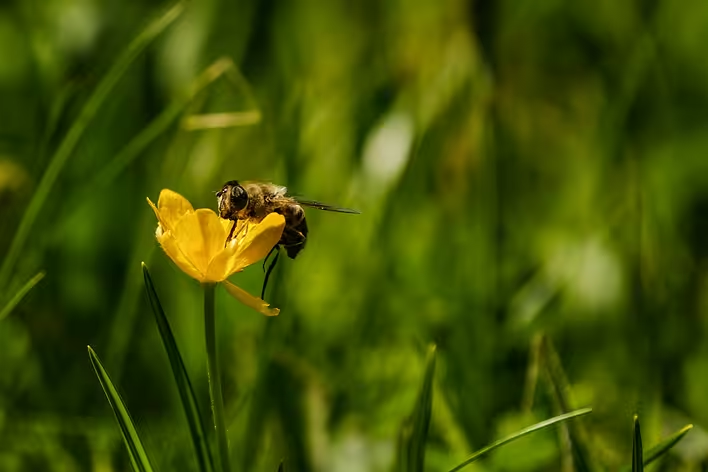
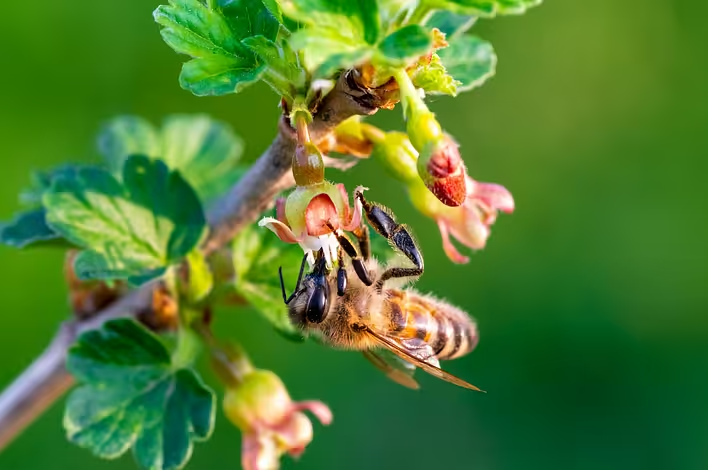
Osmia — are solitary bees from the genus Osmia, often referred to as "mason bees" due to their habit of building nests in natural cavities and sealing them with clay. Unlike common honeybees, they do not form large colonies, do not produce honey in the conventional sense, and do not exhibit aggressive behavior. This is why osmia are increasingly appearing in private gardens as natural pollinators.
Historically, these bees existed long before humans — they are wild species found in Europe, Asia, and North America. Interest in their targeted breeding began to grow actively in the 20th century when farmers noticed that osmia pollinate fruit trees significantly more effectively than even honeybees. For example, one osmia can do the work of several dozen worker bees, as it carries more pollen and is less picky about the weather.
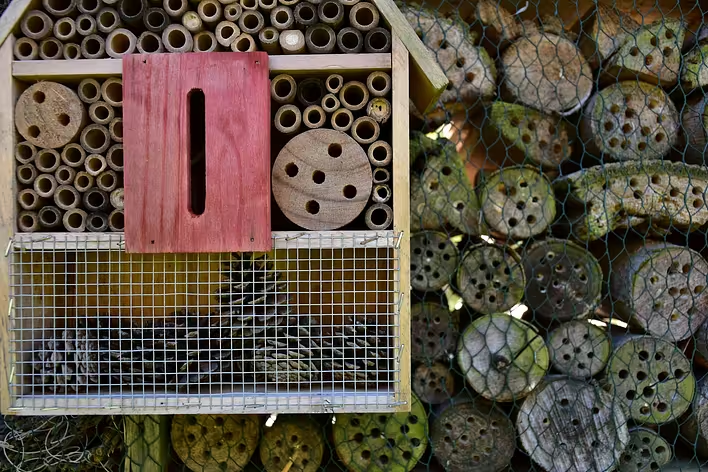
будиночок для осмій
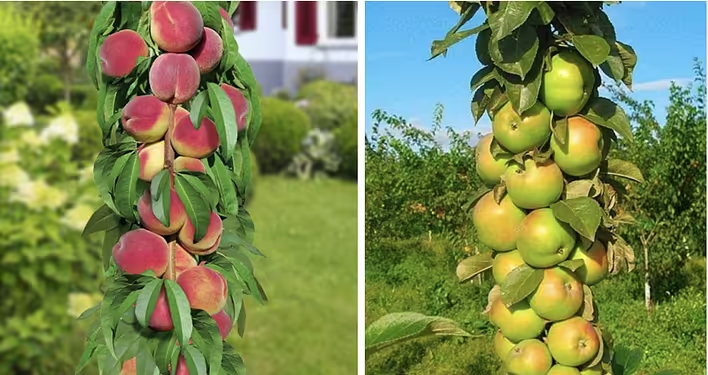
Osmia are especially valuable for gardens because they become active in early spring — just when apple, pear, plum, and cherry trees are in bloom. They are capable of working even in cool, overcast weather when other pollinators are less active. This makes the harvest more stable, and the number of fruits increases.
People keep osmia in gardens not only for their efficiency but also for their ease of care. These bees do not require hives, frames, or complicated maintenance. They do not defend their nest like a swarm, so they rarely sting (only in cases of severe irritation). This makes them safe even for families with children.
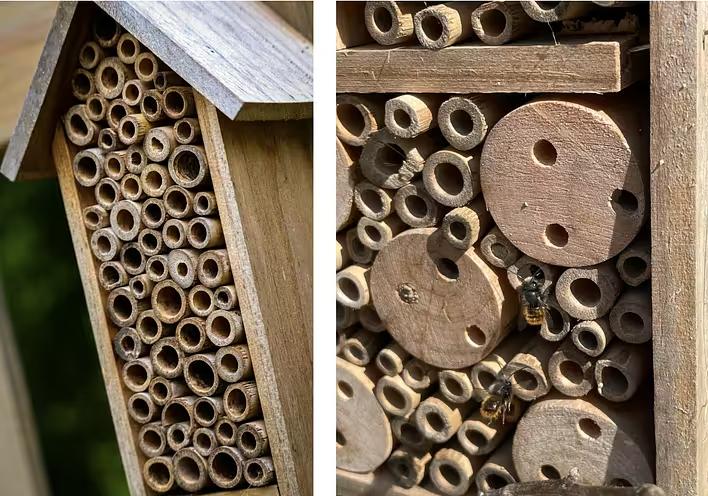
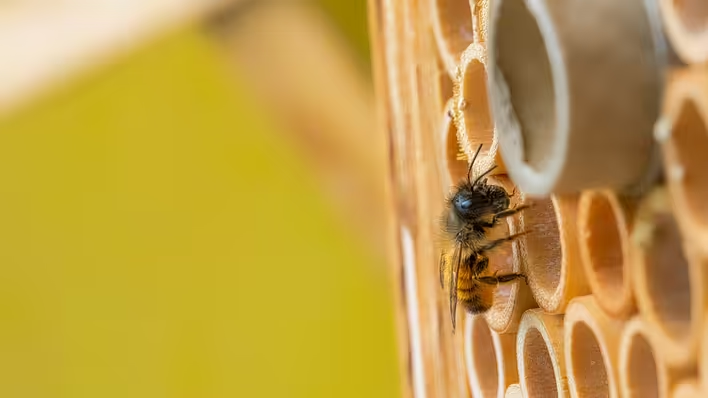
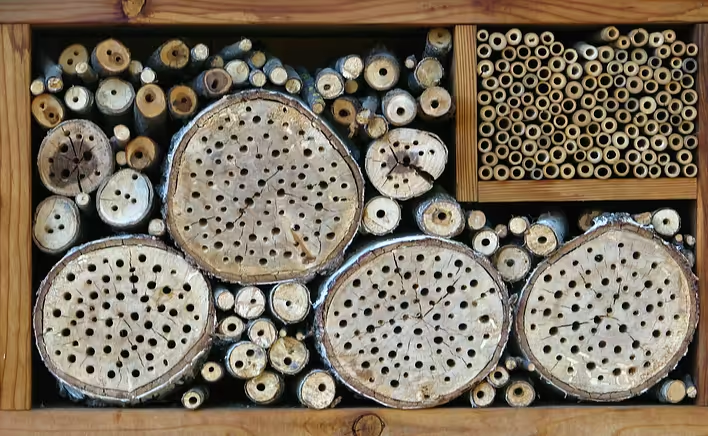
To attract or breed osmia, it is enough to create suitable conditions for them. The simplest way is to install special houses. These can be wooden blocks with drilled holes or bundles of reeds, bamboo, or paper tubes. It is important that the holes have a diameter of approximately 6–10 mm and a depth of 10–20 cm. It is in such cavities that females lay eggs, forming "cells" of pollen and nectar for future larvae.
The houses should be placed in a dry, rain-protected location, preferably at a height of 1–2 meters and facing the sunny side. There must be a source of clay or moist soil nearby — without this, osmia will not be able to close their nests.
If osmia are purchased, it often happens in winter in the form of cocoons. In this case, they need to be stored properly until spring. The best option is in the refrigerator at a temperature of about 2–4 °C, in a ventilated box. It is important to avoid excessive moisture and sharp temperature fluctuations. Cocoons should be taken outside when the temperature consistently rises above +10 °C and the garden begins to bloom.
будиночок для осмій
After emerging from the cocoons, adult bees live for a short time — about 4–6 weeks. During this time, they manage to lay a new generation that will remain in the nests until the next spring. In the fall or winter, gardeners sometimes clean the tubes and separate the cocoons to reduce the risk of pests and diseases.
Despite numerous advantages, osmia have their nuances. They work only for a short spring period, so they cannot fully replace other pollinators. They are also sensitive to pesticides and require an environmentally friendly environment. Another difficulty is the need to control pests and regularly update nesting materials.
будиночок для осмій
Moreover, osmia do not "attach" to a place as strongly as honeybees: some of them may fly away if conditions are unfavorable.
In conclusion, osmia bees are an effective, natural, and quite simple way to improve pollination in the garden. They do not require complicated care but do require an understanding of their life cycle. If basic conditions are created for them, they will return every year and help achieve a better harvest — quietly, without hives and without unnecessary hassle.