This content has been automatically translated from Ukrainian.
The question of "what to take for self-defense" is usually reduced to comparing striking effects. This is a mistake! The decisive factors are legal consequences, speed of application, and whether you can pull the trigger in the actual moment.
The legal side: the difference is huge
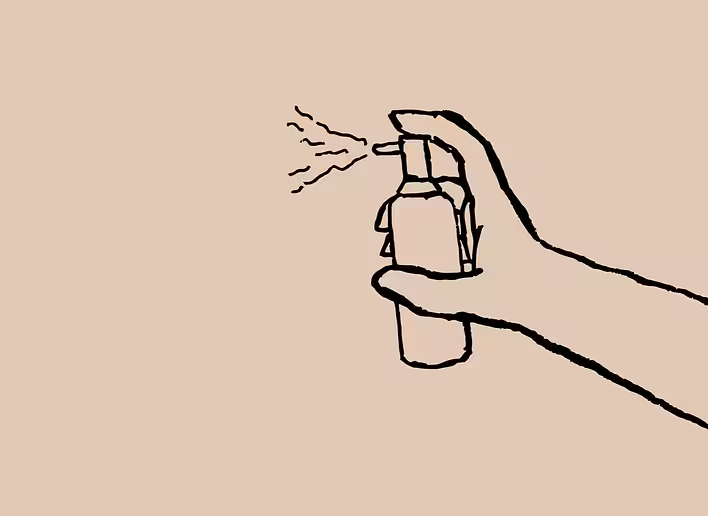
Pepper spray — free circulation. Can be purchased without permits, carried openly, age from 18 years. No registrations required.
Gas pistol — requires a permit from the Ministry of Internal Affairs. Obtaining it involves a medical certificate, a certificate of no criminal record, and the arrangement of a safe at the place of storage. Carrying without a permit is an offense.
Traumatic weapon — the most complex category. In Ukraine, pistols for rubber bullets are not in free civilian circulation; the right to carry is granted to certain categories of individuals by departmental decisions. Legislation here has been reviewed multiple times, so the current status should be checked at the time of purchase.
At this stage, for most people, the choice narrows down to one option.
Speed of application
A real attack lasts 3–7 seconds. Let's count what happens during this time.
Spray: take it out — remove the blocker — press. Approximately 1.5–2 seconds with minimal training. Aiming is not necessary: the aerosol cloud covers the facial area even with a deviation.
Gas pistol: take it out — remove the safety — aim — shoot. 3–4 seconds. Plus recoil, plus the need to maintain distance: a close-range shot is dangerous for the attacker and creates problems for you with the investigation.
Traumatics: technically faster than a gas pistol, but requires skill and readiness to shoot. The psychological barrier is real — people who have never shot at a person often freeze.
Consequences of application
This is something that is hardly thought about before an incident.
The spray leaves the attacker capable but incapacitated for 15–45 minutes. The consequences are the opposite. The chance that law enforcement will qualify the use as exceeding the limits of self-defense is minimal.
The gas pistol, when fired at the face from less than a meter, can cause severe eye injuries. This is already a different article.
Traumatics — this is a potentially lethal means. A rubber bullet to the head kills. Each case of application involves an investigation, expertise, and proving that the threat to life was real.
Who is suitable for what
Spray — the optimal choice for 90% of civilians. A woman returning home from work in the evening. A student. A courier. An elderly person. No permits, no risk of excessive harm, no barrier to application.
Gas pistol — makes sense if you are already undergoing the permit procedure for other reasons and are ready to store it according to the rules.
Traumatics — a tool for those who have the appropriate right, train regularly, and are aware of the legal consequences of each shot.
Clear conclusion
The best self-defense tool is the one you have with you and know how to use. The most powerful traumatics in a safe at home lose to a spray in the pocket of a jacket.
If you are hesitating between categories, start with the simple: walk around for a week with a spray, practice taking it out with one hand blindfolded. Just this will put you ahead of most potential victims. Next, you can choose a self-defense tool for specific scenarios — city, car, private sector.
The main thing is not to postpone the decision until the moment when it is no longer needed.
Like it?React
🧵
This post doesn't have any additions from the author yet.