The internet constantly generates new words, abbreviations, and memes that quickly transcend individual communities and become part of everyday lexicon. One of the linguistic trends of recent years has been abbreviations ending in “AFO.” Some of them have a humorous nature, others have become symbols of entire online movements, and some have even gained political significance.
FAFO: “do first, find out later”
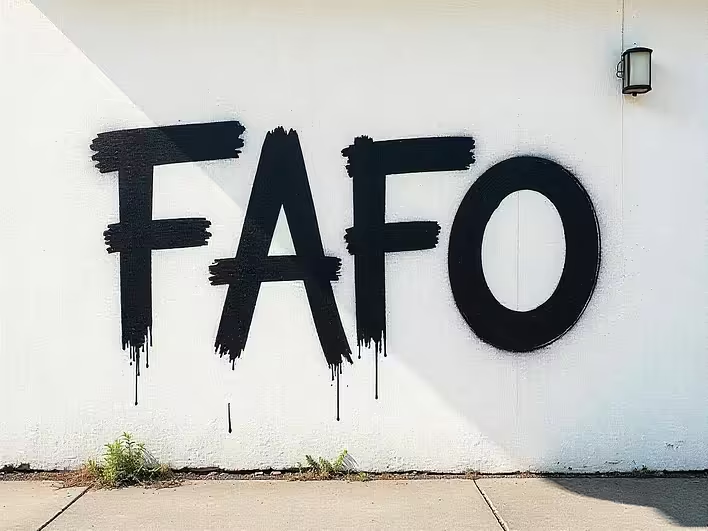
The most well-known example is FAFO, which stands for Fuck Around and Find Out. In Ukrainian, this phrase can be roughly translated as “you'll find out if you push it,” although the literal translation would be much cruder.
The essence of the phrase is that thoughtless actions inevitably have consequences. Initially, a person or organization behaves audaciously, provokes or ignores warnings, and then faces the results of their own actions. Due to its universality, the expression quickly became popular in memes, social media, and even journalistic headlines.
In 2022, the phrase FAFO became particularly popular in the context of the Russian invasion of Ukraine, where it was often used for ironic comments regarding the failed actions of the Russian army.
NAFO: memes against propaganda
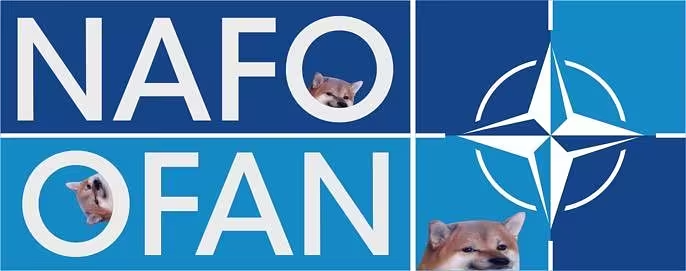
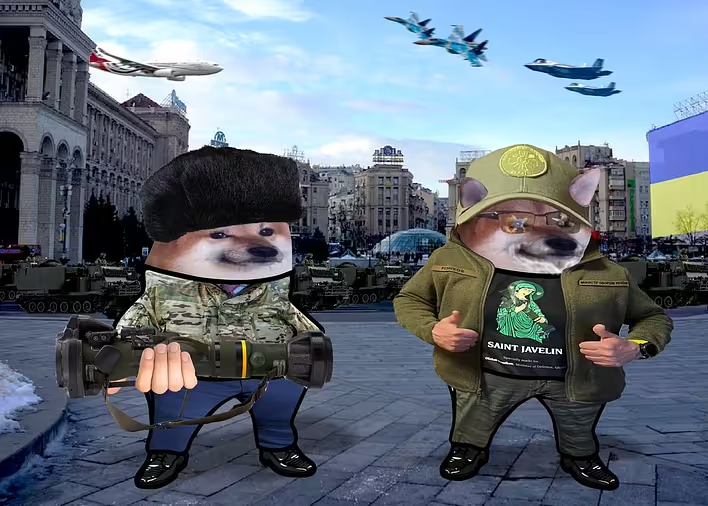
If FAFO is a standalone expression, then NAFO (North Atlantic Fella Organization) has turned into a whole internet phenomenon. The name is an obvious parody of NATO (North Atlantic Treaty Organization), but the “organization” itself has no official structure. It is a decentralized online community of people from around the world who support Ukraine and use humor, memes, and satire to counter Russian propaganda.
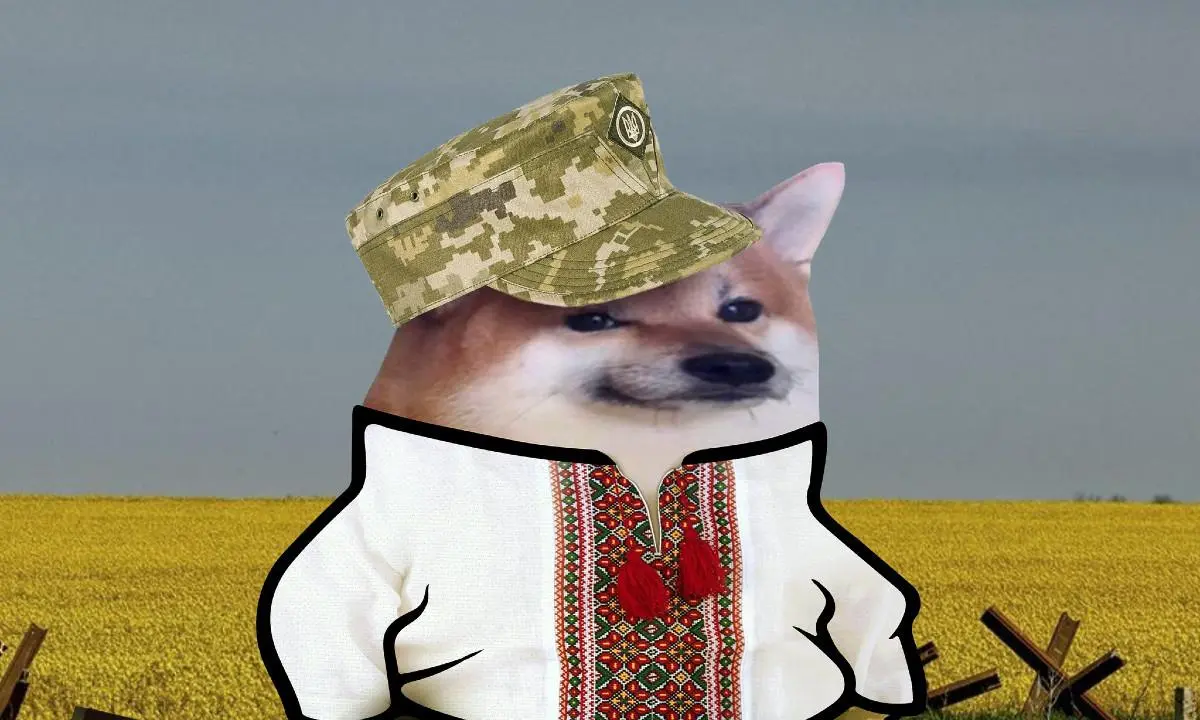
The history of NAFO began in the spring of 2022, after the start of Russia's full-scale invasion of Ukraine. One of its founders is considered to be a Polish Twitter (now X) user under the pseudonym Kama, who began posting funny images of Shiba Inu dogs. These images were created based on the popular internet meme Doge. The artist and volunteer known as Kama offered personalized avatars with Shiba Inu in various outfits to anyone who made donations to support the Ukrainian military.
This is how the so-called “fellas” (fellas) were born — funny dogs in helmets, military uniforms, diplomat suits, or with attributes of historical figures. The very word fella (“buddy,” “guy”) gave the name to the entire community. The abbreviation North Atlantic Fella Organization became a humorous response to the name of NATO while also hinting at the international nature of the movement.
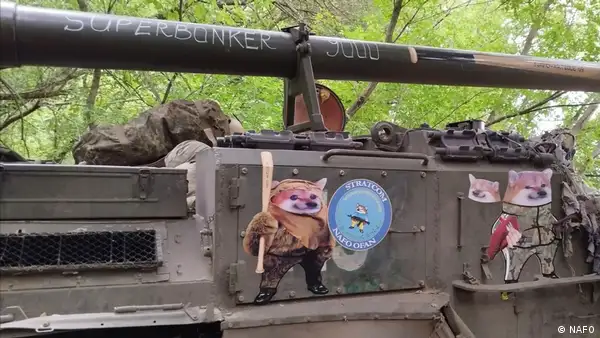
Initially, NAFO was a small group of Twitter users who mocked Russian propagandists, spread memes, and supported fundraising for Ukraine. Over time, the movement grew rapidly. Military analysts, journalists, diplomats, academics, and even high-ranking officials began to join. At one point, personalized avatars with “fellas” appeared among some representatives of the Lithuanian Ministry of Defense, Estonian politicians, former NATO military personnel, and well-known international experts.
A distinctive feature of NAFO is that its participants did not limit themselves to just jokes. The community actively raised funds for Ukrainian volunteer organizations, primarily for the “Georgian Legion” fund and other projects that helped the Ukrainian military. Thanks to the popularity of the memes, millions of dollars in donations were raised.
Another characteristic of NAFO was its style of communication. Instead of lengthy arguments with propagandists, movement participants often responded with irony, memes, and sarcastic comments. This is what made NAFO such a recognizable phenomenon. In a sense, memes became a tool of information warfare.
Over time, Shiba Inu in bulletproof vests and helmets became one of the symbols of international support for Ukraine. What started as a few humorous images on Twitter unexpectedly turned into a real cultural phenomenon. The participants of NAFO continue to insist that they are not a real organization, but rather a large community of friends united by common values, a love for memes, and a desire to help Ukraine.
The internet has long ceased to be just a place for exchanging information. New words, jokes, and symbols are born here, gradually becoming part of modern culture. FAFO reminds us of the consequences of thoughtless actions, NAFO shows the power of humor in countering propaganda, and dozens of other “-AFO” demonstrate how creative online communities can be.
Perhaps, in a few decades, these seemingly strange abbreviations will be viewed as a kind of folklore of the social media era — just as characteristic of the 21st century as folk proverbs or anecdotes were for previous generations.