In the world of modern animation, where computers can create entire digital universes, stop-motion remains something special. There is a certain magic in it that is difficult to replicate with computer graphics. Dolls, clay figures, paper-cut characters, or even ordinary objects suddenly begin to move, live their own lives, and tell stories.
That is why stop-motion is often called the most handcrafted form of animation. Every movement of a character is literally created by the animator's hands, frame by frame, sometimes over many months or even years.
What is stop-motion
Stop-motion is an animation technique in which physical objects are photographed repeatedly, each time slightly changing their position. When the resulting frames are played back in sequence at high speed, the illusion of movement occurs.
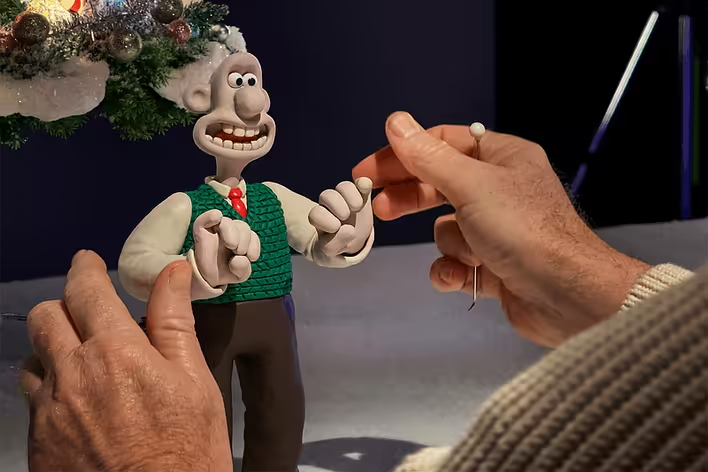
The principle is extremely simple. For example, a doll stands still. The animator slightly raises its arm and takes a photograph. Then they move the arm a few millimeters more and photograph again. If there are several hundred such frames, the viewer will see smooth movement.
Modern animation typically uses between 12 to 24 frames per second. This means that for one minute of finished video, more than a thousand individual photographs may be needed.
How it all began
The history of stop-motion is almost as old as cinema itself.
The first experiments with frame-by-frame animation appeared in the late 19th century. One of the pioneers was the French filmmaker and illusionist Georges Méliès, who accidentally discovered the possibility of creating amazing effects through camera stops.
The first known film entirely built on frame-by-frame animation of objects is considered to be "The Humpty Dumpty Circus," created in 1898. Unfortunately, the film itself has not survived to this day, but it is often referred to as the beginning of the history of stop-motion.
In the 1920s, the technique began to be actively used to create fantastic creatures in film. It was then that dinosaurs, dragons, and other monsters appeared on screen, which seemed incredibly realistic for their time.
The man who brought monsters to life
If there is a name inextricably linked to stop-motion, it is Ray Harryhausen.
In the mid-20th century, he became a true legend of cinema. It was Harryhausen who created the moving skeletons in the film "Jason and the Argonauts," the giant monsters in "The 7th Voyage of Sinbad," and many other iconic creations.
Today, many directors, including Peter Jackson, Guillermo del Toro, and Tim Burton, consider Harryhausen one of their main inspirations.
How stop-motion animation is created
The production process is significantly more complex than it may seem at first glance.
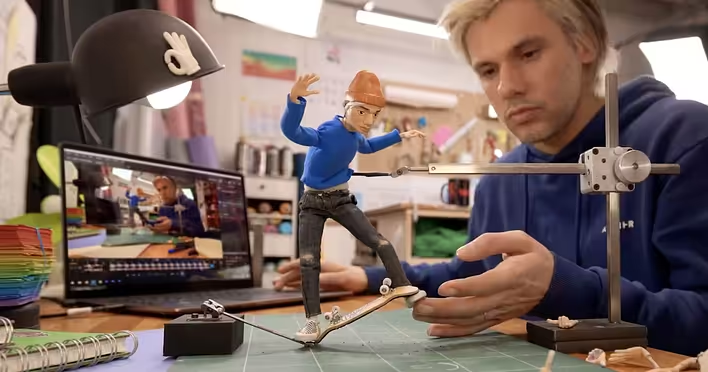
Initially, artists create a script and storyboard. Then they make the sets, characters, and props. Inside the dolls, a special metal frame—an armature—is usually placed. This allows the characters to hold the necessary positions during filming.
After that, the longest stage begins—frame-by-frame shooting. The animator moves the character literally a few millimeters, takes a frame, changes its position again, and photographs once more.
Sometimes, in an entire day of work, only a few seconds of finished animation can be created.
After filming is completed, all the frames are edited, sound effects, music, and voiceovers are added.
Types of stop-motion
Despite popular belief, stop-motion is not just puppet animation.
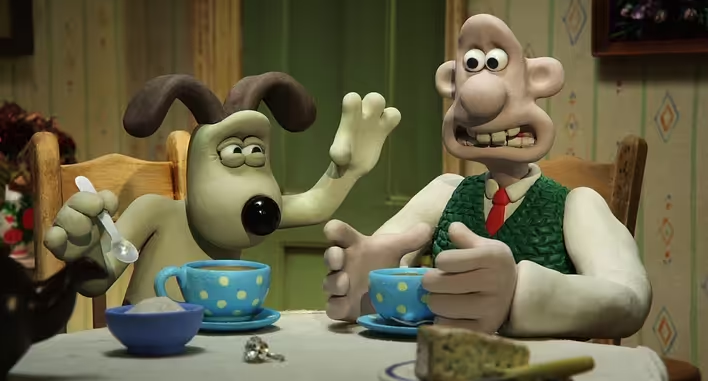
One of the most well-known directions is clay animation, or claymation. It is in this technique that the adventures of the legendary Wallace and Gromit were created.
Puppet animation is also popular, where complex articulated characters made of fabric, silicone, latex, or polymer materials are used.
There is also object animation, where ordinary items become the heroes: books, dishes, stationery, or even food products.
A separate direction is pixilation—a technique in which real people are moved frame by frame instead of dolls.
The studio that made stop-motion popular
When it comes to modern stop-motion, one cannot help but mention the British studio Aardman Animations.
It is the studio that brought the world Wallace and Gromit, as well as the popular animated film "Chicken Run," which remained the highest-grossing stop-motion film in history for many years.
The studio's signature style is easily recognizable by its clay characters, good humor, and incredible attention to detail.
Tim Burton and the gothic fairy tale
Another important popularizer of the technique is Tim Burton.
The films "The Nightmare Before Christmas" and "Corpse Bride" demonstrated that stop-motion can be not only a children's entertainment but also a full-fledged art form with its own atmosphere and unique visual language.
The gothic style, intricate sets, and unusual character designs have made these works iconic for several generations of viewers.
Modern masterpieces of stop-motion
In the 21st century, the technique experienced a true revival.
The studio Laika played a special role in this, combining traditional stop-motion with modern digital technologies.
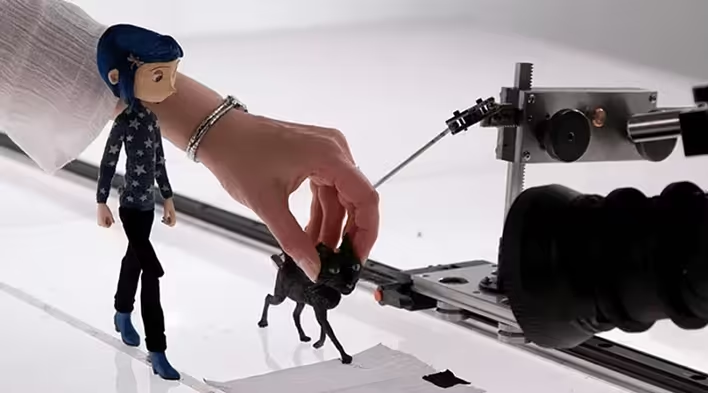
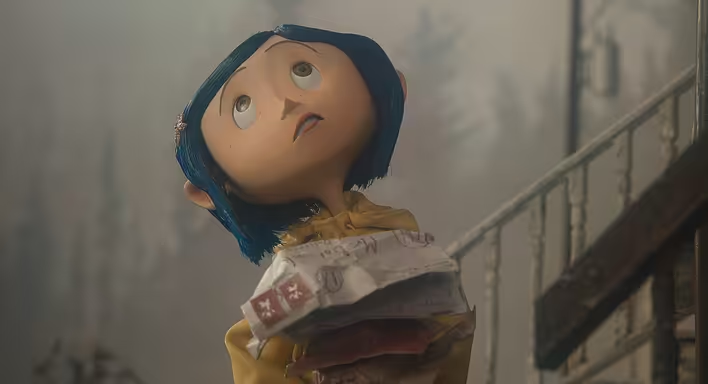
It is the studio that created such well-known films as "Coraline," "ParaNorman," "Kubo and the Two Strings," and "Missing Link."
During the production of some of these films, thousands of interchangeable facial elements for the characters were used, printed on 3D printers, allowing for incredibly smooth and expressive facial expressions.
Why stop-motion has not disappeared
At first glance, it may seem strange that in the age of powerful computer graphics, someone continues to manually move dolls and photograph them thousands of times.
However, it is this handcrafted quality that makes stop-motion so appealing. The viewer subconsciously feels that they are seeing real objects, real lighting, and physically created sets.
This is its special charm. Stop-motion does not try to hide its artificiality—instead, it turns it into its main advantage.
Perhaps that is why this technique, which is over a hundred years old, continues to inspire directors, artists, and millions of viewers around the world. Each frame of such animation is a small miracle created with patience, skill, and love for the art of moving images.