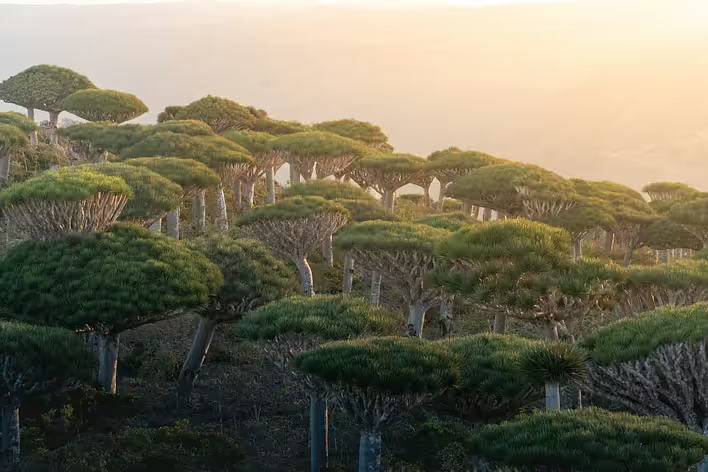
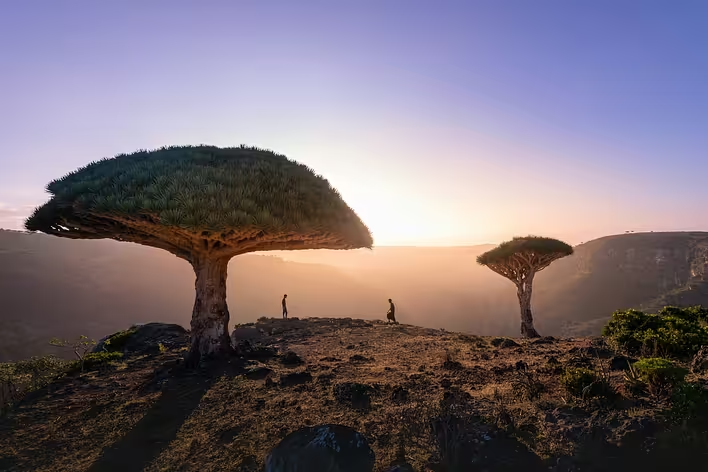
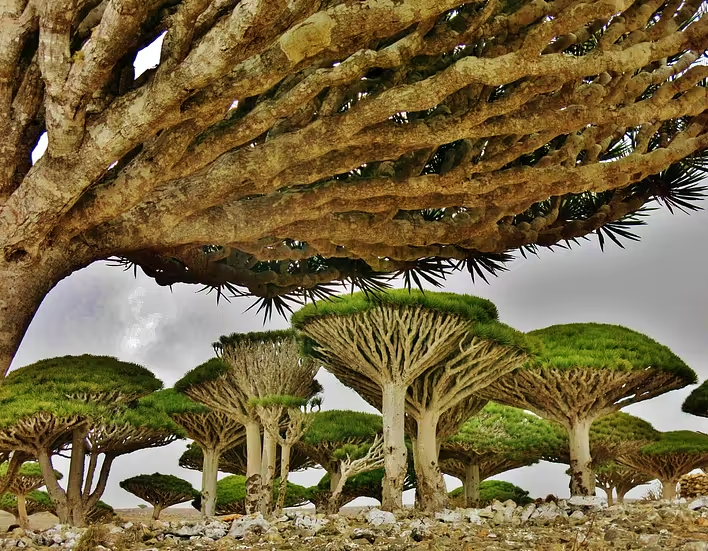
If a director of a science fiction film wanted to show the audience another planet, he might not even need to create complex computer graphics. It would be enough to shoot a few frames on Socotra. Here, trees that resemble giant umbrellas grow, strange plants with thick trunks rise from rocky slopes, and the surrounding landscapes are so unusual that many travelers compare them to the settings of science fiction films. It is no wonder that Socotra is often called one of the most amazing places on our planet.
Socotra is the largest island of the archipelago of the same name, which belongs to Yemen. It is located in the Indian Ocean near the Horn of Africa, at the crossroads of maritime routes between the Arabian Sea, the Gulf of Aden, and the Red Sea. This location has made the archipelago a kind of bridge between Africa and the Arabian Peninsula.
The main reason for Socotra's global fame is its unique nature. Millions of years of geographical isolation have turned the archipelago into a true laboratory of evolution. Many plants and animals that live here are found nowhere else in the world. Almost 40 percent of local plants are endemics, meaning they exist only on Socotra. It is precisely because of its exceptional biological diversity that the archipelago has been included in the UNESCO World Heritage list.
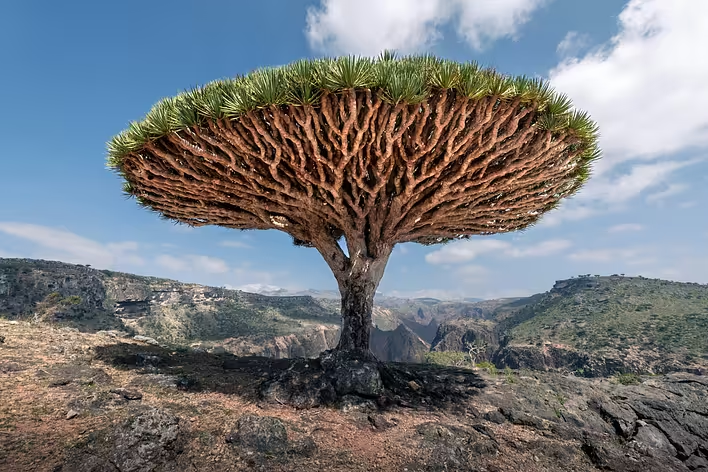
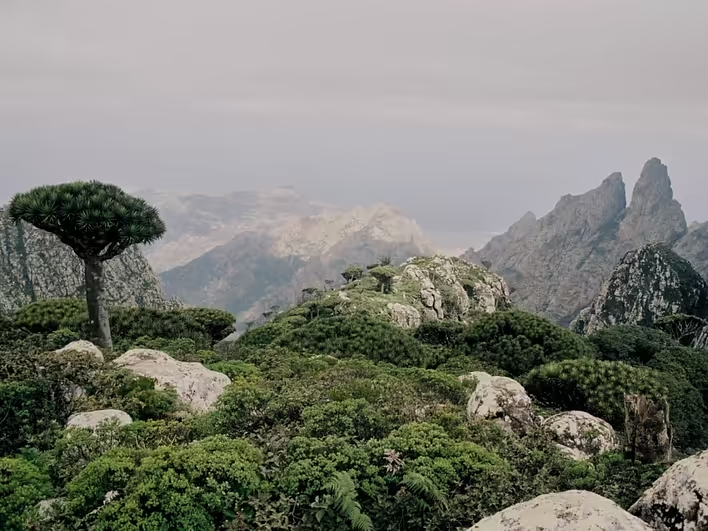
драконове дерево
The symbol of Socotra has become the dragon tree, or red resin dracaena (Dracaena cinnabari). It is hard to confuse it with any other plant. The branches of the tree spread out in different directions, forming a wide crown that resembles a huge umbrella or mushroom. This shape helps collect moisture from the mists and protects the soil from excessive drying. If the bark is damaged, a red resin flows out, which has been called "dragon's blood" since ancient times. This is what gave the plant its name. In the past, this substance was used as a dye, a component of varnishes, a cosmetic, and even a medicine.
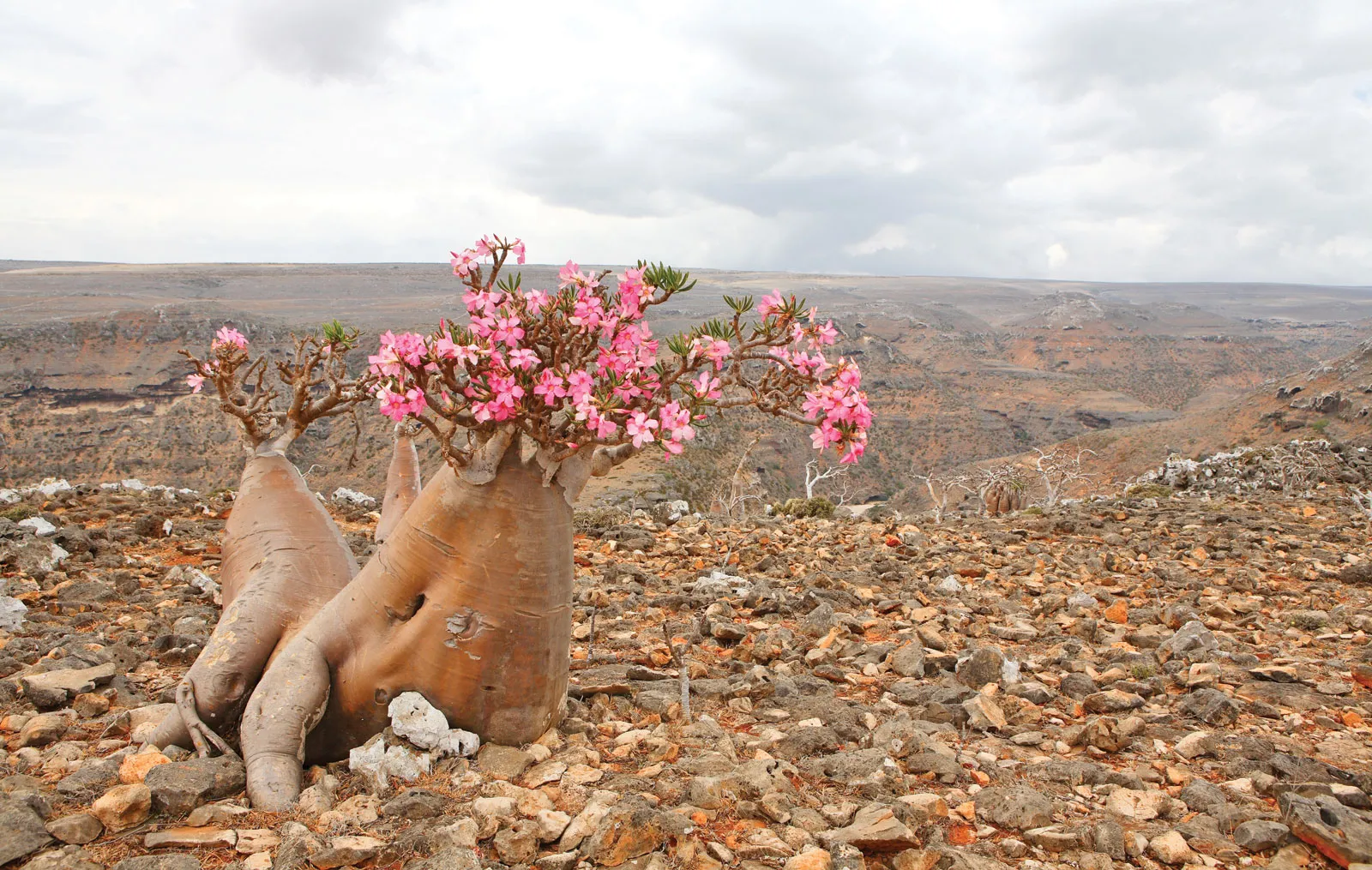
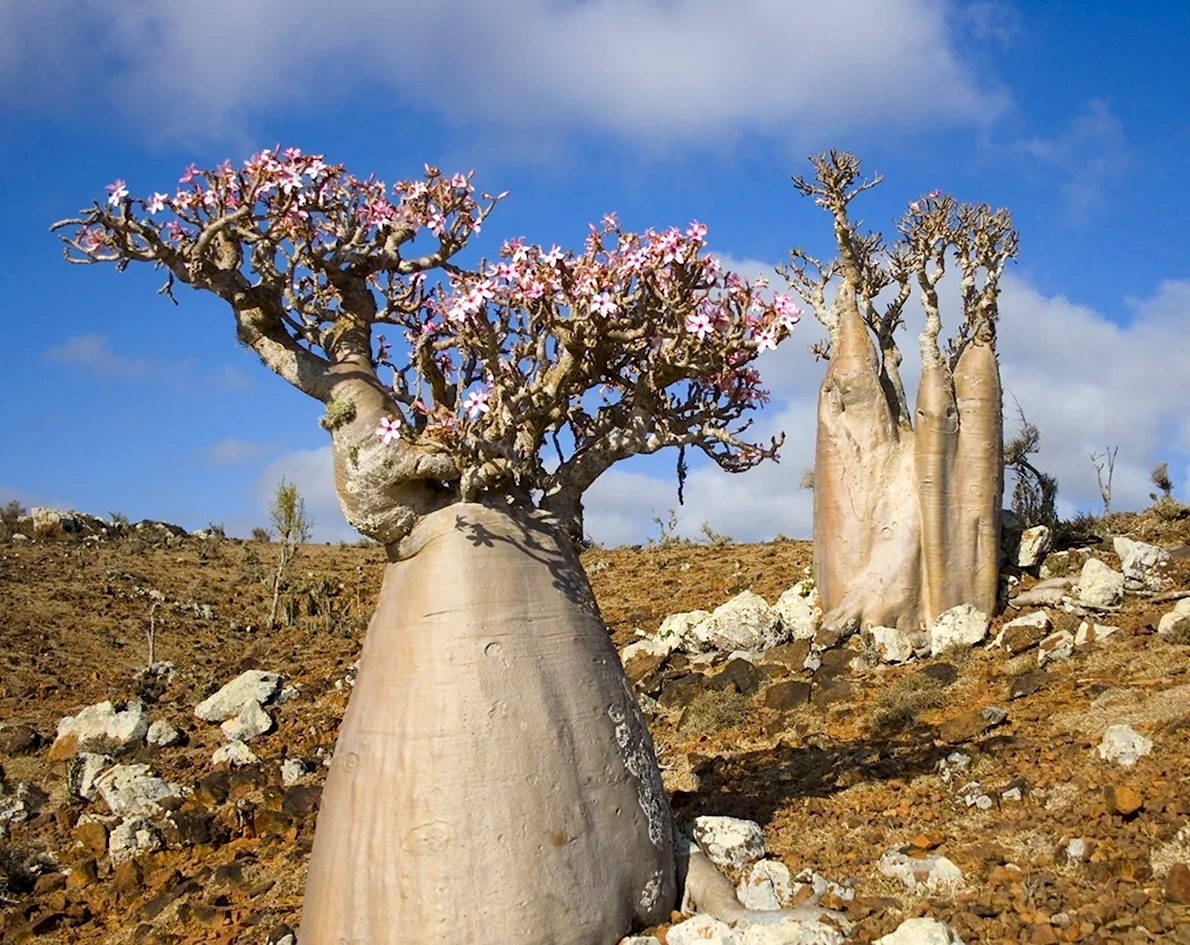
However, dragon trees are not the only wonder of the archipelago. On Socotra, there are bottle trees, or desert roses, with trunks capable of storing large amounts of water. There are also rare species of frankincense, aloe, and many other plants that seem like aliens from prehistoric times. Due to the extraordinary diversity of wildlife, Socotra is often referred to as the "Galapagos of the Indian Ocean."
пляшкове дерево
пляшкове дерево
No less interesting is the history of this region. Socotra was known to ancient navigators. The archipelago lay on important trade routes, and its inhabitants traded frankincense, myrrh, aloe, and dragon resin. The island is mentioned in ancient Greek, Roman, and Arab sources. Throughout various eras, merchants and sailors from Africa, Arabia, and India arrived here.
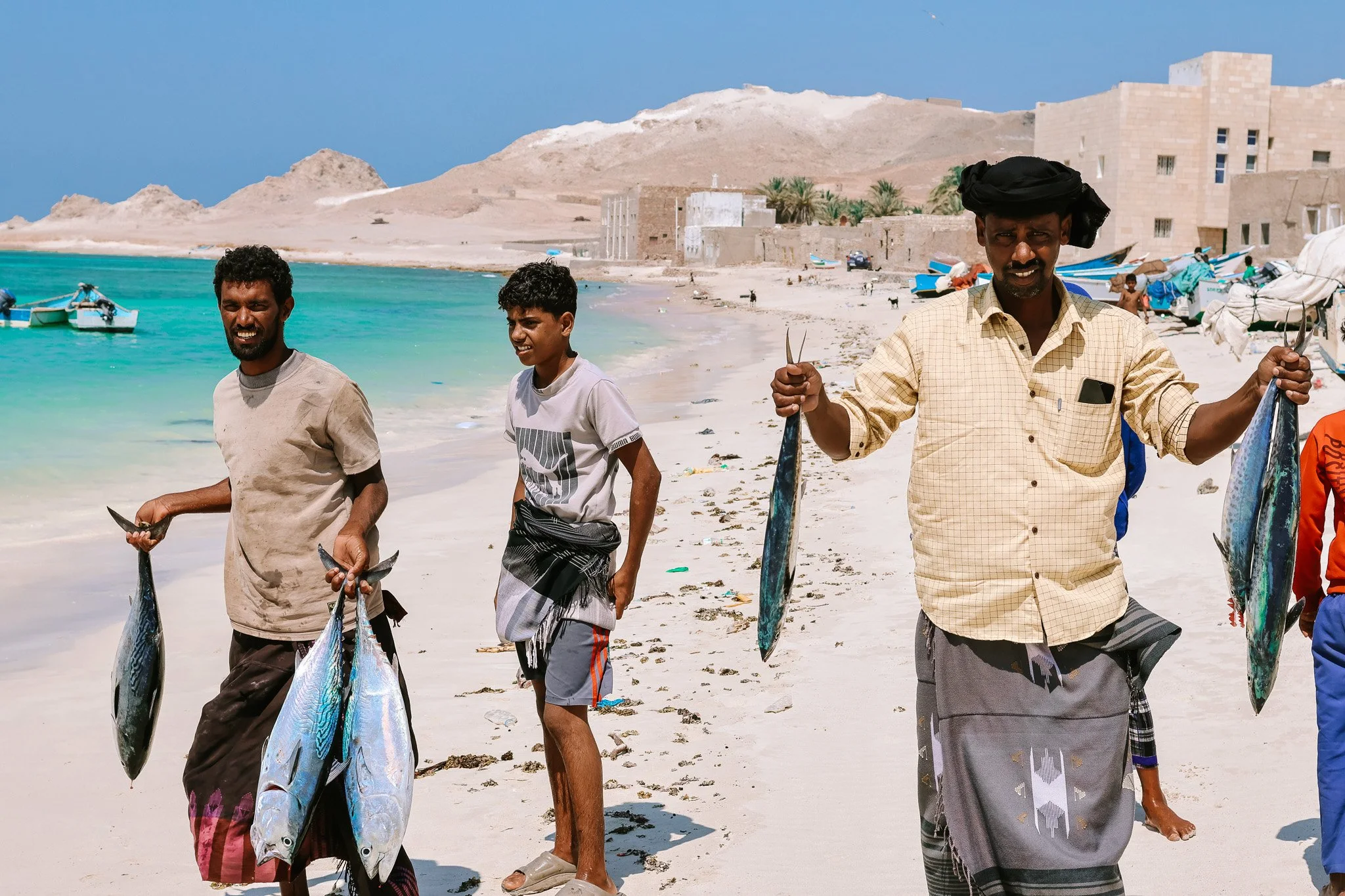
The inhabitants of Socotra deserve special attention. They speak the Socotri language — one of the oldest Semitic languages in the world. It is noticeably different from modern Arabic and has preserved many very ancient linguistic features. Prolonged isolation has allowed the local culture to develop along its own path, forming unique traditions and customs.
The nature of Socotra remains extremely vulnerable. It is affected by climate change, strong tropical cyclones, overgrazing of goats, and other economic activities. The future of dragon trees is particularly concerning. Young seedlings often do not have time to grow due to livestock grazing, so the number of these unique plants is gradually decreasing. Scientists and conservationists are working on programs to preserve them, as the disappearance of dragon trees would be a loss for the entire world.
Today, Socotra remains one of the most unusual corners of the planet. Here you can see landscapes that have hardly changed for millennia, plants that do not grow anywhere else on Earth, and a culture that has preserved its uniqueness despite all historical upheavals. This is why the archipelago regularly appears on lists of the most unique places in the world. And although it is often called "alien," Socotra reminds us of how amazing and diverse our own planet can be.