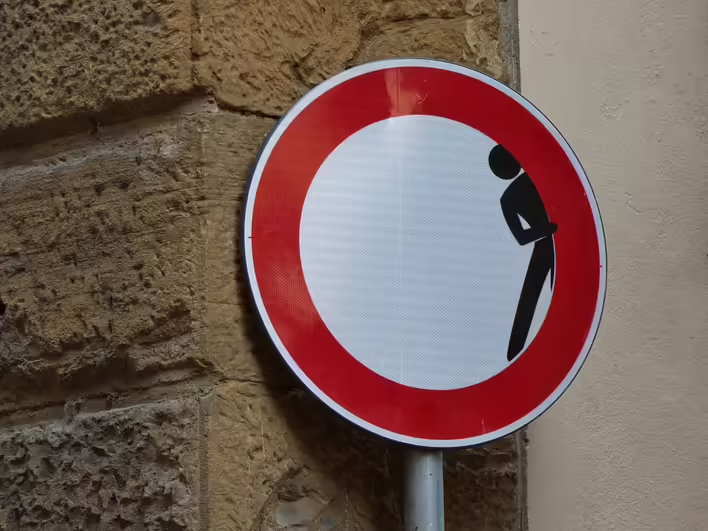
Shaming is the act of publicly humiliating, condemning, or mocking a person for their actions, choices, appearance, or beliefs. It can be anything from comments on social media to ridicule in real life.
The goal of shaming is to evoke a strong sense of shame, guilt, or embarrassment in the person, making them feel inadequate.
Public humiliation in ancient times
The concept of shaming is not new. In the Middle Ages, public humiliation was a common method of punishment. People who broke laws or moral norms were put on display in stocks, where they became objects of ridicule and were pelted with rotten vegetables. The aim was not only to punish but also to make the community feel contempt for the offender, to prevent similar actions in the future.Even in ancient civilizations, such as the Roman Empire or China, there were forms of public humiliation used to control society. For example, exile or deprivation of civil rights were considered some of the harshest punishments, as they carried social condemnation.
The emergence of the term "shaming"
The term "shaming" in a modern context began to be actively used only in the 20th century, especially in academic and psychological circles. A significant influence on its popularization came from the research of British sociologist John Braithwaite in the 1980s.
In his book "Crime, Shame and Reintegration" (1989), he introduced the concept of "reintegrative shaming." Braithwaite argued that shaming can be beneficial for society if it is directed at condemning the bad act rather than the person themselves. According to his theory, after shaming, society should "reintegrate" the person back, rather than push them away forever.
Shaming in the Internet Age
The real rise of shaming occurred with the advent of the internet and social media. Today, cyber shaming (online humiliation) is one of the most common forms of bullying.
The internet allows people to easily and quickly spread information and photos without feeling direct responsibility for their actions. This has led to the emergence of phenomena such as body shaming in comments, slut shaming in public posts, and the viral spread of personal data, leading to harassment.
Main types of shaming
Body Shaming — is the humiliation or criticism of a person due to their appearance, weight, body shape, height, or any other physical characteristics. For example, when someone is called "fat" or "skinny" with the intent to insult.
Slut Shaming is the condemnation of a person (most often a woman) for their sexual behavior, the number of sexual partners, the choice of clothing deemed "too revealing," or generally for sexual promiscuity.
Poor Shaming is the ridicule or condemnation of a person due to their low social or financial status, poverty, or inability to afford expensive items.
Fat Shaming is a specific type of body shaming aimed exclusively at people with excess weight. Its goal is to make the person feel guilty about their weight, which often leads to serious health and self-esteem issues.
In conclusion
Always remember that your attitude and words carry weight. We all need to be more tolerant and aware. Every hurtful word, every judgmental comment has serious consequences for the person receiving them.