When we see an old oak in the city park, a sprawling linden by the house, or neatly maintained trees along the street, we rarely think about the fact that their condition is often monitored by specialized professionals. They are called arborists. This profession is sometimes compared to the work of doctors, as its representatives are involved in the diagnosis, care, and preservation of trees. Although, of course, trees are not treated in the literal sense as people or animals.
The word "arborist" comes from the Latin arbor, which means "tree." Arboriculture is the field that deals with the care of individual trees, their condition, safety, and longevity. While foresters primarily work with forested areas as a single ecosystem, arborists focus on specific trees in cities, parks, gardens, botanical collections, and private properties.
What does an arborist do?
Many believe that the work of an arborist consists solely of pruning branches. In fact, this is just one of the many components of the profession.
An arborist assesses the condition of a tree, identifies signs of disease, damage, or stress, checks the condition of the crown, trunk, and root system. They can determine whether a tree poses a potential danger to people, buildings, or engineering networks, as well as suggest ways to preserve the plant.
The responsibilities of an arborist include sanitary and formative pruning, installing support systems for large or damaged branches, improving the growth conditions of the tree, and preparing conclusions about its condition.
Often, it is the arborist who decides whether a tree that seems doomed to removal at first glance can be saved.
An arborist is not just a person with a saw
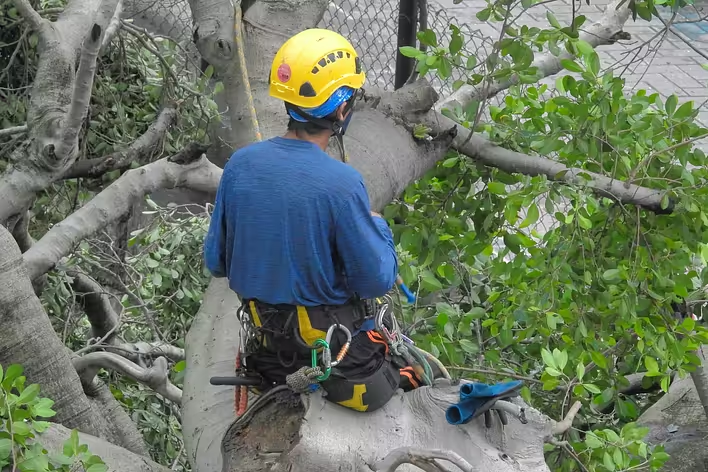
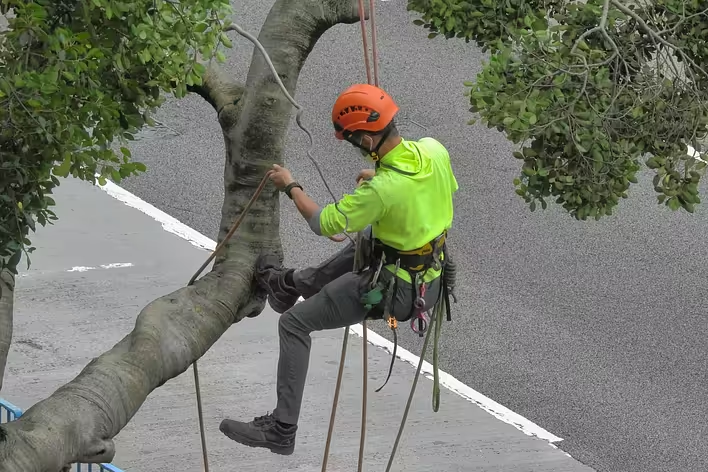
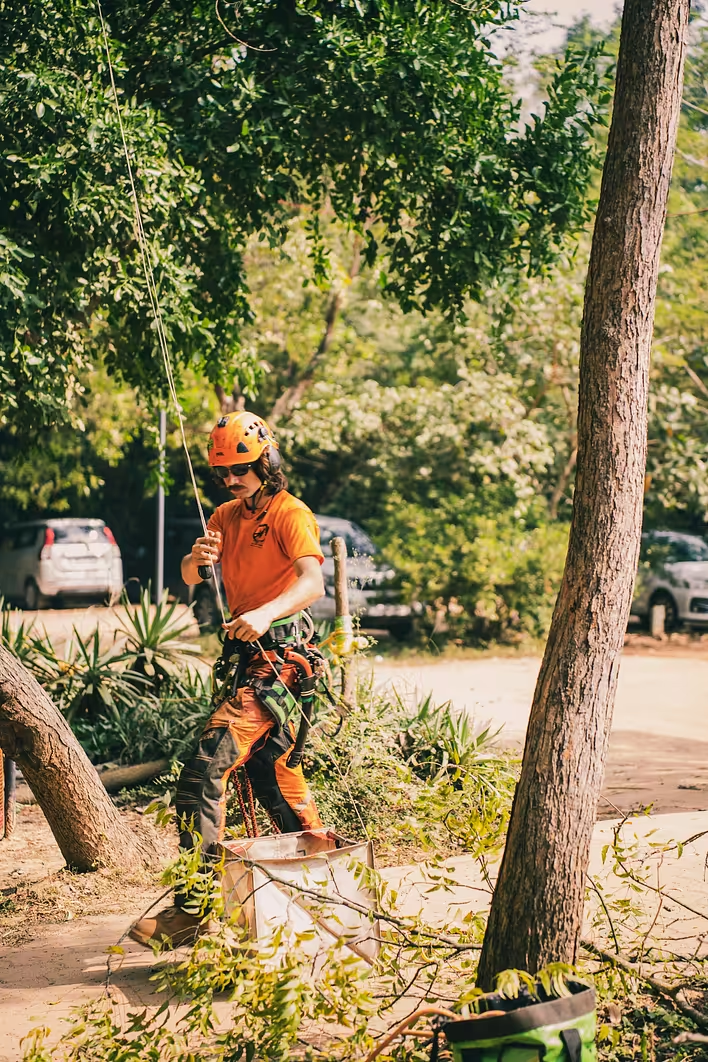
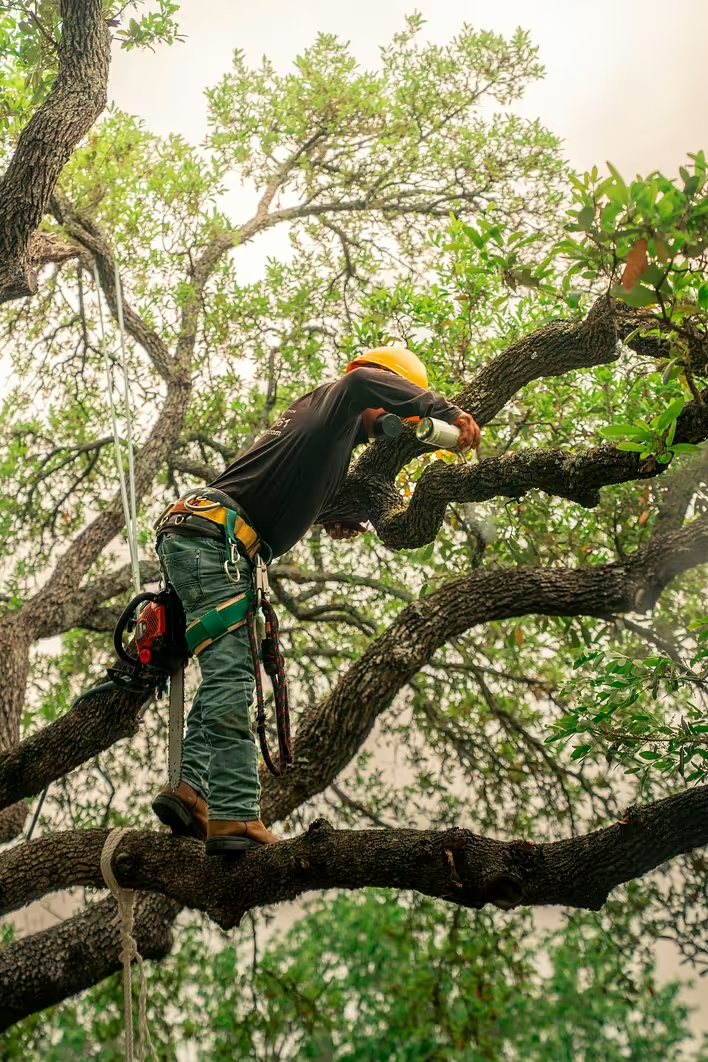
One of the most well-known aspects of the profession is working at heights. To access the upper part of the crown, arborists often use specialized climbing equipment: ropes, safety systems, carabiners, and helmets.
However, the main feature of the profession is not the ability to climb trees. An arborist must have a good understanding of tree biology, their growth, and their response to pruning. A poorly cut branch can become a source of infection or weaken the tree for many years.
Therefore, a professional arborist combines the knowledge of a botanist, gardener, tree care specialist, and climber.
Why is this profession so important?
In a natural forest, trees grow and die without human intervention. In cities, the conditions are quite different. The root system often lacks space, the soil is compacted due to traffic and pedestrian movement, and the air may contain increased levels of pollutants.
Additionally, there are damages during construction, laying of communications, pruning, as well as the impact of droughts or strong winds. All of this creates additional stress on the trees.
Arborists help maintain their condition while reducing the risks associated with hazardous trees or large dead branches.
Can trees be treated?
In a certain sense — yes. Although modern arboriculture relies less on old practices of "plugging" cavities or sealing all damages and focuses more on creating conditions under which a tree can recover on its own.
Arborists deal with problems caused by pests, fungal diseases, mechanical damage, and unfavorable growth conditions. Various methods can be applied for this: improving soil, mulching, pest control, specialized support systems, and other measures.
To assess the condition of a tree, modern equipment is sometimes used — for example, resistographs or acoustic tomographs, which help detect internal trunk damage without destroying it.
The art of proper pruning
One of the most common tasks of an arborist is tree pruning. However, professional pruning has little in common with radical "topping," which can sometimes be seen in cities.
Improper pruning weakens the tree, shortens its lifespan, and can make it more vulnerable to diseases. In contrast, proper crown formation helps maintain healthy growth, improves lighting, and reduces the risk of branch breakage.
Modern arboriculture aims to preserve the natural shape of the tree as much as possible and to intervene only where it is truly necessary.
Old trees and their preservation
Arborists play a special role in caring for ancient trees. Old oaks, lindens, ashes, or chestnuts often have not only natural but also historical or cultural value.
Even if such a tree has cavities, cracks, or partially damaged branches, this does not always mean it needs to be removed. With the help of specialized cabling systems, supports, and proper care, many trees can remain safe and viable for decades.
Thanks to the work of arborists, many cities and parks preserve trees that are living witnesses to several generations of people.
A profession whose importance is constantly growing
In modern cities, trees perform numerous important functions. They provide shade, lower temperatures on hot days, trap dust, absorb some pollutants, and make the urban environment more comfortable for living.
The larger the city, the more important professional care for green spaces becomes. That is why arboriculture is gradually becoming an important component of modern urbanism, ecology, and landscape management.
An arborist is a specialist who helps trees remain healthy and safe, and cities — green and cozy. And although their work often goes unnoticed by most people, its results are seen every day in parks, squares, streets, and gardens.