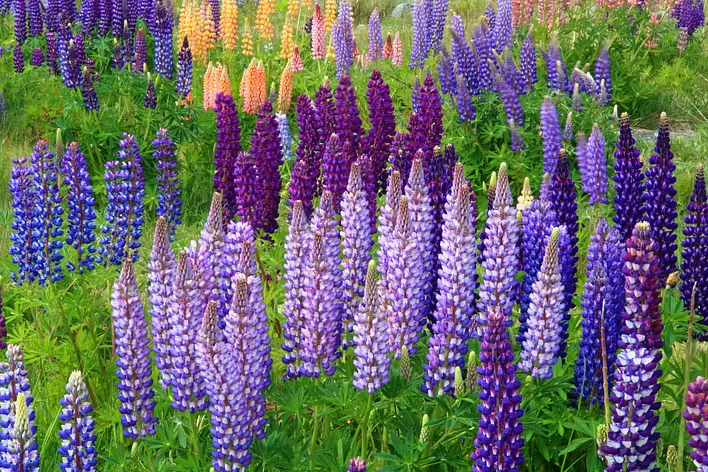
In spring and early summer, gardens, meadows, and roadways burst into flames with tall candles of blue, pink, white, yellow, and purple flowers. This is lupine — a plant that some appreciate for its decorative qualities, others for its benefits to the soil, and botanists consider one of the most interesting representatives of the legume family.
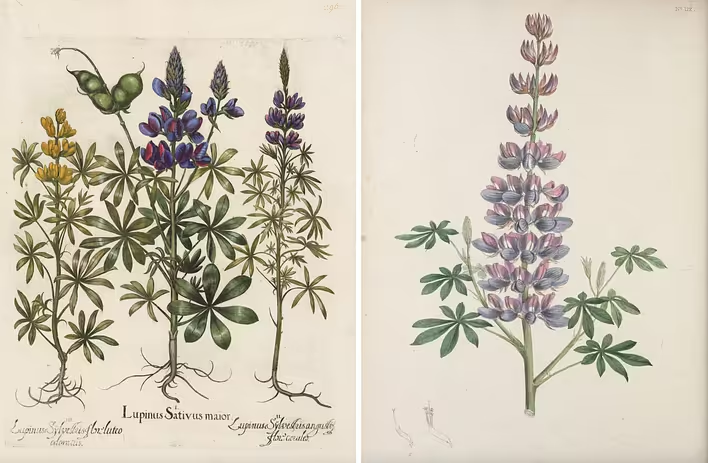
Its history is much older than it may seem. Lupine has accompanied humanity for several millennia, gradually changing its purpose: from a food and fodder crop to a decorative adornment of gardens and an indispensable natural helper in agriculture.
The Ancient History of Lupine
The name Lupinus likely derives from the Latin word lupus — "wolf." There is a widespread version that once the plant was considered one that depletes the land, as if "devouring" its nutrients. In reality, the opposite is true — lupine not only does not impoverish the soil but significantly improves its fertility.
Archaeologists have repeatedly found lupine seeds in ancient Egyptian burials over four thousand years old, indicating its cultivation during the time of the pharaohs. Over time, this crop spread throughout the Mediterranean.
Lupine was especially popular in Ancient Greece and Rome. Its seeds were used for food after prolonged soaking, which removed the natural bitterness. Additionally, it was used as fodder for livestock.
In medieval Europe, lupine began to be widely sown as a green manure — a plant that naturally restores depleted lands. Even then, farmers noticed that other crops grew significantly better after it.
A Plant That Naturally Enriches the Soil
One of the most amazing features of lupine is hidden underground.
On its roots live nodule bacteria that can fix atmospheric nitrogen and convert it into compounds available to the plant. After the roots die and plant residues decompose, this nitrogen remains in the soil, making it more fertile.
That is why lupine is called a natural nitrogen fertilizer. It improves soil structure, increases organic matter content, and helps reduce the need for mineral fertilizers.
This crop feels particularly good in poor sandy soils, where many other plants develop significantly worse.
A Journey Around the World
The genus lupine comprises over 200 species that grow naturally on different continents.
The greatest diversity is found in North and South America. Particularly many wild lupines can be seen along the Pacific coast of the USA, in Mexico, Peru, and Chile.
In Europe, there are significantly fewer natural species; however, it is here that lupine gained great importance as an agricultural crop.
In Ukraine, it was widely grown in Polissia and other regions with light sandy soils. Thanks to its ability to enrich the soil with nitrogen, lupine helped increase yields without significant fertilizer costs, and later became a popular ornamental plant.
Today, lupines are grown on almost all continents except Antarctica.
How Lupine Became a Gardener's Favorite
By the early 20th century, most lupines were grown primarily as fodder or green manure crops. However, everything changed thanks to selection.
The most famous contribution was made by British gardener George Russell. For nearly two decades, he selected and crossed the best garden forms of perennial lupines, producing plants with larger inflorescences, richer colors, and longer flowering periods.
This is how the famous Russell lupines emerged, which today have become a classic of ornamental gardening and are grown in many botanical gardens and private gardens around the world.
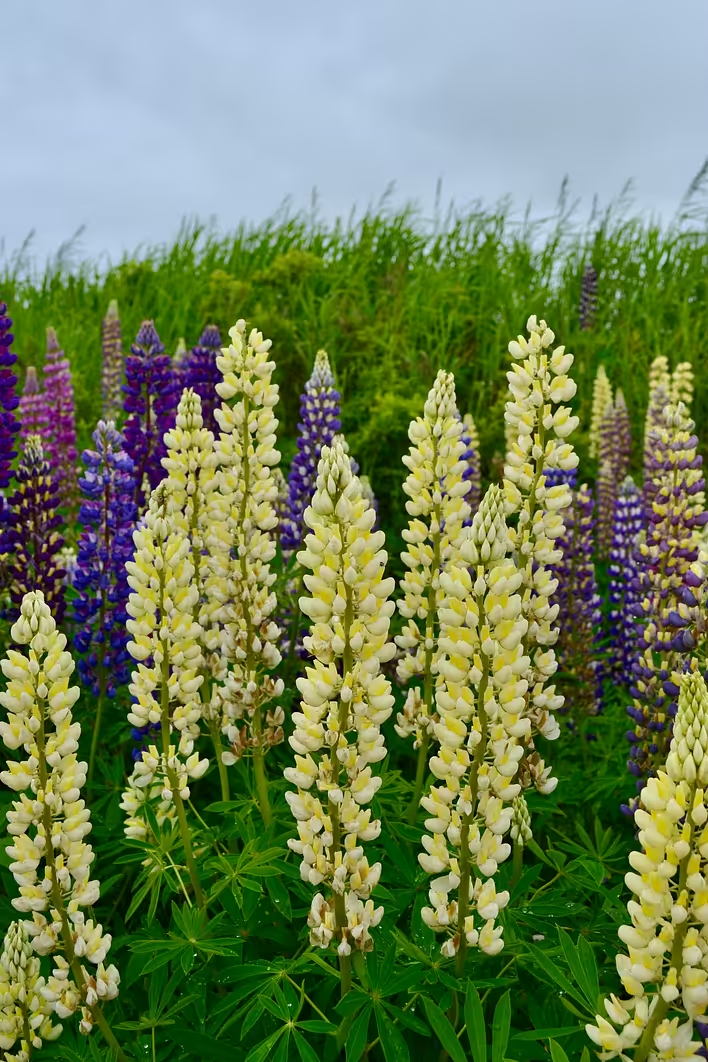
Modern varieties impress with a variety of colors. There are nearly black, cream, wine-red, orange-pink, bicolored, and even tricolored flowers.
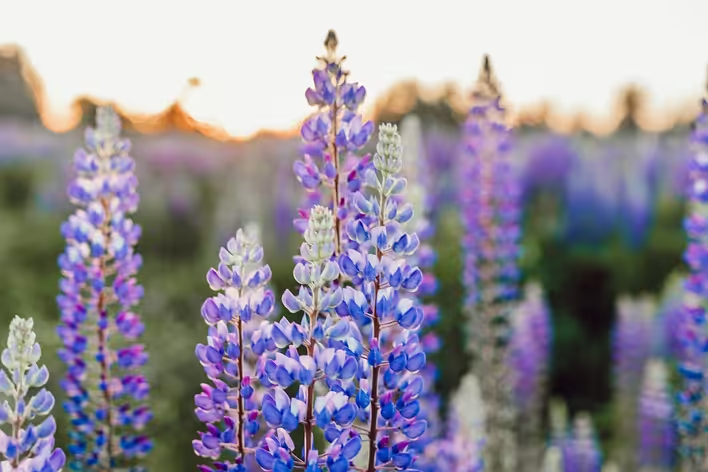
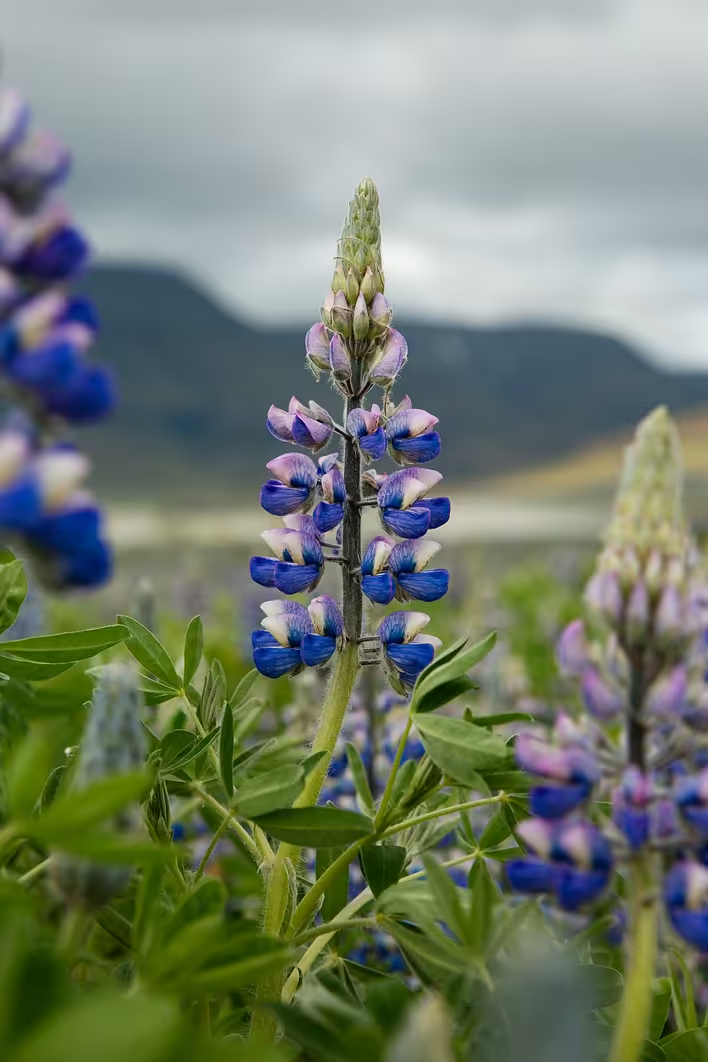
The main decoration of lupine is its tall candle-like inflorescences. In most ornamental varieties, they reach 60–120 centimeters, although some varieties can exceed one and a half meters.
The flowers bloom gradually — from the bottom of the inflorescence to the top. This allows the flowering to last quite a long time, and the plant remains decorative for almost the entire duration.
The leaves are equally attractive. Large palmate leaf blades form dense green rosettes that adorn the flowerbed even after flowering ends.
Lupine and Pollinating Insects
During the flowering of lupines, they literally come alive with the buzzing of insects.
Their flowers produce a lot of nectar and pollen, attracting bumblebees, bees, butterflies, and many other pollinators.
It is especially interesting to observe bumblebees. When an insect lands on a flower, its weight activates a peculiar mechanism: the stamens extend outward and shower the bumblebee with pollen, which it carries to the next flower.
That is why lupines are often planted in natural gardens that support local biodiversity.
Are All Lupines the Same?
Despite their external similarity, different species of lupine can differ significantly.
Some are annuals, while others are perennials. Some have compact bushes only 40 centimeters tall, while others grow nearly two meters high.
The seeds also differ. In wild species, they contain a significant amount of alkaloids, which give them a bitter taste. Thanks to modern selection, so-called "sweet" varieties with low levels of these substances have been created, which are used as fodder and food crops.
Interesting Facts About Lupine
Lupine is a close relative of peas, beans, lentils, and peanuts, as they all belong to the legume family.
In some countries, lupine seeds are used to make flour, which is added to bread, pasta, plant-based drinks, and even desserts. It is high in protein and fiber, which has attracted increasing attention from health food producers in recent years. In Mediterranean countries, a popular snack is pickled lupine seeds, sold in markets and stores alongside olives.
In nature, there are species of lupine that grow in desert areas, mountains, and even on volcanic soils. Their ability to adapt to harsh conditions has made this plant one of the symbols of resilience.
At the same time, in some regions of the world, certain species of lupine behave too aggressively and can displace local vegetation. That is why in conservation areas, they are sometimes controlled to preserve natural ecosystems.
Lupine is a rare example of a plant that is equally valued by gardeners, agronomists, ecologists, and botanists. It decorates flowerbeds with bright inflorescences, attracts beneficial insects, improves the soil, and even finds applications in the food industry.
Perhaps that is why interest in this flower has not waned for several millennia. Today, lupine remains not just a beautiful ornamental plant, but a true example of how nature can combine aesthetics, practical benefits, and amazing biological properties.