This content has been automatically translated from Ukrainian.
I want to share the scheme of my autonomous system, its logic, and the nuances I had to face.
Input Data and Infrastructure
- Solar field: 3840 W (6 panels of 640 W each).
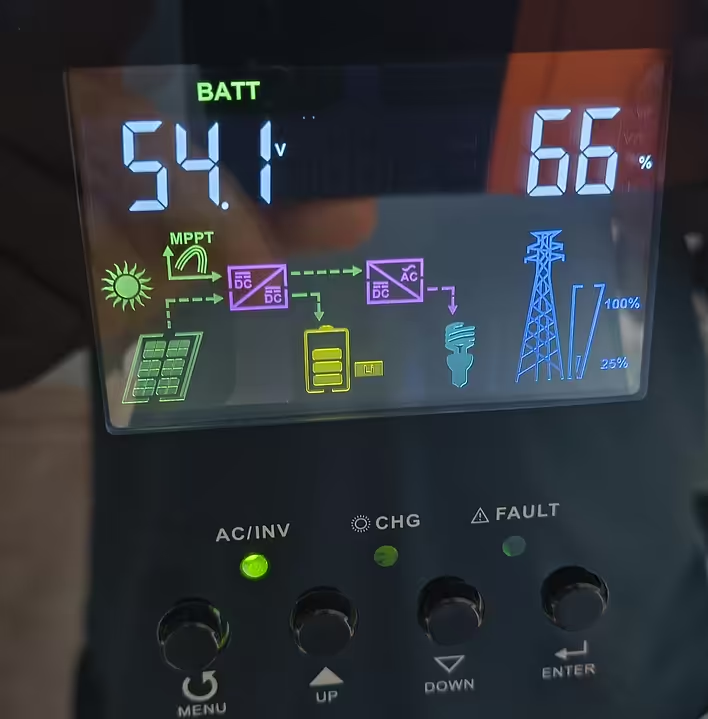
- Power system: Two all-in-one charging stations (instead of one hybrid inverter with a battery array).
- Phase distribution: Each station is powered by its own phase. The house has old wiring - so there is only one consumer.
Why two stations instead of one powerful inverter?
From the perspective of a classic system, one powerful inverter and a large battery (stack of several) is a cleaner and more efficient solution. But in my case, practical considerations came into play:
- Price/Value: One station was already available. I managed to grab the second one at a very advantageous price - it turned out cheaper than just buying a separate battery block of similar capacity.
- Mobility and backup: Two separate stations mean flexibility. If needed, either one can be disconnected and taken to another site or used independently.
- Modularity: A conscious compromise where the benefits of local autonomy outweighed the complexity of wiring.
The problem of the sun and the second battery
Solar generation (DC, direct current) is fed into the first station. With a simple switch 1-0-2, you can't just switch the solar cable between the stations - with direct current at high voltage, such things don't work (you need to extinguish the arc and all that).
But what to do on a sunny day when there is no grid (and possibly won't be for a long time), the first station is already fully charged, the sun is still shining, and the second station is discharged? You don't want to lose solar potential.
Solution with wiring: A switch 1-0-2 is installed between Phase 2 and Station 1. With an excess of solar generation, in manual mode, you can feed modified current (220V AC) from Station 1 to the charging input of Station 2 (Must).
About compromise and efficiency: Yes, with this scheme, there are double losses in conversion: DC (sun) ➔ AC (Station 1) ➔ DC (battery of Station 2). But during a blackout, it's a shame to lose solar energy. Not charging the second station with an excess of sun is somewhat foolish. This is currently the best way I have found to fully charge both stations from the sun (one field). Of course, you could split the solar field into 2, or add more panels, etc. But that's all money.
The scheme works. It's not automated, but better than an empty battery.
Like it?React
🧵
This post doesn't have any additions from the author yet.