This content has been automatically translated from Ukrainian.
The English village in detective series is a deceptive place. Behind neat hedges, old stone houses, and an unchanging cup of tea, family secrets, ancient grievances, and surprisingly ingenious crimes may be hidden. However, even murders here rarely disrupt the sense of coziness: by the end of the episode, order will inevitably be restored, and familiar characters will return to their usual pursuits.
Such stories usually do not aim to scare the viewer. Much more important to them are picturesque settings, local eccentrics, ironic dialogues, and the mystery that can be unraveled alongside the detective. In this selection, there are series about English villages and small towns where the calm provincial life is repeatedly interrupted by mysterious crimes. The second part of the selection is already here.
“Father Brown” (Father Brown)
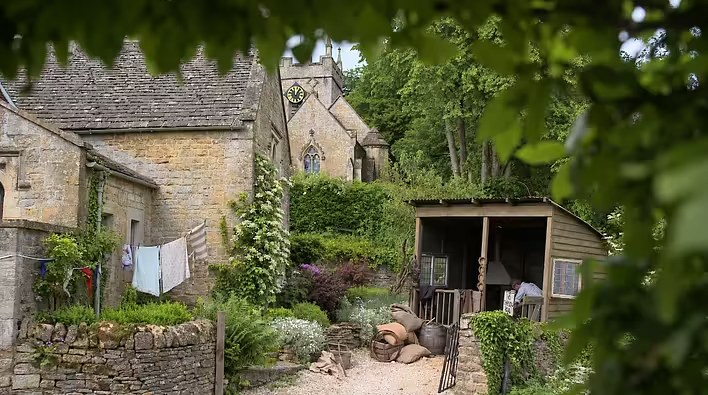
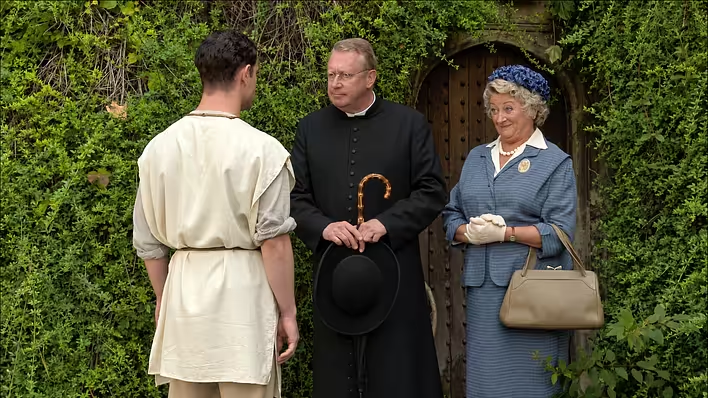
The main character of the series is a Catholic priest from the fictional village of Kembleford in the Cotswolds. He investigates crimes not due to special training, but through attentiveness, compassion, and a deep understanding of human weaknesses.
The events take place in the 1950s, so the series has a special visual charm: bicycles, old cars, parish festivals, cozy living rooms, and green country roads. Crimes are almost always connected to a small circle of people, but Father Brown is interested not only in the identity of the murderer. He seeks to understand what drove a person to commit a crime and often thinks about saving their soul more than about formal punishment.
Despite the regular murders, Kembleford remains a place that is pleasant to return to. The series features a constant circle of characters, gentle humor, and a sense of a familiar community where everyone keeps an eye on each other's lives.
“Agatha Raisin” (Agatha Raisin)
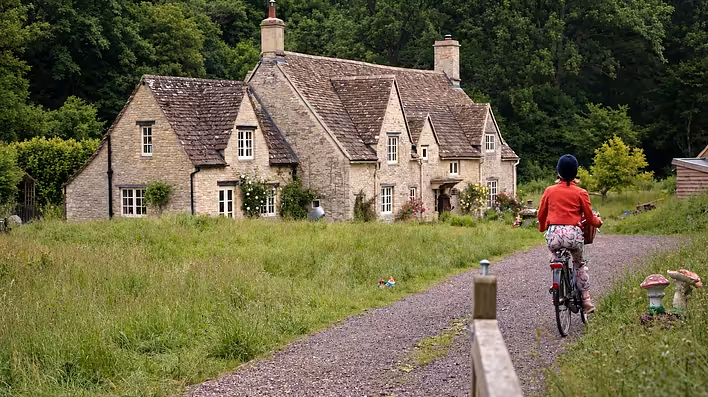

Agatha Raisin leaves a successful career in London and settles in a picturesque village in the Cotswolds. She dreams of a quiet provincial life but quickly discovers that behind blooming gardens and polite smiles from neighbors lie many secrets.
Agatha is nothing like the reserved classic detectives. She is impulsive, self-assured, loves bright clothing, and often finds herself in ridiculous situations. It is her character that turns the series into a detective comedy, where the relationships between characters are sometimes more important than the crime itself.
Particular pleasure comes from the rural settings: stone cottages, small shops, well-kept lawns, local contests, and festivals. The village looks almost postcard-perfect, although the level of crime in it clearly does not match the idyllic scenery.
“Shakespeare & Hathaway: Private Investigators” (Shakespeare & Hathaway: Private Investigators)
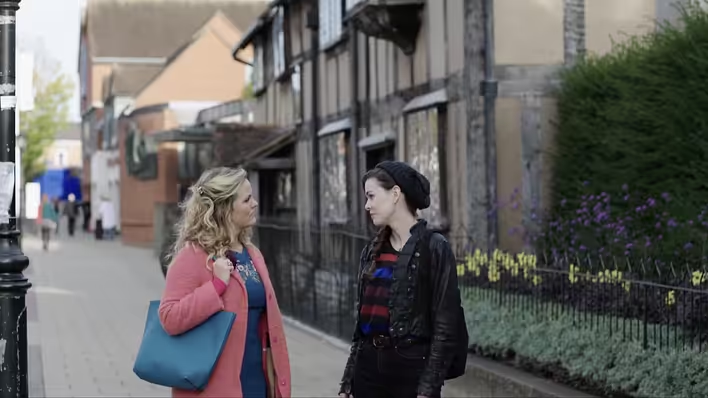
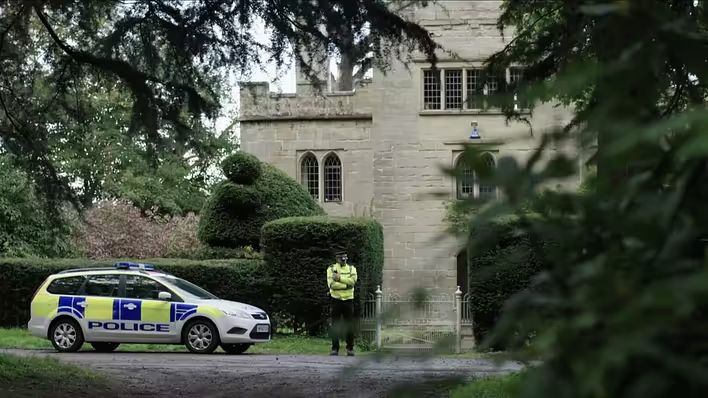
The action of the series takes place in Stratford-upon-Avon — a town inextricably linked to William Shakespeare. Here, private detectives Frank Hathaway and Luella Shakespeare work, assisted by Sebastian — a young actor with a remarkable talent for transformation.
Instead of grim criminal stories, the series offers light, sometimes almost theatrical cases. The heroes investigate fraud, disappearances, blackmail, and crimes related to family conflicts. Even serious situations are lightened with humor, and the relationships between the detectives gradually become just as important as the mysteries.
Stratford in the series is a fully-fledged part of the story. Old streets, timber-framed houses, theaters, pubs, and the tranquil banks of the Avon create a distinctive English atmosphere. It is a good choice for those who value a pleasant company of characters and a setting that one wants to return to in detective stories.
“Agatha Christie’s Marple” (Agatha Christie’s Marple)
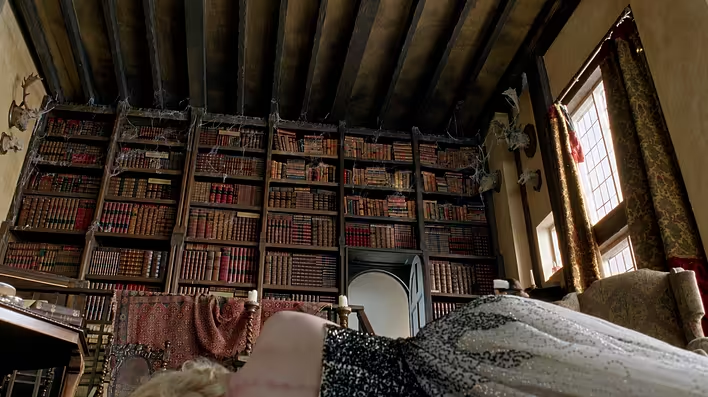
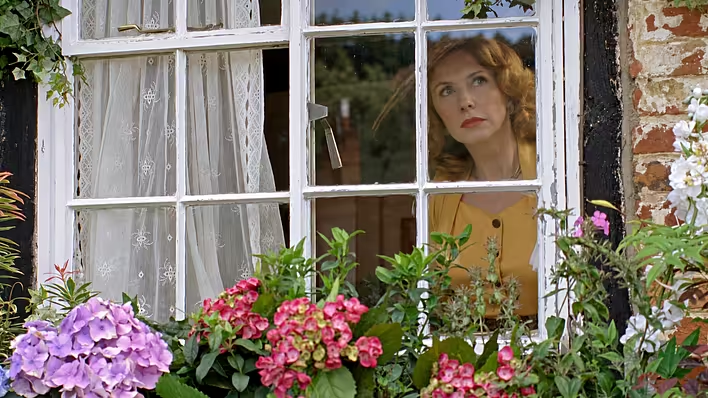
Miss Marple lives in St. Mary Mead — a typical English village where everyone knows each other, and almost everyone has something to hide. She seems to be a modest elderly lady interested in gardening and village gossip, but in reality, she understands people extraordinarily well.
In the series, coziness combines with a classic mystery about a limited circle of suspects. Luxurious mansions, old hotels, libraries, winter gardens, and quiet provincial stations create a world where crime seems to be a disruption of the established order. Even when the action leaves St. Mary Mead, the stories retain the atmosphere of old England.
These are restrained intellectual detectives, where attentiveness to human behavior weighs more than laboratory analyses or spectacular chases. Miss Marple does not pressure the suspects but listens, observes, and compares the new story with the characters of people she has met before.
“Rosemary & Thyme” (Rosemary & Thyme)

Rosemary Boxer and Laura Thyme are engaged in gardening and landscape design. They are invited to restore old gardens, tidy up neglected plots, and save rare plants. However, almost every new assignment leads the heroines to yet another mysterious death.
This is one of the coziest series in the selection. A significant part of the action takes place outdoors: among flower beds, hedges, ancient parks, churchyards, and large country estates. Gardens here are not just a backdrop — plants, soil characteristics, or the history of the plot often become part of the investigation.
There is no usual detective competition between the heroines. They argue, joke, support each other, and gradually become close friends. Because of this, even stories about murders are perceived as leisurely journeys through the English countryside.
“Midsomer Murders” (Midsomer Murders)

The fictional county of Midsomer consists of a series of impeccably picturesque villages. Here, flower shows, fairs, concerts, literary evenings, and cricket competitions are held. However, almost every such event sooner or later ends in murder.
Crimes can sometimes be bizarre, but the overall tone remains calm and ironic. Inspector Barnaby does not chase suspects down dark alleys but methodically talks to locals, notices inconsistencies, and gradually uncovers hidden connections between them.
A separate character in the series is the English village itself. Old churches, ivy-covered cottages, pubs, mills, woodland paths, and grand estates create an almost fairy-tale environment. There is always an eccentric collector, an offended neighbor, or a family that has been hiding an inconvenient truth for decades.
“The Marlow Murder Club” (The Marlow Murder Club)

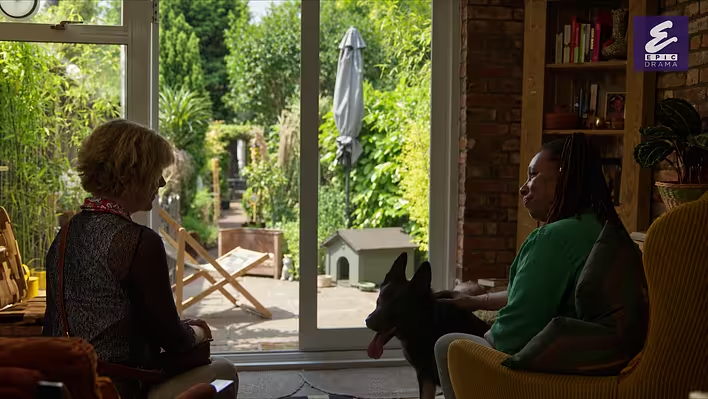
In the small town of Marlow lives Judith Potts — an independent and inquisitive woman who composes crosswords and enjoys life in an old house by the Thames. Hearing a gunshot from the neighboring estate, she disagrees with the police's version and begins her own investigation. Soon, she is joined by the vicar's wife Bex and business owner Suzy.
The trio works precisely because of the differences between the heroines. Judith easily spots logical inconsistencies, Suzy knows the locals, and Bex knows how to be where people are particularly eager to share gossip. Their gradual closeness adds warmth to the story and turns the investigation into a tale of unexpected friendship.
The town, with its boats, gardens, old houses, and quiet streets, perfectly matches the mood of a modern cozy detective. It is not a stylization of 1950s England, but the same attractive world where behind the calm facade of a small community lies a complex web of relationships.
Like it?React
🧵
This post doesn't have any additions from the author yet.