Table of contentsClick link to navigate to the desired location
This content has been automatically translated from Ukrainian.
Language is a living organism that grows, changes, and adapts to historical conditions. The vocabulary related to urban life is particularly sensitive to changes: it reflects social transformations, cultural influences, and economic processes. Once in Lviv, people would go to a pub, in Kyiv – to a tavern, and today everyone goes to a café.
Café. When coffee became part of culture

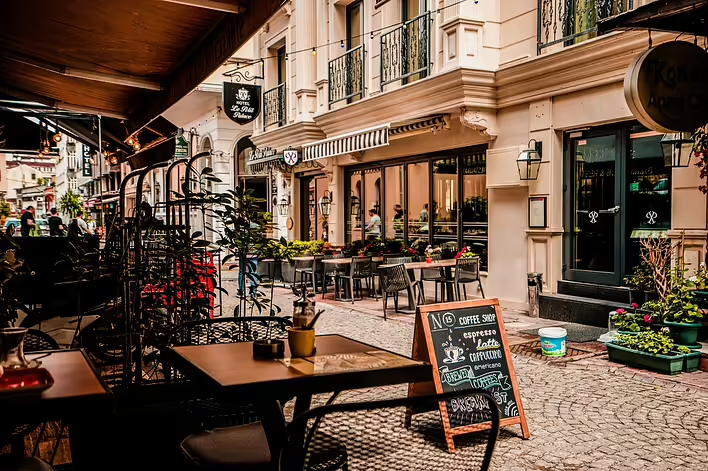
The word "café" has Polish origins (kawiarnia), which in turn comes from the word kawa – “coffee”. This word came to Ukraine during the times when part of our lands was part of the Polish-Lithuanian Commonwealth. It became especially popular in Lviv, where the first cafés appeared as early as the 18th century.
But "café" was not always used in Ukraine. In Kyiv, Odesa, and other cities, the words "café" and "costume shop" were long used (this is how places where one could drink coffee and socialize were sometimes called in the early 20th century). During Soviet times, the word "café" almost disappeared, replaced by the official term "café". However, with the revival of Ukrainian culture at the end of the 20th century, it returned to active use, and today café is no longer just a place for coffee, but a certain philosophy: a cozy space for conversations, work, and creativity.
Bookstore. From a shop to a modern space for readers

Another word with deep historical roots is "bookstore". This word also came from Polish (księgarnia), formed from the word księga – “book”. In the Ukrainian language, the word appeared in the 19th century and was common in Western Ukrainian cities.
In Kyiv and other cities, there were long "book stalls" or simply "book shops", and during the Soviet period, the term "bookstore" became popular. Only at the end of the 20th century did the word "bookstore" begin to return to common usage.
Today, bookstores are not just places that sell books, but also important cultural spaces: they host literary meetings, lectures, and presentations. And the word "bookstore" now has a special nuance: it conveys an atmosphere of not just commerce, but also a love for reading.
Pub. Disappearance and return
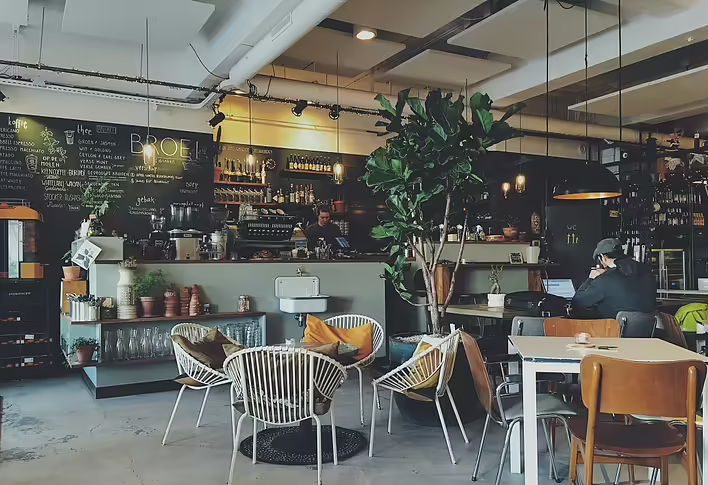
The word "pub" has German origins (Kneipe) and means a small establishment where one can drink and have a snack. It was common in Galicia and western Ukraine, where Austrian influence left a significant mark on the language. Lviv, Chernivtsi, Uzhhorod – it was there that one could hear the word "pub" as early as the 19th century.
However, during the Soviet period, this word almost disappeared – it was replaced by "café", "restaurants", and "snack bars". Yet in the 21st century, "pub" began to return, especially in Western Ukraine. Now this word is used to refer to small atmospheric bars and pubs that want to emphasize their historical authenticity.
Cities develop, cultural codes change, and along with them – the vocabulary. What was once lost returns, and new words are born in the context of modern life. And who knows, perhaps in decades we will have even more new words that better reflect the urban environment.
This post doesn't have any additions from the author yet.